Introduction
Midlife brings physical changes, and these changes often make people feel exhausted and frustrated. Many people experience severe fatigue, sudden weight gain, and unpredictable mood swings. Doctors often treat these struggles as standard aging or prescribe quick pharmaceutical fixes. Conventional medicine frequently misses the underlying problems because broad reference ranges fail to detect early systemic changes. As a result, doctors overlook millions of patients with chronic fatigue, anxiety, and hormone imbalance.
These bodily shifts represent powerful warning signs of systemic disruptions rather than inevitable declines. When they seek answers for their declining health, many patients ask: What are common signs of hormonal imbalance in adults over 40? The gap between how patients feel and what standard blood tests show causes unnecessary suffering. Fortunately, functional diagnostic testing looks beyond population averages to identify individual optimal baselines. This approach helps people identify their unique triggers and find physiological healing.
Physical Reality Behind Midlife Changes
Patients find this physiological healing when they understand the physical reality of midlife changes. Patients often experience severe fatigue and sudden weight gain, and these symptoms disrupt their daily routines. Conventional doctors often attribute these struggles to getting older and advise patients to eat less and exercise more. However, these physical shifts reflect physiological disruptions rather than personal failures. Medical research offers scientific validation for these lived experiences.
For instance, 75% of menopausal women report fatigue, and this number exceeds the frequency of hot flashes at 73.1%. This data proves that extreme exhaustion functions as a primary symptom of midlife hormonal changes. Because conventional doctors view aging as a slow decline, they miss the underlying shifts in the body's chemistry. These symptoms certainly stem from measurable internal imbalances. When patients understand this biological mechanism, they stop blaming themselves for their lack of energy. They begin to see their changing bodies through a lens of physiological facts. Patients do not have to accept this exhaustion as their new normal.
What are common signs of hormonal imbalance in adults over 40?
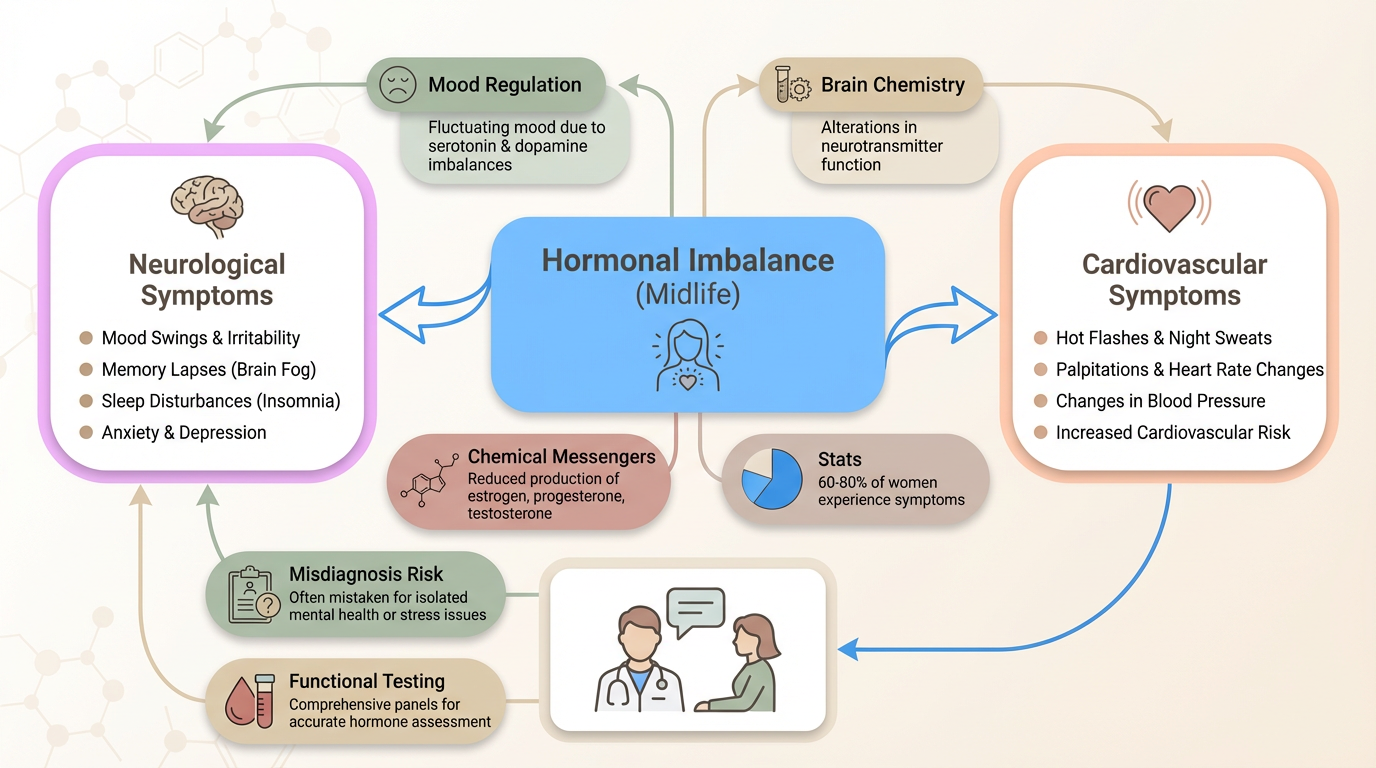
When patients reject this exhaustion as their new normal, they often ask about the common signs of hormonal imbalance in adults over 40. Conventional doctors usually look for obvious indicators like hot flashes or missed periods. However, standard care frequently misdiagnoses hidden systemic signs and lesser-known physical manifestations. These unpredictable bodily changes stem directly from underlying hormonal shifts that affect the entire nervous system. Doctors must look at how different body systems react to chemical changes to find the truth. Fluctuations in estrogen disrupt brain chemistry, and this sudden shift triggers anxiety and palpitations unpredictably. These symptoms frighten patients because they appear without warning. Patients find assurance when they learn these physical manifestations have a clear biological origin.
Midlife chemical fluctuations produce several surprising symptoms:
-
Sudden panic attacks that happen without any clear psychological trigger
-
Rapid heartbeats that wake individuals up from a deep sleep
-
Unexplained muscle weakness that makes ordinary household tasks feel difficult
-
Persistent brain fog that affects daily concentration and memory recall
Detailed hormone testing uncovers the root causes of these hidden signs. When doctors fail to measure these specific chemical messengers, they mislabel physical symptoms as psychiatric issues. Patients then receive medications that only mask the problem instead of fixing the underlying disruption. When patients understand the full spectrum of hormonal warning signs, they protect themselves from incorrect diagnoses and ineffective treatments.