TNT Wellness

Improving Sexual Wellness and Intimacy Naturally

Content authorBy Paige Schreiber, FNPPublished onReading time15 min read
Healthcare professional and patient reviewing medical information on tablets during a telehealth consultation in a comfortable modern living room setting.

Sexual wellness in midlife responds to the same forces that shape overall health: hormones, sleep, stress, nutrition, circulation, and emotional connection. Rebuilding desire naturally means addressing each of these root causes through targeted food choices, movement, nervous system care, and, when needed, functional lab testing and bioidentical hormone support guided by a clinician.

Why does sexual wellness decline in midlife?

Sexual wellness declines in midlife because hormonal transitions in both sexes collide with years of accumulated stress and poor sleep, with low-grade inflammation in the background. Between roughly 35 and 60, women move through perimenopause and menopause while men experience andropause, a slower drop in testosterone that still shifts libido along with mood and energy. Perimenopause starts in the mid-40s but can begin as early as the mid-30s, and it lasts about four years on average before menopause is reached. During that window, estrogen and progesterone rise and fall unpredictably, which disrupts sleep and mood while affecting vaginal tissue health all at once.

Men face a quieter version of the same story. Demanding careers, parenting older children, caring for aging parents, and poor sleep stack on top of slow hormonal decline. The result is rarely one isolated problem. It's a compounding pattern, which is why single-fix approaches disappoint.

What hormones drive libido in men and women?

The hormones that drive libido in both sexes are testosterone, estrogen, progesterone, DHEA, and cortisol, with thyroid hormones playing a supporting role in energy and arousal. When any one of these drifts out of range, desire and physical response shift along with it. In women, estrogen and progesterone govern the rhythm of the menstrual cycle and affect vaginal tissue while also influencing mood and sleep. Testosterone, though present in smaller amounts, still drives the spark of desire. In men, testosterone is the dominant signal for libido and erectile function and also shapes motivation, while estrogen and DHEA balance mood and recovery.

A 2022 systematic review in the Journal of Trace Elements in Medicine and Biology covering 38 studies concluded that serum zinc is positively correlated with total testosterone in men, and zinc deficiency reduces testosterone synthesis. That kind of finding matters because it shows hormones aren't fixed numbers. They respond to nutrition and lifestyle inputs, including stress.

How does testosterone affect desire in both sexes?

Testosterone fuels desire and arousal in both men and women, with energy tied to the same signal, and its decline is one of the most common drivers of low libido in midlife. Women produce testosterone in the ovaries and adrenal glands, and even small drops can flatten interest in sex. A review in the Journal of Clinical Endocrinology and Metabolism found that total testosterone falls about 1.6% per year in aging men, while free and bioavailable testosterone drops 2 to 3% annually. By age 60, roughly 20% of men sit below the normal range.

That slow drift explains why men can't name a moment when libido changed. It eroded over a decade. The good news is that diet, sleep, strength training, and stress reduction all move testosterone in a measurable direction.

How do estrogen and progesterone shape intimacy?

Declining estrogen causes vaginal dryness and tissue thinning that make sex uncomfortable, while low progesterone disrupts sleep and emotional calm, and both shifts suppress desire. The two hormones work in pairs, so an imbalance in one rarely shows up alone. Estrogen keeps vaginal tissue lubricated and well perfused with blood while maintaining elasticity. As levels fall during perimenopause, women report dryness and pain with intercourse as arousal falls. Progesterone is the calming hormone of the pair. It supports deep sleep and steady mood.

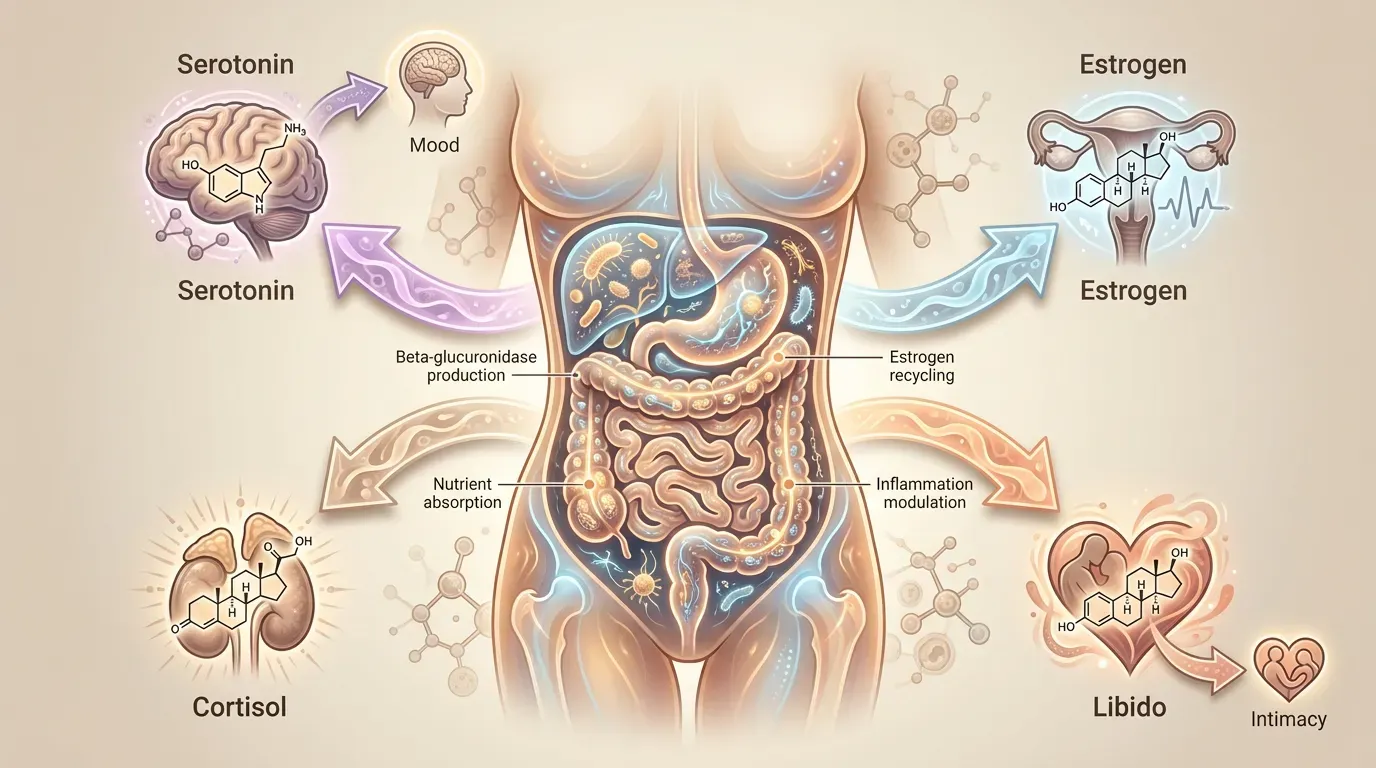
Research on the gut estrobolome published by ZRT Laboratory shows that gut bacteria help recycle and clear estrogens through beta-glucuronidase activity. A disrupted gut can keep estrogen levels uneven even when ovarian output looks normal on a lab.

How does cortisol suppress sex hormones?

Elevated cortisol suppresses sex hormones because the body draws from the same precursor, pregnenolone, to make both stress and sex hormones, and chronic stress shifts production toward cortisol. The effect is the same in men and women: lower testosterone and weaker arousal, with reduced interest alongside them.

A 2011 JAMA study led by Eve Van Cauter at the University of Chicago found that one week of five hours of sleep per night cut daytime testosterone in healthy young men by 10 to 15%, equivalent to aging 10 to 15 years. Sleep loss raises cortisol, and the cortisol-testosterone trade-off shows up fast.

The practical takeaway is that you can't out-supplement a nervous system stuck in fight-or-flight. Stress management is the foundation that lets the rest of the work pay off.

Which foods naturally support sexual health?

Foods that support sexual health are whole foods rich in healthy fats, lean protein, leafy greens, colorful produce, and nutrient-dense seafood, because the body builds sex hormones from cholesterol and requires specific cofactors to assemble them. Restrictive low-fat eating, by contrast, undercuts the raw material. A food-first approach addresses circulation and inflammation while supporting gut health, which is more powerful than chasing a single "libido superfood." Hormones respond to patterns held over months.

Think of your plate in three groups across the week:

  • Healthy fats: olive oil, avocado, nuts, seeds, fatty fish, pasture-raised eggs

  • Hormone-supportive minerals: oysters, grass-fed beef, lamb, pumpkin seeds, dark leafy greens

  • Circulation boosters: beets, berries, pomegranate, citrus, dark chocolate

That structure gives the body the building blocks for testosterone and estrogen plus the vascular tone needed for arousal, all without supplements as the centerpiece.

Ready to transform your health?

Book your health assessment with TNT Wellness personalized nutrition, functional medicine, and science-driven care to address the root causes of your symptoms.

Book Your Assessment →

What nutrients fuel hormone production?

Zinc, magnesium, vitamin D, B vitamins, omega-3 fatty acids, and dietary cholesterol from healthy fats are the nutrients most directly involved in sex hormone production. The body assembles testosterone and estrogen from cholesterol through a chain of enzyme reactions that depend on these cofactors. Zinc gets attention because the data lines up clearly. A landmark study referenced in the same zinc and testosterone literature showed that zinc-restricted men experienced sharp drops in serum testosterone, while supplementation in deficient men restored levels.

If you don't eat oysters or pumpkin seeds regularly, and beef is rare in your diet, your zinc intake is likely lower than you think. The same logic applies to vitamin D in northern climates and magnesium in anyone who drinks alcohol or eats a refined-food diet. Food choices need to match the nutrient gaps a person actually has, which is where lab testing becomes useful.

Which foods improve circulation and arousal?

Foods that improve circulation and arousal are those that boost nitric oxide production and protect blood vessel function: beets, leafy greens, berries, pomegranate, fatty fish, walnuts, and olive oil. Arousal in both sexes depends on blood flow to genital tissue, so vascular health is sexual health. Beets and leafy greens carry dietary nitrates that the body converts into nitric oxide, the molecule that relaxes blood vessels. According to a meta-analysis summarized by News-Medical, nitrate-rich foods like beetroot have been shown to support vasodilation and modestly lower blood pressure in clinical trials.

Omega-3 fats from fish such as salmon and sardines reduce vascular inflammation, while polyphenols in berries and pomegranate protect the endothelial lining. People who eat this way over years have better arterial function than those who don't, and arteries are what carry arousal where it needs to go.

What should you cut back on?

The foods and habits that suppress libido are ultra-processed packaged foods, added sugar, heavy alcohol use, and diets that cut fat too aggressively. Each one disrupts insulin signaling or cortisol rhythm, and some also affect the cholesterol pool the body needs to build sex hormones. Ultra-processed foods drive insulin resistance, which lowers sex hormone-binding globulin and disrupts free testosterone. Heavy alcohol use raises estrogen in men and disrupts sleep architecture in both sexes. Aggressive low-fat dieting starves the body of the cholesterol it uses as a hormone precursor.

The practical move is a steady reduction in the inputs that work against you. Cut the worst offenders 80% of the time, and the body responds within weeks.

How does stress reduction restore desire?

Stress reduction restores desire because the brain has to register safety before the body can shift into arousal. The parasympathetic nervous system, sometimes called rest-and-digest, is also rest-and-arouse. If cortisol is high, that switch never flips. This is why couples report that vacation sex feels different from Tuesday-night sex. The nervous system is in a different state. Chronic stress also reroutes the precursors used for sex hormone production toward cortisol, which means the biochemistry shifts in parallel with the psychology.

A 2023 meta-analysis in Scientific Reports covering randomized controlled trials of breathwork found small to moderate effects on perceived stress and anxiety compared with controls and reported effects on depression as well. Stress reduction works best when it's daily and structured.

Which daily practices lower cortisol?

Daily practices that measurably lower cortisol include slow diaphragmatic breathing, mindfulness meditation, yoga, time outdoors, and gentle movement. Sessions of at least five minutes, repeated consistently, produce the strongest effects. A study in the Journal of the Medical Association of Thailand found that a four-day mindfulness meditation program in medical students dropped average morning serum cortisol from 381.93 nmol/L to 306.38 nmol/L, a statistically significant reduction.

The specific technique matters less than the consistency. Ten minutes of slow breathing each morning will outperform an occasional hour-long meditation. Pair the practice with a fixed cue, like coffee or the morning shower, so it survives busy weeks.

How does sleep quality affect libido?

Sleep quality affects libido because the largest pulses of testosterone release happen during REM sleep, and seven to nine hours of quality sleep is the floor for healthy hormone production in both sexes. Sleep loss is endocrine disruption. The Van Cauter team at the University of Chicago demonstrated in JAMA that just one week of five-hour nights cut testosterone by 10 to 15% in healthy young men, with the lowest readings between 2 pm and 10 pm. That's the same time of day most couples have for connection.

If libido has slipped and sleep is poor, work on sleep first. Cool the bedroom, keep alcohol away from bedtime, hold a consistent wake time, and get morning light. Hormones rebound faster than people expect when sleep is corrected.

Why does gut health influence intimacy?

A glowing anatomical illustration of a woman's torso cutaway, highlighting the gut microbiome with labeled flow arrows to hormones.

Gut health influences intimacy because the gut microbiome regulates how sex hormones are metabolized and cleared and controls absorption of the nutrients used to make those hormones, while inflammation affects mood and energy. A disrupted gut undermines hormone work happening everywhere else. The estrobolome, a subset of gut bacteria first defined in 2011, produces beta-glucuronidase, an enzyme that recycles estrogen back into circulation. According to research compiled by Vibrant Wellness, an imbalanced estrobolome leads to estrogen levels that are either too high or too low, which contributes to symptoms women attribute solely to ovarian decline.

Gut inflammation also raises systemic cortisol and lowers serotonin precursors, which dampens mood and desire. That's why a woman in perimenopause with bloating or constipation, with food sensitivities also in the picture, sees libido improve once gut function is restored, even before any direct hormonal intervention. The route to better intimacy starts with fiber and fermented foods while trigger foods are removed before hormone therapy enters the plan.

Ready to transform your health?

Book your health assessment with TNT Wellness personalized nutrition, functional medicine, and science-driven care to address the root causes of your symptoms.

Book Your Assessment →

How can movement boost sexual vitality?

Movement boosts sexual vitality when it builds strength and improves circulation while lowering stress without pushing the body into chronic exhaustion. Resistance training two to four times a week, plus moderate cardio, is the combination most consistent with libido improvement in both sexes.

A review published in Endocrines concluded that resistance exercise involving large muscle groups and moderate to high intensity with short rest periods reliably produces acute increases in serum testosterone in men, with chronic training associated with higher resting levels compared with sedentary peers. Women benefit too, since strength training preserves muscle and supports bone while improving body image. The trap is excessive endurance training. Marathon-volume cardio in midlife raises cortisol and lowers testosterone while disrupting menstrual cycles in women.

A workable weekly pattern looks like this:

  1. Two to three resistance sessions covering full body

  2. Two to three moderate cardio sessions of 30 to 45 minutes

  3. Daily walking and one longer recovery activity such as yoga or hiking

That structure raises vitality without backfiring into burnout.

How can couples rebuild emotional intimacy?

Couples rebuild emotional intimacy by combining honest communication with regular non-sexual physical affection, because biology alone doesn't restore a relationship that has drifted. The body changes of midlife surface relational patterns that were already there, and those need direct attention.

Desire in long-term partnerships rarely returns by accident. It returns when partners create the conditions: time together without distractions, conversations about needs and resentments, shared physical contact that isn't transactional, and a willingness to be specific about what feels good. The physical work and the relational work reinforce each other.

What communication habits deepen connection?

Communication habits that deepen connection include scheduled check-ins and direct, blame-free conversations about wants and expectations for sex and affection. These habits reduce the performance pressure that quietly kills desire in long-term couples.

Partners do better when they treat conversations about intimacy the same way they treat conversations about finances, on purpose and on a calendar. A weekly 20-minute check-in about closeness and stress prevents small issues from compounding into resentment and gives connection a regular place in the conversation.

Naming a want directly, such as "I'd like more time alone with you on weekends," works better than complaining about its absence. Couples who can do this consistently report higher relationship and sexual satisfaction over time.

How does non-sexual touch rekindle desire?

Non-sexual touch rekindles desire because regular affectionate contact triggers oxytocin release and lowers cortisol while signaling safety to the nervous system, which is the state arousal requires. Touch outside the bedroom does much of the work that touch inside the bedroom can't.

Research published in eLife on diurnal oxytocin showed that affectionate touch was associated with higher endogenous oxytocin levels and lower cortisol responses, which supports the link between everyday physical closeness and stress regulation in romantic partners.

The practical version is unglamorous: hand-holding, hugs that last longer than three seconds, sitting close on the couch, a hand on the shoulder while making dinner. These small contacts prime the nervous system over hours and days, which makes sexual intimacy more available when the opportunity arises.

When should you consider functional lab testing?

You should consider functional lab testing when symptoms persist despite consistent lifestyle changes or when fatigue or low libido are paired with mood shifts or weight changes; testing also helps when you want a specific picture over guesses. Testing turns a vague "something is off" into a targeted plan.

Useful panels in midlife sexual health work include a full sex hormone panel (total and free testosterone, estradiol, progesterone, DHEA-S, SHBG), thyroid markers including reverse T3, comprehensive micronutrient testing, food sensitivity testing, and stool analysis for gut health. The DUTCH urinary hormone test, described by DUTCH Test, maps how estrogens are being metabolized down protective versus less favorable pathways, which a standard blood draw can't show.

The inference most people miss is that normal-range results aren't always optimal results. A testosterone level technically inside the reference range can still produce symptoms in a 50-year-old man whose level was much higher a decade earlier. Functional medicine looks at trends and optimal ranges while using ratios to interpret lab cutoffs.

Is bioidentical hormone replacement right for you?

Bioidentical hormone replacement is a reasonable next step when lifestyle, nutrition, sleep, and stress work have been addressed but symptoms persist and lab values confirm meaningful deficiencies. It's most useful in midlife adults whose hormone production has dropped enough that food and movement alone can't restore it.

Bioidentical hormones are chemically identical to the hormones the body makes, such as estradiol, progesterone, testosterone, and DHEA, and clinicians prescribe them in forms such as creams, patches, pellets, and capsules. They differ from older synthetic hormone preparations in molecular structure, which is part of why many clinicians and patients prefer them.

Clinician-guided care matters because dosing precision and follow-up determine how this work is applied. Hormone therapy without nutrition coaching and lab monitoring underperforms and introduces side effects, especially when stress management is absent. According to the North American Menopause Society position statement, hormone therapy is appropriate for many women experiencing perimenopausal and menopausal symptoms when started in the right window. The thoughtful application layers replacement onto a foundation of lifestyle work.

Work with TNT Wellness for personalized care

If your sexual wellness and intimacy aren't responding to lifestyle changes alone, working with a clinician who looks at root causes is the most direct next step. TNT Wellness in Charlotte, NC combines functional lab testing for hormones and gut health, plus micronutrient testing, with one-on-one nutrition coaching and bioidentical hormone replacement therapy under one roof.

Care is delivered virtually or in person, and TNT Wellness accepts insurance, which removes a common barrier to functional medicine. The team builds plans that account for sleep, stress, gut function, nutrient status, and hormone levels together so libido is addressed as part of the whole picture.

To take the next step, schedule a consultation with TNT Wellness and bring any recent lab work you have. The first visit covers your full history and current symptoms, along with your goals, and from there your provider will recommend the specific testing and care plan that fits your situation in midlife.

Ready to transform your health?

Book your health assessment with TNT Wellness personalized nutrition, functional medicine, and science-driven care to address the root causes of your symptoms.

Book Your Assessment →

Plan on 8 to 12 weeks to judge libido changes from lifestyle habits. Sleep changes affect energy within days, but hormone and circulation changes need a longer pattern. Track desire and sleep in a weekly note, then bring pain or erection changes to a clinician.

Yes, prescription medications can lower libido, arousal, or orgasm quality. Examples include antidepressants such as selective serotonin reuptake inhibitors and hair-loss drugs such as finasteride. Don’t stop a medication on your own. Ask the prescriber about dose changes or alternatives, and ask whether hormone testing fits your symptoms.

Painful sex should be checked when it keeps returning or causes bleeding. Low estrogen and pelvic floor tension are two common causes in midlife, but infection also needs to be ruled out. A clinician can examine the tissue, order testing, and recommend the right option, such as local hormone treatment or pelvic floor therapy.

Yes, lubricants and vaginal moisturizers help when dryness or friction makes sex uncomfortable. Use lubricant during sex, and use a vaginal moisturizer two to three times weekly for dryness between sexual activity. Choose unscented water-based or silicone-based products. If dryness continues, ask a clinician about local estrogen or vaginal DHEA.

Yes, pelvic floor therapy can improve sexual function when pelvic muscle tension or weakness affects arousal or comfort. A pelvic floor physical therapist assesses muscle coordination and relaxation. Treatment can include breath work and muscle release, followed by home exercises. It’s often useful after childbirth or prostate surgery, and it can help with chronic pelvic pain.

Schedule a Meeting

Book a time that works best for you

You Might Also Like

Discover more insights and articles

Minimalist skincare and cosmetic products arranged on a bright modern countertop with soft natural sunlight and indoor plants

Boosting Mood, Energy, and Libido for Women Over 40

In this article, we explain the underlying hormonal mechanisms of midlife transitions and show how targeted lifestyle strategies restore vitality. We also explore functional testing, metabolic nutrition, and circadian-aligned exercise.

A female doctor in a bright, modern office uses a tablet to review patient information, focused on her task in a professional setting.

Digestive Health Assessment: Symptoms, History, Tests, and Next Steps

This article explains how a structured review of your symptoms and history turns vague gut complaints into decisions you can act on. It covers what a practitioner asks about and which warning signs need medical attention first, so you can walk into an appointment with the information that actually changes the outcome.

A female nutritionist in a bright, minimalist office discusses treatment plans with a patient, using a tablet displaying healthcare data.

Functional Medicine Consultation: How to Prepare and What Happens Next

This article covers what to bring to a first functional medicine consultation and what actually happens during and after the visit. It also explains why testing sometimes comes later than people expect, and what a realistic plan looks like when you walk out.

A woman doctor consults with a patient, shown from behind, in a warm, upscale medical office with natural lighting and soft colors.

How to Choose a Gut Health Specialist for Persistent Digestive Symptoms

This article explains how to pick the right provider when bloating or unpredictable bowel habits have stopped being occasional. It walks through the warning signs that need medical attention now and what each type of provider is actually trained to do.