TNT Wellness

Regenerative Medicine Clinic: Healing with Stem Cells

Content authorBy Paige Schreiber, FNPPublished onReading time10 min read
Doctor discussing treatment plan with male patient during a consultation in a modern healthcare clinic

In this article, we examine how systemic metabolic health influences the efficacy of advanced biologic treatments. This article outlines the necessity of preparing the cellular environment to achieve optimal results in tissue repair and age management.

Introduction

Advanced biologic treatments offer a medical approach to tissue repair and age management. The regenerative medicine industry has grown rapidly over the past few decades, and this expansion has led to an increase in predatory marketing about cell treatments. Many heavily promoted offshore procedures lack clinical validation. These deceptive operations have even prompted federal regulators to ban founders and order $3.4 million in refunds. Patients need to understand the science behind modern orthobiologics to avoid these deceptive practices. This understanding begins with the internal cellular environment.

A conventional approach to modern orthobiologics rarely delivers lasting results because it ignores this internal environment. True tissue regeneration combines advanced cellular science with deep metabolic optimization. A reputable regenerative medicine clinic recognizes that cell therapies fail in an inflamed body. These clinics address underlying metabolic dysfunctions first. Functional medicine prepares the biological terrain, and this preparation turns advanced therapies into effective tools for tissue repair.

Current Landscape of Regenerative Medicine Clinic

Although these advanced therapies serve as effective tools for tissue repair, the rapid growth of cellular therapies naturally generates skepticism among patients. Offshore facilities often promise miraculous results but lack strict regulatory oversight. These unproven operations exploit patients and create a shadow over legitimate scientific advancements. However, the industry changed significantly over the last few years. Recent legal decisions confirm that the Food and Drug Administration holds the authority to regulate unproven treatments across the country. This regulatory oversight forces facilities to adopt stringent quality controls and prioritize patient well-being.

The medical community now recognizes legitimate biological treatments. The Food and Drug Administration has already approved cellular and gene products to treat complex blood and cancer disorders. These approvals demonstrate that cellular medicine rests on solid scientific evidence rather than aggressive marketing tactics. A reputable regenerative medicine clinic builds its protocols around these evidence-based standards to improve patient outcomes.

How to Identify a Reliable Regenerative Medicine Clinic

Patients must evaluate clinics carefully to distinguish legitimate medical providers from operations that prioritize profit over patient safety. A trustworthy regenerative medicine clinic follows established clinical protocols, maintains transparency, and bases every treatment decision on scientific evidence rather than marketing claims.

Specific clinical standards distinguish a reliable regenerative medicine clinic from a predatory operation:

  • Doctors conduct thorough metabolic evaluations before any procedure begins.

  • Facilities provide transparent data about the source and processing of biological materials.

  • The clinical team integrates functional medicine to address underlying health conditions before treatment.

  • Practitioners communicate clearly about realistic recovery timelines and expected outcomes.

Strict regulatory oversight and standardized clinical practices improve patient safety and explain how these biological therapies actually heal damaged tissues.

Cellular Mechanisms Behind Joint Repair

Advanced biological treatments target the root cause of tissue degeneration and signal the body to rebuild damaged cartilage. Many patients confuse different types of treatments when they explore options for joint health. Platelet-Rich Plasma uses a patient's own blood to isolate growth factors. Doctors inject these growth factors into the damaged joint to stimulate local healing. While Platelet-Rich Plasma works well for mild injuries, it relies entirely on the patient's existing cellular health. Platelets do not carry the necessary signaling power to repair severe damage if the patient has poor metabolic health.

Advanced regenerative injections for pain take a different approach. Researchers note that stem cell therapy demonstrates the most pain reduction when compared to peptides and other biomimetic therapies. These specialized cells act as general contractors inside the joint. They assess the tissue damage, release potent anti-inflammatory proteins, and coordinate the construction of new cartilage.

Ready to transform your health?

Book your health assessment with TNT Wellness personalized nutrition, functional medicine, and science-driven care to address the root causes of your symptoms.

Book Your Assessment →

Clinical Outcomes and the Role of Metabolic Health in Joint Regeneration

A recent clinical case study followed a 55-year-old marathon runner with severe osteoarthritis in both knees. After the patient failed to find relief through standard injections, the clinical team initiated a thorough metabolic reset. They optimized the runner's dietary nutrition to lower systemic inflammation before they administered advanced cellular treatments. Within six months, imaging showed significant cartilage regeneration, and the runner returned to competitive racing.

This level of precision separates true tissue repair from temporary pain relief. The quality of the cellular environment directly dictates how well these biological contractors perform their repair work. These specific joint repair mechanisms explain how cellular science also influences systemic aging.

Anti-Aging Frontier Through Stem Cell Secretomes

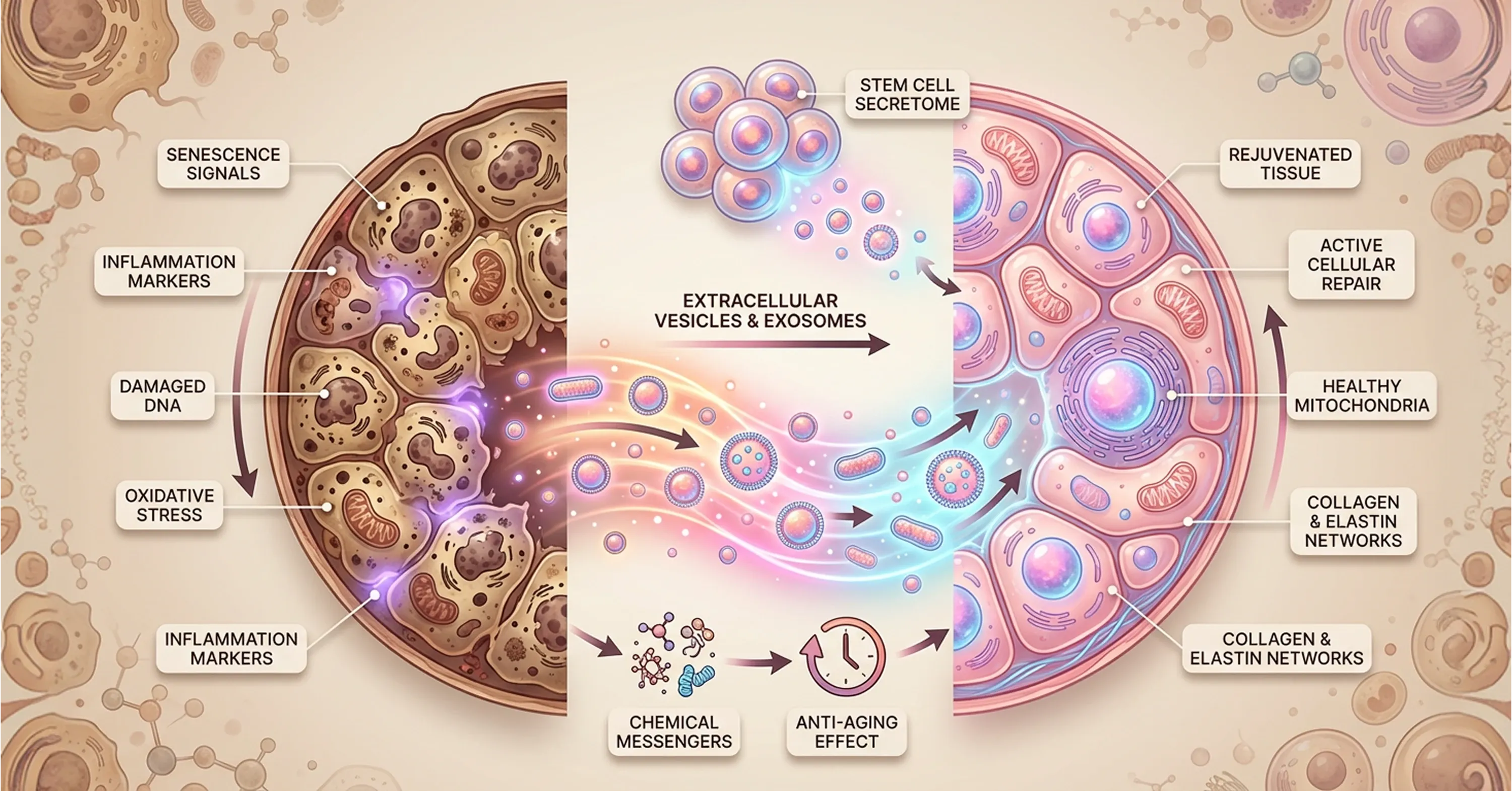
Infographic showing how stem cell secretome and exosomes support cellular repair, reduce inflammation, and promote anti-aging effects.

To understand this systemic aging influence, medical researchers now look beyond whole-cell transplants to apply the powerful chemical signals that cells use to communicate with each other. Scientists discovered that cells secrete tiny packets of information. These packets function as extracellular vesicles or exosomes. These microscopic messengers make up the stem cell secretome. Doctors do not deliver new cells into the body. They isolate these chemical signals and use them to instruct older, damaged cells to repair themselves. This cell-free approach offers a high level of protection because it completely bypasses the risks of whole-cell transplants and unwanted immune responses.

The secretome targets the metabolic memory of aging. As people age, their cells accumulate damage and stop dividing normally. Scientists call this state cellular senescence. Senescent cells secrete inflammatory chemicals that damage nearby healthy tissues. Clinical models show that secretome components demonstrate anti-inflammatory and anti-aging potential that helps clear out these toxic senescent cells. These chemical messengers lower systemic inflammation and reset the biological clock at the cellular level.

Exosomes in Anti-Aging and Skin Regeneration

This technology extends far beyond internal organ health. Dermatological studies confirm that exosomes reduce oxidative stress and promote collagen synthesis in aging skin. Whether a patient seeks stem cell therapy for skin rejuvenation or targeted regenerative injections for pain, the underlying mechanism remains identical. The therapy delivers a concentrated dose of healing instructions exactly where the body needs it most.

This cell-free technology proves that cellular communication serves as the primary mechanism for both joint repair and advanced age management, but these communication signals require a healthy biological terrain.

Why Biological Terrain Determines Treatment Success

This biological terrain dictates whether cellular therapies succeed or fail. When practitioners inject healthy cells into an inflamed joint, the treatment often stalls. Many patients spend thousands of dollars on procedures that fail because underlying metabolic blockers disrupt the healing process. A regenerative medicine clinic evaluates the patient's internal environment before recommending any procedure. Practitioners understand that cellular science requires optimal conditions to rebuild damaged cartilage.

Medical researchers identify specific metabolic barriers that compromise tissue repair. For example, donor age strongly influences stem cell potential and significantly reduces efficacy in elderly patients. Similarly, multiple clinical studies show that high blood sugar decreases the regenerative capacity of these cells. When sugar coats the cellular matrix, the cells cannot receive the chemical signals they need to start building new tissue.

Ready to transform your health?

Book your health assessment with TNT Wellness personalized nutrition, functional medicine, and science-driven care to address the root causes of your symptoms.

Book Your Assessment →

Preparing the Body for Successful Regenerative Therapy

Successful regenerative outcomes depend on preparing the body to receive and utilize biologic treatments effectively. Medical professionals focus on correcting internal imbalances before initiating therapy because even the most advanced cellular interventions cannot function properly in a compromised metabolic environment. This preparation phase creates the physiological conditions necessary for long-term tissue repair rather than short-term symptom relief.

Functional medicine practitioners implement strict protocols to overcome these barriers before they administer stem cell therapy:

  1. Evaluate age-related cellular decline to determine the required dosage of biologic materials.

  2. Regulate glucose metabolism to prevent sugar molecules from degrading the healing proteins.

  3. Resolve chronic inflammation because inflammation causes weight gain and joint degradation.

  4. Correct severe nutrient deficiencies that starve newly formed tissues.

These protocols ensure that the body accepts the biologic treatment. Without this preparation, regenerative injections for pain act as temporary relief rather than permanent solutions.

Functional Preparation for Cellular Therapy

Functional medicine provides this proper preparation and creates the necessary foundation for advanced biologic treatments. Doctors prepare the body before cellular therapy to improve recovery timelines and ensure long-term tissue repair. Clinical evidence shows that metabolic health optimization before orthobiologic therapies improves regenerative outcomes and tissue responsiveness. This thorough preparation shifts the focus from treating isolated symptoms to repairing the entire biological system.

A regenerative medicine clinic relies on this systematic preparation to achieve successful outcomes. Practitioners investigate hormone imbalances, poor digestion, and systemic stress to ensure the newly introduced cells survive and thrive. This specific approach ensures that the biological terrain can support the biologic materials.

Lifestyle Preparation for Regenerative Therapy Success

The preparation phase requires strict adherence to lifestyle modifications. Practitioners often prescribe anti-inflammatory foods to lower systemic stress and provide raw materials for tissue synthesis. They also use targeted supplements to balance the immune system. When the clinical team eliminates the underlying sources of inflammation through proper nutrition, regenerative injections for pain have the clean environment they need to reconstruct damaged joints.

How Targeted Nutrition Enhances Stem Cell Therapy

Dietary interventions play a direct role in supporting the cellular matrix. Adjusting macronutrients changes the biological terrain from a hostile environment into a responsive healing zone. Preclinical models indicate that calorie restriction and intermittent fasting enhance muscle stem cell function. These nutritional strategies force the body to clear out damaged proteins and prioritize cellular repair.

Practitioners carefully design meal plans that eliminate processed sugars and refined carbohydrates. These harmful ingredients drive systemic inflammation and accelerate cartilage degradation. Replacing these triggers with quality proteins and healthy fats provides the exact building blocks the body needs to synthesize new collagen. This nutritional shift reduces swelling and brings physical comfort to aching joints before the clinical team administers the actual stem cell therapy, but these nutritional benefits rely on a healthy digestive tract.

Role of Gut Health in Treatment Outcomes

Systemic inflammation almost always originates in the digestive tract. The gut lining acts as a physical barrier that prevents toxins and undigested food particles from entering the bloodstream. Poor diet or chronic stress degrades this barrier. Toxins then flood the system and trigger an aggressive immune response. This immune cascade travels throughout the body and specifically targets vulnerable areas like arthritic joints.

Microbiome repair creates a safe refuge for healthy cellular activity. Practitioners use specialized protocols to seal the gut lining and restore beneficial bacteria. A healthy digestive system ensures the body absorbs the essential amino acids and micronutrients that tissue regeneration requires. Without a functioning gut, the body cannot extract the raw materials needed to support advanced biologic treatments and produce cellular energy.

Physical Recovery with NAD+ Optimization

Nicotinamide Adenine Dinucleotide (NAD+) serves as a crucial metabolic coenzyme that fuels this cellular energy production. Declining NAD+ levels stall tissue repair because the cells lack the energy they need to divide and synthesize collagen. Practitioners optimize these coenzyme levels through targeted supplementation or intravenous therapy. This ensures the newly introduced biologic materials have enough energy to perform their repair work.

This biochemical support works alongside structured physical rehabilitation. Movement provides necessary mechanical stability to the recovering joint. Supervised physical therapy signals the newly formed tissues to align properly along the lines of physical stress. The combination of cellular energy optimization and precise mechanical loading improves long-term success rates and prevents the joint from degrading again in the future.

Conclusion

These cellular energy and physical recovery methods demonstrate that advanced biologic therapies offer potential for tissue repair and age management. These treatments serve as a catalyst for recovery rather than a standalone cure. A properly vetted regenerative medicine clinic always emphasizes the importance of foundational metabolic health for true regeneration. Patients often partner with a medical practitioner to lower systemic inflammation, correct nutrient deficiencies, and optimize the biological terrain. Patients use these healthy aging strategies to ensure an optimal environment for cellular therapies and secure long-term mobility and vitality for the future. Schedule a consultation with a local practitioner to discuss these treatments today.

Ready to transform your health?

Book your health assessment with TNT Wellness personalized nutrition, functional medicine, and science-driven care to address the root causes of your symptoms.

Book Your Assessment →

Health insurance companies rarely cover biological treatments because they still classify these procedures as experimental. You'll usually pay out of pocket for these therapies. You should contact your insurance provider to verify your coverage details and ask about flexible payment plans.

You'll need to change your diet for eight to twelve weeks before your procedure. You need this time to lower systemic inflammation and build a supportive environment for new cells. A regenerative medicine clinic tracks your progress to ensure your metabolic health improves.

Doctors order blood panels to check your hormone levels, inflammatory markers, and micronutrient status. TNT Wellness provides functional lab testing to identify gut health issues and food sensitivities that drive systemic inflammation. Practitioners use these diagnostics to create a preparation plan because they don't want the treatment to fail.

Older adults can achieve joint repair when doctors use biological materials from younger donors instead of the patient's own cells. Cell-free technologies also work well for senior patients because they don't require cell division. Your doctor will evaluate your health status to determine the safest approach.

You can improve your joints without injections through physical therapy and medical nutrition therapy. Practitioners design exercise programs to strengthen the muscles around your damaged joints. You can also take supplements to lower inflammation if you don't want to undergo a medical procedure.

Schedule a Meeting

Book a time that works best for you

You Might Also Like

Discover more insights and articles

Minimalist skincare and cosmetic products arranged on a bright modern countertop with soft natural sunlight and indoor plants

Boosting Mood, Energy, and Libido for Women Over 40

In this article, we explain the underlying hormonal mechanisms of midlife transitions and show how targeted lifestyle strategies restore vitality. We also explore functional testing, metabolic nutrition, and circadian-aligned exercise.

A female doctor in a bright, modern office uses a tablet to review patient information, focused on her task in a professional setting.

Digestive Health Assessment: Symptoms, History, Tests, and Next Steps

This article explains how a structured review of your symptoms and history turns vague gut complaints into decisions you can act on. It covers what a practitioner asks about and which warning signs need medical attention first, so you can walk into an appointment with the information that actually changes the outcome.

A female nutritionist in a bright, minimalist office discusses treatment plans with a patient, using a tablet displaying healthcare data.

Functional Medicine Consultation: How to Prepare and What Happens Next

This article covers what to bring to a first functional medicine consultation and what actually happens during and after the visit. It also explains why testing sometimes comes later than people expect, and what a realistic plan looks like when you walk out.

A woman doctor consults with a patient, shown from behind, in a warm, upscale medical office with natural lighting and soft colors.

How to Choose a Gut Health Specialist for Persistent Digestive Symptoms

This article explains how to pick the right provider when bloating or unpredictable bowel habits have stopped being occasional. It walks through the warning signs that need medical attention now and what each type of provider is actually trained to do.