TNT Wellness

Lifestyle Changes to Support Healthy Testosterone and Libido

Content authorBy Paige Schreiber, FNPPublished onReading time9 min read
Tablet displaying a health and fitness dashboard with heart rate, steps, and wellness metrics on a clean home desk with a glass of water and notebook

In this article, we explore how diet, exercise, stress, and sleep naturally restore male hormonal health. We discuss specific nutritional strategies, workout adjustments, and functional lab tests that uncover the causes of low energy.

Introduction

Declining energy, mood, and sexual desire affect countless individuals, and these symptoms often signal a disruption in natural hormonal balance. Testosterone naturally declines 1 to 3 percent yearly after age 40, but modern habits severely accelerate this process. Chronic stress, poor nutrition, and sleep deprivation disrupt the endocrine system and suppress natural hormone production. When people ignore these root causes, they struggle with persistent fatigue and low energy. Before pursuing medical treatments, patients often ask what lifestyle changes help with low testosterone and low libido in men. Understanding how these habits influence hormone synthesis provides a clear solution.

Interconnected Hormonal Ecosystem

This clear solution works because human physiology operates as a complex network. This network suffers when one biological system fails. Some patients look for a single supplement to fix fatigue and diminished drive. This isolated approach fails because it ignores how lifestyle factors interact.

Poor sleep increases cortisol levels in the body. Elevated cortisol sabotages exercise recovery and drives poor dietary choices. For instance, a corporate executive wanted to improve his energy. He hired a personal trainer and restricted his calories, but he continued to sleep four hours a night. His exhaustion worsened because his sleep deprivation suppressed natural hormone production.

Treating diet, sleep, stress, and exercise as a single interconnected unit helps resolve underlying systemic issues instead of treating isolated symptoms. Researchers observed this connection in clinical settings. Studies show that combined diet and exercise interventions outperform single-modality approaches for body composition. Balancing daily habits creates an optimal environment for hormone production and regulation. This strategy ensures that the endocrine system functions smoothly and maintains healthy testosterone levels.

Evidence-Based Nutrition for Hormone Synthesis

To function smoothly, the endocrine system requires specific raw materials to manufacture hormones. Food provides these fundamental building blocks. A long-term commitment to nutrient-dense eating gives the body the resources it needs to maintain energy and stamina throughout the day. Some patients associate low libido entirely with aging. They research signs of male andropause and fail to evaluate their daily food intake.

A diet that lacks vital nutrients starves the endocrine pathways. Natural hormone synthesis requires specific elements in daily meals:

  • Healthy dietary fats serve as the foundation for cholesterol-derived hormones.

  • Fat-soluble vitamins regulate endocrine gland function and hormone receptor sensitivity.

  • Essential trace minerals facilitate the conversion of inactive hormones into their active states.

  • Quality proteins supply amino acids for muscle repair and metabolic health.

These nutritional components work together to support hormone production. Addressing dietary deficiencies creates a profound shift in physical health and sexual desire.

Dietary Fats for Testosterone Production

Addressing these dietary deficiencies begins with dietary fats because testosterone comes from cholesterol. Eliminating dietary fats removes the primary ingredient for hormone synthesis. A classic case study involves a middle-aged patient who adopted a strict low-fat diet to lose weight. He lost weight, but his sexual desire disappeared and he could not maintain his strength. His endocrine system lacked the cholesterol needed to produce androgens.

Current clinical data supports higher fat consumption for hormonal health. Researchers found that an optimal dietary fat intake of 35 to 45 percent of daily calories supports testosterone production. Healthy fats come from sources like olive oil, avocados, and grass-fed beef. Highly processed trans fats drive cellular inflammation and disrupt hormonal pathways.

Ready to transform your health?

Book your health assessment with TNT Wellness personalized nutrition, functional medicine, and science-driven care to address the root causes of your symptoms.

Book Your Assessment →

Role of Vitamin D

Just as healthy dietary fats support these hormonal pathways, vitamin D functions as a prohormone rather than a standard vitamin. It binds to receptors on the testes and directly stimulates the production of androgens. Modern indoor lifestyles keep people out of the sun and cause severe vitamin D deficiencies. These deficiencies halt hormonal progress and leave individuals lethargic.

Correcting this imbalance yields significant clinical results. In one controlled trial, a daily vitamin D supplement of 3,332 International Units (IU) increased testosterone by 25 percent yearly. Consistent sunlight exposure and high-quality supplementation help achieve optimal levels. Routine blood work helps patients identify their current vitamin D status. Restoring these levels typically improves mood, bone density, and sexual function.

Essential Minerals: Zinc, Magnesium

Vitamin D improves sexual function, and zinc and magnesium serve as critical catalysts in the body. Zinc prevents the aromatase enzyme from converting testosterone into estrogen. Magnesium frees testosterone from binding proteins and makes it available for cellular use. A lack of these minerals stops hormone production.

Clinical evidence highlights the rapid consequences of trace mineral depletion. Medical studies demonstrate that a zinc deficiency causes a 75 percent drop in testosterone over six months. Mineral-rich foods like oysters, pumpkin seeds, and leafy greens provide these essential trace minerals. A real-world case study features athletes who sweat heavily and lose magnesium rapidly. These athletes recover faster and maintain healthier hormone profiles after they replenish their magnesium stores.

Intelligent Exercise Guidelines

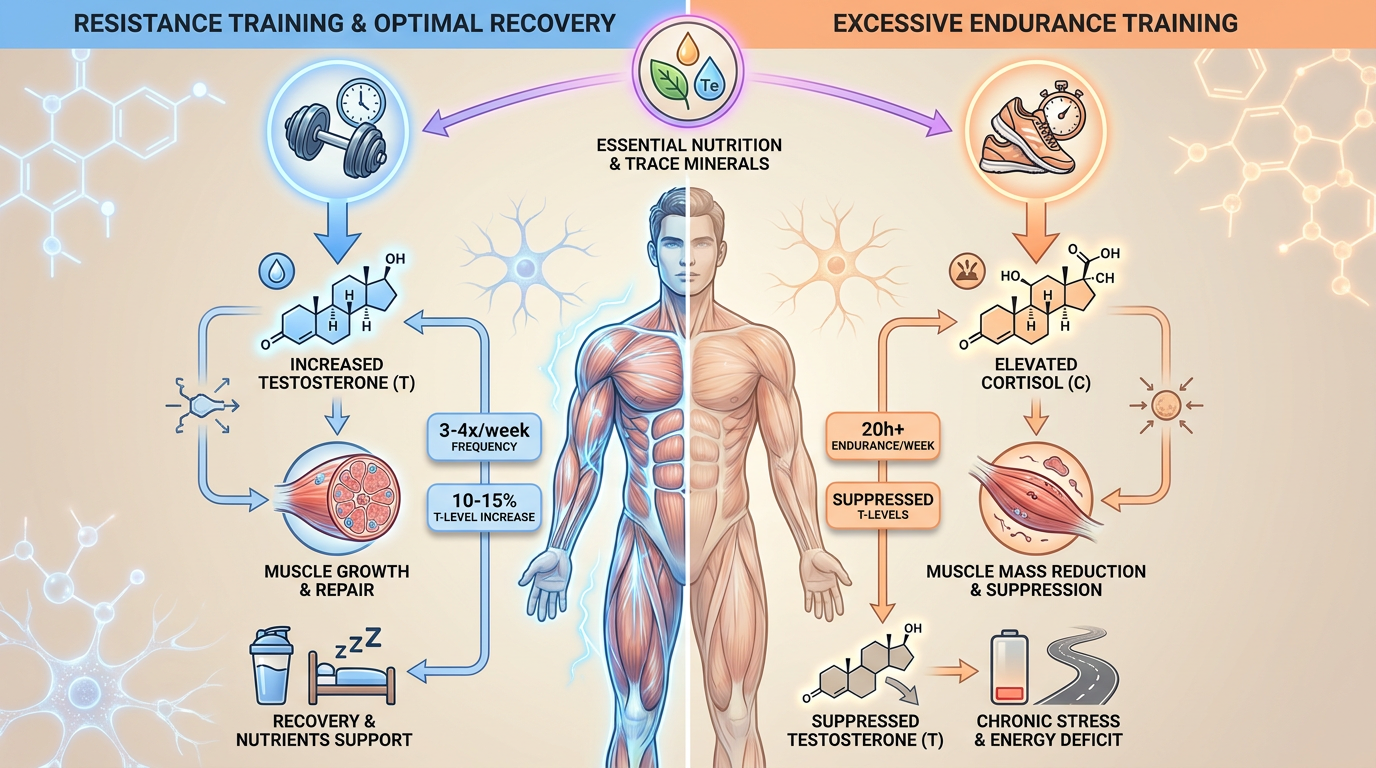
Split-layout scientific schematic illustrating male anatomy: left side shows resistance training benefits, right side depicts excessive endurance effects.

Proper nutrition replenishes these trace minerals, and physical activity acts as a powerful stimulus for the endocrine system. Heavy resistance training signals the body to build muscle and produce more androgens. However, too much exercise creates chronic physical stress and suppresses reproductive hormones. Patients frequently ask what lifestyle changes help with low testosterone and low libido in men, but they often ignore the damage caused by grueling workout routines.

A marathon runner who trains twenty hours a week provides a good example. His resilience and effort look impressive, but his continuous endurance training elevates cortisol levels and shuts down his testosterone production. The body perceives this excessive training as a survival threat and stops prioritizing non-essential functions like reproduction.

Scientific observations confirm this delicate balance. Sports scientists note that proper resistance training improves testosterone by 10 to 15 percent, while extended endurance work reduces these levels. Effective routines involve lifting heavy weights three to four times a week and allowing adequate time for recovery. Rest days remain just as crucial as training days. Prioritizing recovery helps patients build muscle effectively and maintain a healthy hormonal profile.

Ready to transform your health?

Book your health assessment with TNT Wellness personalized nutrition, functional medicine, and science-driven care to address the root causes of your symptoms.

Book Your Assessment →

Sleep Architecture and Hormone Production

This physiological recovery relies on sleep architecture, which directly dictates hormone production. Patients often overlook their bedtime habits when they try to restore their vitality. The endocrine system manufactures the vast majority of androgens during deep, restorative sleep phases.

When men cut their sleep short, they disrupt this precise biological process. Researchers found that five hours of sleep a night for one week reduced daytime testosterone levels by 10 to 15 percent. A healthy man might sacrifice rest to work longer hours. His body interprets this sleep deprivation as a physical threat and slows down reproduction-related functions. He quickly loses his vitality, and his morning erections disappear.

Patients maintain daily consistency with a seven-to-eight-hour sleep schedule to give the brain enough time to complete all necessary sleep cycles. The body uses this quiet time to repair muscle tissue and synthesize hormones. Men establish strict bedtime routines and remove electronic devices from the bedroom to improve their sleep quality. Once patients prioritize their rest, they typically notice a significant change in their daily energy and sexual desire.

Cortisol Effect On Hormonal Health

Even when patients prioritize their rest, chronic stress actively destroys hormonal health. When a man experiences continuous psychological pressure, his adrenal glands release cortisol. This survival hormone floods the bloodstream and actively blocks the reproductive system from proper function. Medical studies demonstrate that cortisol suppresses testosterone through the Gαs-cAMP/PKA signaling mechanism.

Men often wonder what lifestyle changes help with low testosterone and low libido in men before they look into bioidentical hormone replacement therapy. The answer starts with psychological tension control. An accountant works eighty hours a week during tax season. He feels constantly overwhelmed, and his sexual desire vanishes because his elevated cortisol levels command his body to focus entirely on survival rather than reproduction.

Men actively manage their daily stress to regain control over their endocrine system and restore physical stability. Patients lower their cortisol levels with three techniques:

  1. They practice deep breathing exercises to lower resting heart rates.

  2. They schedule dedicated downtime away from screens and work emails.

  3. They walk outside daily to reduce nervous system tension.

Lower cortisol levels allow the endocrine pathways to reopen. This important change helps the body resume normal hormone synthesis and restores a healthy sex drive.

Functional Hormone Evaluation For Personalized Protocols

Lower cortisol helps resume normal hormone synthesis, but uninformed assumptions about hormone levels waste time and fail to solve the underlying problem. Men need accurate physiological data to make the right decisions when they explore ways to restore their vitality naturally. Functional lab evaluations provide a direct view into the endocrine system and help doctors identify the primary causes of diminished vitality. A standard clinical assessment includes total testosterone, free testosterone, Sex Hormone-Binding Globulin, Dihydrotestosterone, and Dehydroepiandrosterone sulfate. Total testosterone shows the overall production volume, while free testosterone reveals how much of that hormone the body can actually use. Sometimes, Sex Hormone-Binding Globulin binds to hormones and makes them unavailable to the tissues.

A patient might feel terrible even if he has normal total hormone levels. When he checks his blood work through a thorough functional male hormone panel, he discovers elevated Sex Hormone-Binding Globulin that traps his free androgens. He then learns he needs specific trace minerals to fix this specific imbalance. This diagnostic approach provides patients the clarity they need to adjust their daily habits. It provides clear direction to construct a personalized health protocol, and this eliminates the need for generic advice.

Conclusion

In summary, this personalized health protocol proves that restoring optimal hormone levels requires a thorough approach to daily habits rather than isolated treatments. This approach answers a common question about how to restore vitality naturally. The right daily adjustments help individuals rebuild their energy, mood, and sexual health naturally. As medical understanding of the endocrine system evolves, lifestyle interventions will remain a reliable foundation for long-term health. The first step toward a precise understanding of personal hormonal health involves a complete hormone testing assessment to establish a baseline and develop a personalized treatment plan.

Ready to transform your health?

Book your health assessment with TNT Wellness personalized nutrition, functional medicine, and science-driven care to address the root causes of your symptoms.

Book Your Assessment →

You should focus on compound movements like squats, bench presses, and deadlifts. These exercises engage large muscle groups and trigger more androgen release. You don't need complicated machines to build muscle. Free weights stimulate your nervous system better and force your body to adapt.

Drinking alcohol before bed ruins your sleep cycles and lowers how your body makes androgens. Even a single drink stops your brain from entering deep sleep phases. You won't get the rest you need to synthesize hormones, and you will wake up tired the next day.

Chemicals in plastics and pesticides mimic estrogen and disrupt your natural hormone output. If you wonder what lifestyle changes help with low testosterone and low libido in men, you need to evaluate your environment. You protect your endocrine system when you store food in glass containers.

You should test your baseline hormones around age thirty. Your body begins to slow its hormone production during this decade. TNT Wellness provides lab panels that track these early shifts. You can adjust your diet and exercise habits sooner if you catch these changes early.

Intermittent fasting can improve your focus, but it won't help your body make hormones. Your brain needs a consistent supply of nutrients to signal your glands to produce androgens. Long fasting windows elevate your cortisol levels. You shouldn't skip meals if you want to maintain a strong drive.

Schedule a Meeting

Book a time that works best for you

You Might Also Like

Discover more insights and articles

Minimalist skincare and cosmetic products arranged on a bright modern countertop with soft natural sunlight and indoor plants

Boosting Mood, Energy, and Libido for Women Over 40

In this article, we explain the underlying hormonal mechanisms of midlife transitions and show how targeted lifestyle strategies restore vitality. We also explore functional testing, metabolic nutrition, and circadian-aligned exercise.

A female doctor in a bright, modern office uses a tablet to review patient information, focused on her task in a professional setting.

Digestive Health Assessment: Symptoms, History, Tests, and Next Steps

This article explains how a structured review of your symptoms and history turns vague gut complaints into decisions you can act on. It covers what a practitioner asks about and which warning signs need medical attention first, so you can walk into an appointment with the information that actually changes the outcome.

A female nutritionist in a bright, minimalist office discusses treatment plans with a patient, using a tablet displaying healthcare data.

Functional Medicine Consultation: How to Prepare and What Happens Next

This article covers what to bring to a first functional medicine consultation and what actually happens during and after the visit. It also explains why testing sometimes comes later than people expect, and what a realistic plan looks like when you walk out.

A woman doctor consults with a patient, shown from behind, in a warm, upscale medical office with natural lighting and soft colors.

How to Choose a Gut Health Specialist for Persistent Digestive Symptoms

This article explains how to pick the right provider when bloating or unpredictable bowel habits have stopped being occasional. It walks through the warning signs that need medical attention now and what each type of provider is actually trained to do.