TNT Wellness

Understanding and Addressing Low Libido in Midlife

Content authorBy Dr. Vanessa Lara PhDPublished onReading time12 min read
Smiling mature couple embracing on a comfortable sofa in a bright modern home, expressing happiness, companionship, and a fulfilling lifestyle together.

Libido drops in midlife because hormones and stress chemistry shift at once. Estrogen, testosterone, progesterone, DHEA, and thyroid output decline through the 40s and 50s, while cortisol stays elevated and desire erodes under the combined pressure of sleep loss, blood sugar swings, medication effects, and other daily factors. The pattern is a health signal.

Why does libido drop in midlife?

Libido falls in midlife because it sits downstream of hormones and stress load, and those layers start pulling in the same direction during the 40s and 50s. A single low hormone rarely tells the whole story. What people feel as "no interest" is a stack of smaller physiological changes. The scale of this is larger than most clinicians acknowledge. In a community-based study of 2,020 Australian women aged 40 to 65, researchers found that 69.3% reported low sexual desire and 32.2% met criteria for hypoactive sexual desire disorder. Numbers that high mean low desire is closer to a baseline midlife experience than an outlier condition.

The practical takeaway is that desire is a downstream signal worth investigating. When libido drops alongside fatigue or sleep changes, the body is reporting on systems that can be measured and adjusted.

Which hormonal changes affect desire most?

Five hormones drive most of the midlife libido picture: estrogen, testosterone, progesterone, DHEA, and thyroid hormones. Each one influences a different piece of the desire circuit, from blood flow and tissue health to motivation and energy. A drop in any of them blunts libido on its own, and midlife brings shifts in more than one at the same time. This is why single-hormone explanations rarely match what patients actually feel.

The hormonal picture is layered, and the layers interact:

  • Estrogen governs vaginal tissue, including lubrication, and parts of brain chemistry linked to motivation

  • Testosterone drives arousal and satisfaction in both sexes

  • Progesterone supports sleep quality and a calmer mood

  • DHEA acts as a precursor that feeds the sex hormone pathway

  • Thyroid hormones set the metabolic floor that all the others operate on

Understanding which combination is off in a given person is what separates targeted treatment from generic advice.

How does estrogen decline impact women?

Falling estrogen during perimenopause and menopause reduces vaginal lubrication and tissue elasticity, which makes intimacy uncomfortable. Estrogen receptors also sit in brain regions tied to motivation and mood, so the impact is physical and neurological at once.

The physical changes are well documented. According to data summarized by OHSU's clinical brief on low libido, 41% of menopausal women said vaginal atrophy had negative consequences for their sex life and 36% said it made them feel old. When sex becomes painful, the brain learns to avoid it, which deepens the loss of desire beyond the original tissue change.

What role does testosterone play?

Testosterone drives arousal and orgasmic satisfaction in both sexes, and it falls along a long curve through midlife. That gradual slope is part of why the symptoms are missed for years.

Research led by Susan Davis at Monash University and published through The Conversation found that women's testosterone levels decrease by around 50% from age 20 to age 60, with a 25% drop between ages 40 and 58 to 59. Men lose roughly 1% per year after age 30. Measurable and routinely overlooked.

How do progesterone and DHEA contribute?

Progesterone calms the nervous system and supports deep sleep, while DHEA is the adrenal precursor that feeds testosterone and estrogen production. When both fall, the hormonal cascade weakens from two directions at once.

The pregnenolone steal narrative oversimplifies the biochemistry. As naturopathic doctor Fiona McCulloch explains in her clinical review of the pregnenolone steal concept, each tissue produces its own pregnenolone independently, so there is no shared reservoir being diverted. The clinical observation is still real: stress and perimenopause do reduce progesterone and DHEA, and that drop matters for sleep and the raw material available downstream.

Can thyroid imbalance lower libido?

Hypothyroidism is one of the most commonly missed drivers of low desire in midlife. Low thyroid output drags down energy and contributes to vaginal dryness, which is why screening thyroid function early prevents months of treating the wrong system.

A 2024 meta-analysis of nine studies covering 1,013 women, published in PubMed, found sexual dysfunction in 41.8% of women with hypothyroidism and 59.6% of women with hyperthyroidism. Numbers like that are too large to ignore. Any midlife workup for low libido that skips a full thyroid panel with antibodies is incomplete.

Ready to transform your health?

Book your health assessment with TNT Wellness personalized nutrition, functional medicine, and science-driven care to address the root causes of your symptoms.

Book Your Assessment →

How does chronic stress shut down sex drive?

Chronic stress shuts down sex drive because sustained cortisol output competes for the same cholesterol-based building blocks as sex hormones and tells the body that survival ranks above reproduction. The body listens to that signal whether the stressor is a deadline or a poorly slept week.

The simplified "pregnenolone steal" story is biochemically incomplete, but the downstream pattern holds. A study of male shift workers published in PMC found that disrupted circadian stress patterns produced lower pregnenolone and lower total and free testosterone compared with daytime workers. The mechanism is more specific than a single shared pool of raw material, but the result is the same: prolonged stress physiology suppresses the sex hormone arm.

For a patient, the implication is direct. If cortisol regulation is off, hormone replacement alone rarely restores desire because the nervous system is still flagging the situation as unsafe for connection. The stress layer has to be addressed alongside the hormonal one.

Which lifestyle factors quietly kill libido?

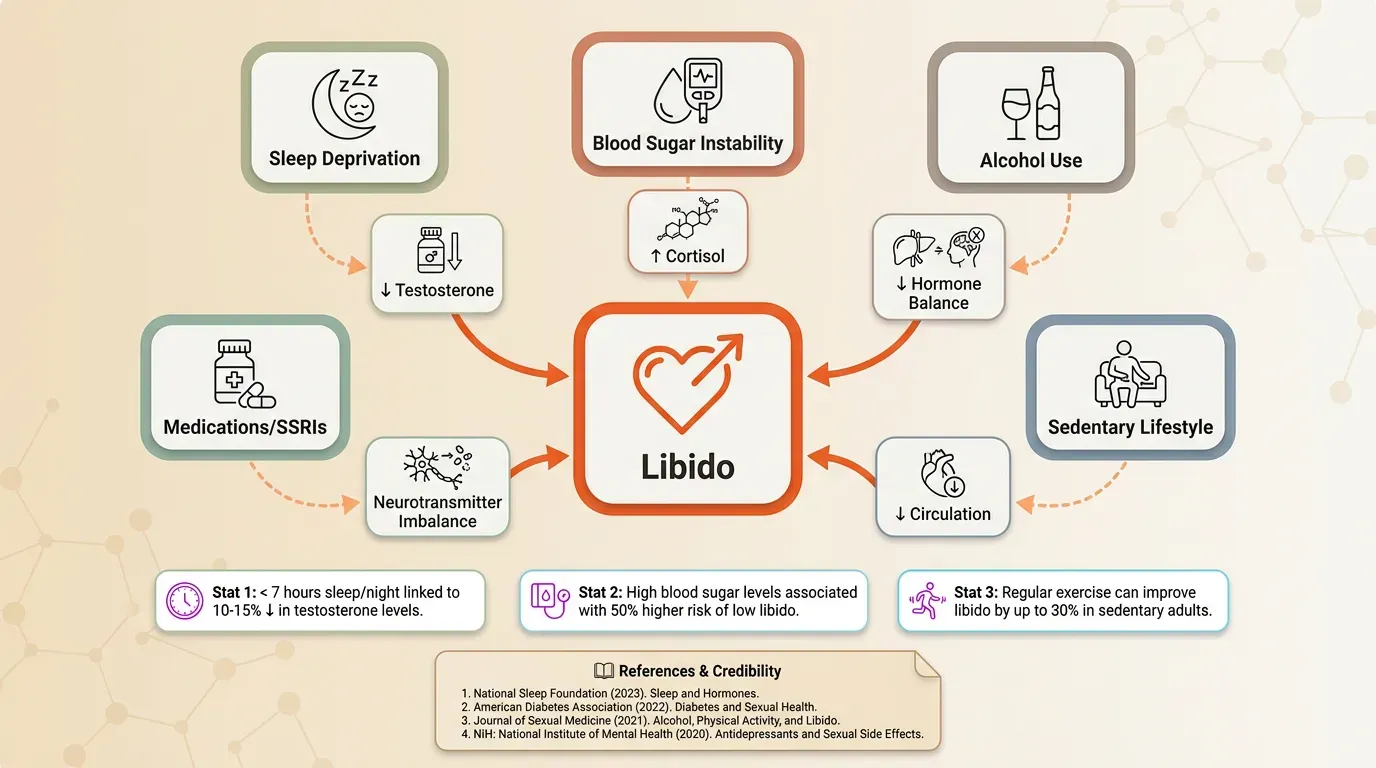
A flat medical infographic showing a central libido icon with lifestyle factors and mechanisms affecting libido, set on a warm beige background.

Sleep loss, blood sugar swings, alcohol, sedentary patterns, weight gain, and overtraining each push hormones in the wrong direction, and most people are running two or three of these at the same time. These are the inputs that turn a manageable hormonal shift into a full libido shutdown.

These factors are worth listing because they're the ones most under personal control:

  • Sleeping under seven hours a night

  • Eating in ways that spike and crash blood sugar

  • Regular alcohol use, even at "social" levels

  • Sitting most of the day

  • Excess body fat, particularly visceral fat

  • Overtraining without adequate recovery

How does poor sleep disrupt desire?

Sleeping less than seven hours flattens the cortisol rhythm and cuts into the overnight window when testosterone is produced, which directly reduces morning desire and energy. The effect shows up fast.

In a 2011 study led by Eve Van Cauter at the University of Chicago, ten healthy young men who slept five hours per night for one week saw testosterone levels drop by 10 to 15 percent, with the lowest levels in the afternoon and evening. That decline matches roughly 10 to 15 years of normal aging compressed into a single week of short sleep. For a midlife adult already losing hormones to age, lost sleep doubles the headwind.

Why does blood sugar instability matter?

Blood sugar swings trigger cortisol and insulin spikes that disrupt sex hormone production and feed fatigue and weight gain, both of which dampen desire. Each crash is a small stress event the adrenals have to manage.

Over time, insulin resistance pushes sex hormone binding globulin in the wrong direction, which reduces free testosterone available to tissues. Stabilizing glucose with protein-forward meals and fewer refined carbohydrates is one of the fastest ways to remove a hidden drag on libido, because it lowers the daily cortisol load without requiring any change to the hormonal prescription.

Can alcohol and medications be culprits?

Yes, and they're routinely overlooked. SSRIs, hormonal contraceptives, certain blood pressure medications, and regular alcohol are among the most common pharmacologic suppressors of libido in midlife.

The SSRI numbers are especially striking. According to a review published in PMC, studies estimate antidepressant-associated sexual dysfunction in 25% to 73% of people treated with an SSRI. When a patient on an SSRI reports low desire, that's the first variable to examine with the prescriber, because changing the agent or adjusting the dose can resolve the issue without touching hormones.

Ready to transform your health?

Book your health assessment with TNT Wellness personalized nutrition, functional medicine, and science-driven care to address the root causes of your symptoms.

Book Your Assessment →

What about relationships and mood?

Relationship strain, body image shifts, identity transitions, anxiety, and depression are not separate from the hormonal picture. They share the same nervous system, and they pull on the same cortisol and oxytocin pathways that hormones depend on.

The data backs this up. The same Australian study of 2,020 midlife women referenced earlier found that moderate to severe depressive symptoms tripled the odds of hypoactive sexual desire disorder, and use of psychotropic medication raised the odds independently. Vaginal dryness and painful intercourse also significantly increased distress, which shows how physical and psychological factors compound.

The clinical lesson is that treating hormones alone in a patient stuck in marital conflict or untreated anxiety produces poor results. Both layers need attention at the same time, because each one keeps the other from resolving. A functional medicine approach treats the relational and emotional inputs as part of the physiology.

How does functional medicine find the root cause?

Functional medicine pinpoints the driver of low libido through a long intake combined with targeted lab testing that maps hormones, metabolic markers, nutrient status, and gut function. The goal is to replace guessing with measurement.

A standard primary care visit checks TSH and estradiol. A functional workup goes wider because the hormonal axis is interconnected with metabolism and inflammation. The Institute for Functional Medicine, the field's main training body, frames this as identifying upstream causes. That shift in framing changes what gets tested and what gets treated.

The practical outcome is that two patients with the same complaint of "low libido" can leave a functional workup with completely different treatment plans, because the actual drivers differ. One patient's labs point to subclinical hypothyroidism and iron deficiency, another's to elevated nighttime cortisol and low free testosterone. Both are valid, and a single TSH or estrogen check would miss them.

Which labs should be considered?

A useful midlife libido workup goes well beyond basic hormone panels. The goal is to capture the sex hormone axis and the nutrient inputs that hormone production depends on.

A practical testing menu includes:

  • Full sex hormone panel, including estradiol, progesterone, total and free testosterone, SHBG, and DHEA-S

  • Complete thyroid panel with TSH, free T3, free T4, reverse T3, and thyroid antibodies

  • Fasting insulin, glucose, and HbA1c

  • Micronutrient testing for vitamin D, B12, iron and ferritin, zinc, and magnesium

  • Gut health and food sensitivity testing where digestive symptoms are present

Running these together is what reveals patterns that single tests miss.

What does a personalized plan look like?

A personalized plan translates lab findings into specific interventions across nutrition, supplementation, stress and sleep work, movement, and where appropriate, bioidentical hormone replacement therapy. The point is to address the actual drivers found in the workup.

For one patient, the plan centers on stabilizing blood sugar and adding magnesium and progesterone support. For another, it involves low-dose testosterone therapy paired with cortisol regulation and pelvic floor work. The North American Menopause Society's 2022 position statement supports individualized hormone therapy for symptomatic women based on personal risk profile, which aligns with how functional plans are built one patient at a time.

What practical steps can restore libido?

Readers can start before lab results come back. The most reliable early moves are prioritizing protein and healthy fats, anchoring sleep at seven to nine hours, doing resistance training twice a week, cutting alcohol, building in a daily stress-down practice, and improving direct communication with a partner.

Resistance training deserves attention because it shifts more than hormone numbers. Research summarized by Lattice Training shows that full-body resistance training produces acute testosterone increases of around 30% in middle-aged and older men, and even when basal testosterone barely shifts, androgen receptor sensitivity improves. The body uses available hormone better. That's why strength training shows up in nearly every credible midlife libido protocol, even when its main effect isn't reflected in a baseline blood draw.

For partners, the communication piece matters more than most people expect. Desire in long relationships responds to feeling safe and valued. Direct conversation about what each person actually wants, separate from sex itself, frequently restores more interest than any supplement.

When should you seek professional support?

Persistent low desire lasting several months, especially when paired with fatigue, weight gain, mood changes, or cycle irregularities, warrants a clinical workup. At that point, more reading and more supplements rarely close the gap.

The threshold matters because midlife symptoms cluster. When libido and mood are off together, the underlying driver is systemic and needs measurement to identify. Trying to fix one symptom at a time extends the timeline and frustrates the patient. A clinician trained in hormone health can run the right panels and build a sequenced plan that addresses several layers at once.

There's no benefit to waiting for symptoms to become severe. Hormone shifts that go unaddressed for years produce changes in bone density and muscle mass that are harder to reverse than the desire issue itself. Getting evaluated earlier in the trajectory keeps more options on the table.

How TNT Wellness helps midlife libido concerns

TNT Wellness is a Charlotte-based functional medicine practice that works with patients facing exactly the midlife pattern described in this article. The practice runs comprehensive functional lab testing covering hormones, gut health, micronutrients, and DNA, then translates results into individualized care.

Patients work one-on-one with the team through customized nutrition plans and bioidentical hormone replacement therapy where indicated. Sessions are offered virtually or in person, which makes it practical for patients across the Carolinas and beyond to stay engaged with the protocol over the months that real hormonal rebalancing takes.

The approach is evidence-based and non-judgmental. Low libido is treated as a health signal that points to identifiable causes. Patients ready to investigate what's actually driving their symptoms can book an initial consultation with TNT Wellness to review their history and begin a plan built around their own labs and goals.

Ready to transform your health?

Book your health assessment with TNT Wellness personalized nutrition, functional medicine, and science-driven care to address the root causes of your symptoms.

Book Your Assessment →

No, low libido doesn’t always mean your hormones are low. Desire can drop from stress, poor sleep, medication effects, depression, relationship strain, thyroid disease, or blood sugar instability. A good evaluation checks hormones, but it also reviews daily habits, medications, mood, and metabolic markers.

No, don’t stop an antidepressant without speaking with your prescriber. Stopping suddenly can cause withdrawal symptoms or a return of depression or anxiety. Ask about options such as dose timing, dose adjustment, switching medications, or adding a treatment that reduces sexual side effects.

Bring a medication and supplement list, recent lab results, and a timeline of when symptoms started. Include changes in sleep, weight, menstrual cycles, erections, mood, pain with sex, and alcohol use. This helps the clinician connect libido changes to patterns that a single lab result can miss.

Yes, pain during sex can lower desire because the brain starts linking intimacy with discomfort. Vaginal dryness, pelvic floor tension, infections, and scar tissue can all contribute. Treatment depends on the cause and can include lubrication, vaginal estrogen when appropriate, pelvic floor therapy, or treatment for infection.

Medical conditions such as anemia, diabetes, sleep apnea, chronic pain, and autoimmune thyroid disease can mimic hormone-related low libido. They affect energy, circulation, mood, or nerve function, which all matter for arousal. Testing should match the full symptom pattern rather than focusing only on sex hormones.

Schedule a Meeting

Book a time that works best for you

You Might Also Like

Discover more insights and articles

Minimalist skincare and cosmetic products arranged on a bright modern countertop with soft natural sunlight and indoor plants

Boosting Mood, Energy, and Libido for Women Over 40

In this article, we explain the underlying hormonal mechanisms of midlife transitions and show how targeted lifestyle strategies restore vitality. We also explore functional testing, metabolic nutrition, and circadian-aligned exercise.

A female doctor in a bright, modern office uses a tablet to review patient information, focused on her task in a professional setting.

Digestive Health Assessment: Symptoms, History, Tests, and Next Steps

This article explains how a structured review of your symptoms and history turns vague gut complaints into decisions you can act on. It covers what a practitioner asks about and which warning signs need medical attention first, so you can walk into an appointment with the information that actually changes the outcome.

A female nutritionist in a bright, minimalist office discusses treatment plans with a patient, using a tablet displaying healthcare data.

Functional Medicine Consultation: How to Prepare and What Happens Next

This article covers what to bring to a first functional medicine consultation and what actually happens during and after the visit. It also explains why testing sometimes comes later than people expect, and what a realistic plan looks like when you walk out.

A woman doctor consults with a patient, shown from behind, in a warm, upscale medical office with natural lighting and soft colors.

How to Choose a Gut Health Specialist for Persistent Digestive Symptoms

This article explains how to pick the right provider when bloating or unpredictable bowel habits have stopped being occasional. It walks through the warning signs that need medical attention now and what each type of provider is actually trained to do.