Economic Value of Recovery
This prompt clinical response provides a direct financial benefit to working professionals. Prolonged illness drains physical energy and damages professional stability. Workers lose valuable days to severe fatigue when they rely on slow-acting oral supplements to fight viral infections. This lost time creates a heavy financial burden for both employees and organizations. Research shows that absenteeism costs $3,600 per hourly employee and $2,650 per salaried employee annually.
When workers evaluate these economic losses, they recognize that investing in immediate medical care makes financial sense. A single IV drip therapy session costs a fraction of the wages lost during a multi-day absence. Patients use this targeted treatment to regain their strength quickly and return to work without prolonged downtime. This strategic intervention provides the confidence that professionals need to maintain their demanding schedules throughout the year.
This medical intervention serves as a calculated health investment that requires analyzing specific economic factors. The cost-benefit scenario involves several key considerations:
-
Lost daily wages from missing work
-
Decreased productivity from working with symptoms
-
Missed professional opportunities during the absence
-
Out-of-pocket expenses for ineffective oral remedies
Intravenous treatments stop symptoms early, protect earning potential, and prevent the compounding costs of extended sick leave. Patients view this physiological support as an essential tool for protecting their livelihood rather than a luxury expense.
True Personalization in IV hydration therapy
Patients secure this essential physiological support when they choose their medical providers carefully. Commercial drip bars commodified intravenous treatments and offer generic menus to walk-in customers. These unregulated facilities sell pre-mixed vitamin bags, but they do not understand the patient's biological needs. Health experts warn that more than 85% of IV clinics recommend specific IV cocktails for symptoms and fail to ask for a medical history. This negligent practice treats complex physiological problems with a one-size-fits-all solution that often fails to deliver lasting energy.
True Personalization in IV Hydration Therapy: A Clinical Approach
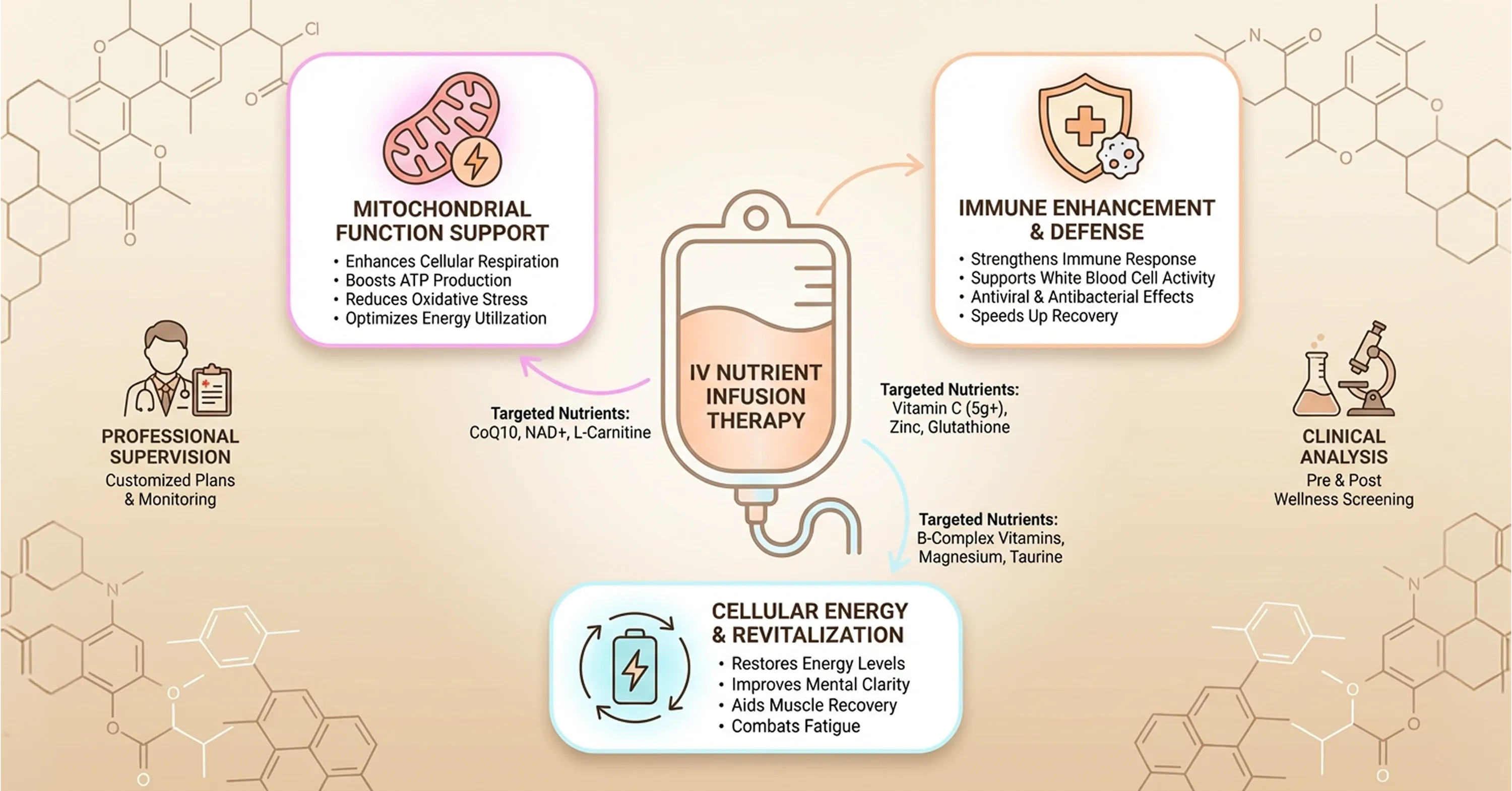
Genuine medical clinics operate differently because they prioritize patient safety over quick sales. In a supervised setting, state medical boards classify IV hydration therapy as a practice of medicine that requires a physician diagnosis and prescription. Functional medicine practitioners review comprehensive blood panels before they insert a single needle. They analyze micronutrient levels to identify exact deficiencies that cause chronic fatigue or weaken immune responses.
This diagnostic step establishes the trust necessary for effective medical interventions. Doctors use the laboratory results to formulate a custom infusion that addresses the metabolic imbalances of the individual. They calculate specific dosages of vitamins and minerals to restore cellular function and avoid overwhelming the kidneys or liver.
Clinical oversight changes a trendy service into a reliable component of a holistic approach to wellness. Medical professionals monitor patients throughout the entire infusion process to prevent adverse reactions and adjust flow rates if necessary. This strict adherence to medical protocols guarantees that the body receives the exact nutrients it requires to accelerate systemic recovery.
Integration Framework
Medical professionals rely on active patient participation to sustain this accelerated systemic recovery. Intravenous treatments accelerate recovery only when patients maintain strong foundational health habits. A medical infusion provides an immediate surge of vitamins and minerals, but it cannot reverse the damage that chronic sleep deprivation or a poor diet causes. Medical professionals prescribe iv hydration therapy to amplify an existing health baseline instead of an independent cure for lifestyle neglect.
Patients achieve lasting energy restoration when they pair clinical treatments with a holistic approach to wellness. The infusion delivers necessary raw materials to the cells, while daily habits dictate how efficiently the body uses those nutrients. A sound nutritional diet and consistent oral hydration provide the metabolic stability that sustains the benefits of an intravenous treatment over time. This integration ensures the soundness of the overall medical strategy.
Integrating IV Therapy Into a Holistic Health Strategy
When patients pursue a healthy lifestyle, they use IV drip therapy to address specific physiological deficits and actively improve their daily routines. They combine targeted detoxification protocols with restorative sleep to maximize cellular repair. This thorough method gives patients the certainty that their immune system can handle acute physical stress effectively.
Medical practitioners recommend a structured approach to integrate these restorative infusions with daily health practices:
-
Patients assess current sleep patterns and dietary habits.
-
Doctors identify persistent fatigue symptoms that require medical intervention.
-
Clinics schedule clinical infusions during periods of high physical stress.
-
Patients maintain optimal oral water intake between intravenous sessions.
Conclusion
These structured health practices determine the long-term success of any clinical infusion. To summarize the major points, optimal health requires a foundation of adequate sleep, whole foods, and daily hydration. An isolated IV hydration therapy session cannot replace these fundamental lifestyle habits. These treatments serve as an amplifier for an already established baseline rather than a standalone cure.
Patients receive safe treatments when registered nurses and functional medicine practitioners use clinical data. They benefit from supervision that ensures the appropriate balance of nutrients for specific physiological needs. In the future, they will secure a sustainable path to enhanced energy and recovery by combining consistent lifestyle practices with targeted medical interventions. To achieve lasting benefits, patients take the next step by implementing a broad hydration strategy and evaluating providers carefully before scheduling any infusion.