TNT Wellness

Hormone Therapy for Insomnia: Restoring Sleep Patterns

Content authorBy Paige Schreiber, FNPPublished onReading time10 min read
woman-sleeping-peacefully-bed-natural-morning-light

In this article, we explore how specific hormonal imbalances disrupt natural sleep cycles and cause chronic nighttime wakefulness. We also discuss the limitations of conventional sleep medications and explain why functional medicine testing offers a precise path to resolve insomnia.

Introduction

Chronic nighttime wakefulness affects many people. Researchers estimate that approximately 10% of adults suffer from insomnia disorder, and another 20% experience occasional insomnia symptoms. Many individuals often practice perfect sleep hygiene and take conventional sleep aids, but they still toss and turn for hours every night. Conventional medicine usually treats this chronic insomnia as a standalone issue and masks the symptoms. However, this persistent sleep disruption frequently signals hidden metabolic and circadian dysfunctions. Physicians evaluate cortisol, thyroid, and sex hormones to understand these systemic issues.

These doctors deeply investigate specific endocrine drivers. They use advanced functional testing to reveal the exact imbalances that prevent restorative sleep. This thorough diagnostic approach allows these practitioners to develop specific protocols that restore natural sleep patterns. Because of this, individuals increasingly explore hormone therapy for insomnia to treat the physiological origins of their sleep disruption, and they avoid generic supplementation or standard sedatives.

Conventional Treatments Limitations

When individuals avoid standard sedatives, they recognize that standard sleep medications and basic lab tests fail to resolve persistent hyperarousal. Doctors often prescribe sedatives to force the brain into an unconscious state. These sedatives bypass the natural sleep cycle and leave individuals feeling groggy the next morning. Generic supplements also mask symptoms, but they fail to address the physiological origins of sleep disruption.

The Side Effects and Limitations of Conventional Sleep Treatments

Conventional treatments often cause undesirable side effects. Researchers studied the effects of zolpidem because doctors frequently prescribe this medication. These researchers found that older adults who take zolpidem show a 58% incidence of balance loss if someone wakes them after two hours. They also noted that cognitive impairments from zolpidem are more than twice as large compared to placebo in older adults.

Standard sedatives affect patients through specific mechanisms:

  • Delay natural melatonin production

  • Alter standard brain wave patterns

  • Create chemical dependency

Chemical sedation masks symptoms, but it fails to address the underlying causes of sleep deprivation. Medical professionals must look beyond standard sedatives to treat chronic sleep issues effectively. For instance, a clinic treated a middle-aged woman with a five-year history of severe sleep deprivation. This patient took prescribed sedatives every night but still woke up exhausted. Her doctors stopped the sedatives and tested her endocrine system. The medical team discovered severe imbalances and changed her treatment plan. These doctors used hormone therapy for insomnia to restore the patient's natural circadian rhythm. Similarly, medical professionals prescribe hormone therapy for low energy to help patients recover from chronic fatigue after restless nights.

Endocrine Disruptors Influence Sleep Architecture

Patients experience restless nights when imbalances disrupt the hormonal-sleep axis, and this axis regulates how the human body transitions between different stages of rest. This system produces chemical messengers that tell the brain when to feel tired and when to wake up. Specific endocrine imbalances directly interfere with these sleep stages and circadian rhythms.

Unbalanced chemical messengers cause the body to lose its capability to maintain a steady sleep architecture. Patients wake up at odd hours and struggle to fall back asleep because their bodies stay alert. Medical studies show that Central Nervous System hyperarousal connects to insomnia through a 24-hour cortisol secretion increase.

The sleep and endocrine system connection requires close attention from medical professionals. Patients lack physical strength during the day when hormonal imbalances disrupt their rest at night. Glands that produce abnormal amounts of specific hormones prevent the brain from reaching deep sleep stages. Doctors correct these imbalances to help the body rebuild a normal sleep pattern.

Ready to transform your health?

Book your health assessment with TNT Wellness personalized nutrition, functional medicine, and science-driven care to address the root causes of your symptoms.

Book Your Assessment →

Cortisol Adrenal Testing For Sleep Disorders

Doctors help the body rebuild a normal sleep pattern when they treat disrupted daily cortisol rhythms that cause nighttime hyperarousal and prevent people from resting. This hormone acts as the primary stress indicator in the body. The adrenal glands release high amounts of cortisol in the morning to wake the body up, and they reduce these levels at night to allow for sleep.

Adrenal dysfunction causes the glands to release cortisol at the wrong times. A sudden cortisol spike at midnight forces the brain awake and triggers a stress response. Doctors use cortisol and adrenal testing to identify these exact daily pattern disruptions. These precise diagnostics map the hormone levels across a full twenty-four hours.

This detailed map gives medical practitioners data to design customized treatments. Doctors use this information to target the specific hours when hormone levels spike or crash. For example, medical professionals prescribe hormone therapy for low energy to support patients with underactive adrenal glands. Medical experts restore the natural cortisol curve to eliminate the nighttime spikes that cause chronic wakefulness.

Thyroid Function Causes Nighttime Wakefulness

While doctors eliminate nighttime spikes from cortisol, they also investigate undetected subclinical hypothyroidism because it prolongs sleep latency and reduces overall sleep duration. The thyroid gland controls energy usage and regulates metabolism. A sluggish thyroid causes every cellular process in the body to slow down simultaneously.

This metabolic slowdown creates severe sleep disturbances. Medical data shows that subclinical hypothyroidism affects up to 18% of the general population, and it primarily impacts women and elderly individuals. Standard medical evaluations often miss this condition because routine blood tests check basic hormone levels rather than thorough thyroid panels.

Researchers confirm that subclinical hypothyroidism leads to longer sleep latency, shorter sleep duration, and increased sleep disturbance. Patients lie in bed for hours while they wait to fall asleep. Doctors identify these hidden thyroid issues to correct the patient's sleep schedule. Specialists recommend hormone therapy for insomnia to reverse the metabolic slowdown. Proper thyroid support warms the body, speeds up cellular repair, and helps the brain transition into deep sleep phases.

Sex Hormone Imbalances Cause Sleep Disruption

Even when proper thyroid support helps the brain transition into deep sleep phases, decreased estrogen and irregular progesterone ratios disrupt Rapid Eye Movement sleep. These specific hormonal shifts severely degrade sleep architecture during perimenopause and menopause. Women often experience sudden nighttime awakenings and hot flashes that ruin their rest.

Estrogen naturally calms the brain at night. Studies show that estrogen inhibits specific awakening neurotransmitters like acetylcholine, histamine, and noradrenaline. A drop in estrogen levels during menopause causes these chemicals to spike and shock the brain into a conscious state. Furthermore, researchers note that low estrogen levels reduce melatonin production, and this reduction contributes to perimenopausal sleep disturbances.

Progesterone also acts as a natural relaxant. Patients lose the calming effect that protects their Rapid Eye Movement sleep when progesterone levels fall out of balance with estrogen. Functional medicine testing identifies these exact hormone ratios to guide clinical decisions. Doctors use this data to prescribe targeted bioidentical hormones and specific micronutrients like magnesium. This customized approach stabilizes brain chemistry and restores uninterrupted sleep.

Ready to transform your health?

Book your health assessment with TNT Wellness personalized nutrition, functional medicine, and science-driven care to address the root causes of your symptoms.

Book Your Assessment →

Functional Medicine Test Advantage

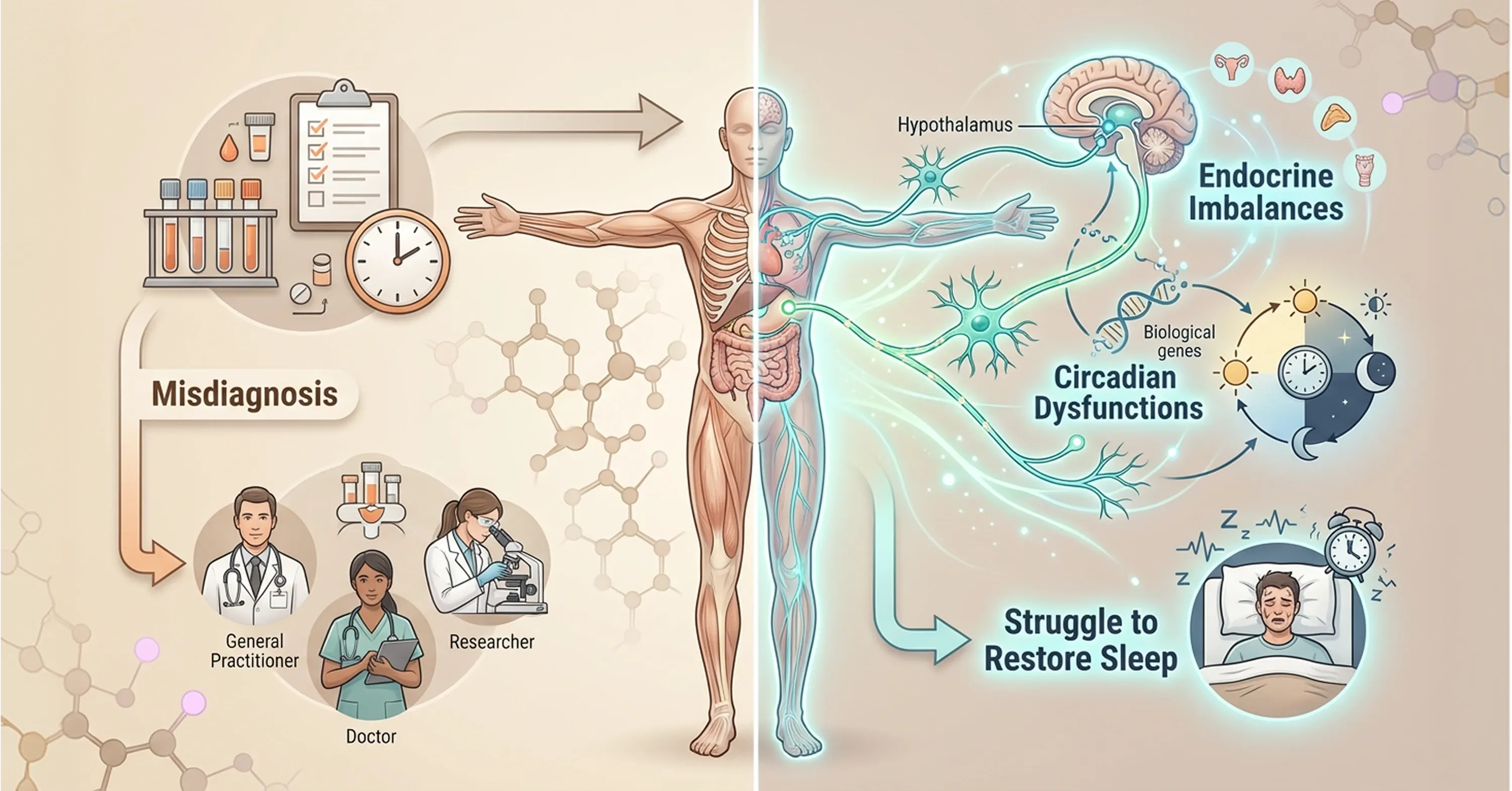
Infographic showing how sleep disorders are misdiagnosed due to endocrine imbalances and circadian rhythm dysfunction affecting the human body

Patients struggle to restore uninterrupted sleep because standard medical evaluations often miss the underlying endocrine imbalances that cause chronic nighttime wakefulness. General practitioners usually order basic blood tests that capture a single moment in time. This limited snapshot fails to provide the clarity needed to diagnose complex circadian dysfunctions. For instance, researchers note that test interference occurs in approximately 1% of thyroid evaluations. This interference causes misdiagnosis when doctors rely solely on basic panels.

How Functional Medicine Uses Advanced Diagnostics to Identify Sleep Disorders

Functional medicine practitioners take a different approach. They use advanced functional diagnostics to map hormone fluctuations throughout the entire day.

These specialists execute specific diagnostic steps to gather detailed data and design precise treatments:

  1. Evaluate circadian rhythms with four-point salivary tests.

  2. Analyze complete thyroid function beyond basic thyroid stimulating hormone levels.

  3. Measure exact estrogen and progesterone ratios.

This detailed data gives practitioners the assurance to prescribe targeted treatments. When tests reveal daytime adrenal fatigue, doctors might recommend hormone therapy for low energy. If nighttime spikes emerge, doctors apply targeted cortisol and adrenal testing protocols to calm the nervous system. For example, one clinic treated a male patient who suffered from severe insomnia for a decade. Standard blood work always showed normal results. Once the clinic ran a four-point salivary panel, the doctors discovered severe cortisol spikes at two in the morning. Medical professionals stop guessing and treat the source of the problem directly when they have access to detailed endocrine maps. Advanced diagnostics replace generic prescriptions with exact physiological solutions.

Integrative Protocols: Hormone Therapy for Insomnia

After advanced diagnostics provide exact physiological solutions, functional medicine practitioners use detailed test results to design integrative protocols that restore natural circadian rhythms. Doctors combine bioidentical hormones with targeted micronutrients and cognitive behavioral adjustments. This multifaceted approach addresses the endocrine-sleep axis directly. When practitioners prescribe hormone therapy for insomnia, they use bioidentical substances that match the body's natural chemical structures. Clinical studies show that sleep quality scores improved from 7.8 to 6.1 after one month of therapy with estradiol and micronized progesterone.

Why Bioidentical Hormones and Micronutrients Improve Sleep Quality

These bioidentical hormone treatments stabilize brain chemistry and prevent sudden nighttime awakenings. Practitioners also integrate specific micronutrients to support hormone metabolism and calm the central nervous system. Medical trials demonstrate that magnesium bisglycinate reduces insomnia severity index scores by 28%, compared to an 18% reduction for placebo. Doctors help patients regulate their sleep schedules when they pair these biological interventions with cognitive behavioral adjustments.

How Personalized Hormone Protocols Replace Sleeping Pills

Because functional medicine treats the whole system, patients recover from multiple symptoms simultaneously. Patients who receive hormone therapy for low energy during the day naturally sleep better at night. Doctors rely on cortisol and adrenal testing to adjust medication dosages and match the patient's unique biological clock. This precise calibration eliminates the need for harsh sedatives. For instance, a female patient at a wellness center took sleeping pills for years that left her groggy. Her doctor transitioned her to a customized bioidentical progesterone protocol and magnesium supplementation.

Within two months, she slept through the night and woke up refreshed. Medical professionals help patients sleep deeply when they treat the physiological root causes directly.

Conclusion

To summarize the major points, functional medicine practitioners treat the physiological root causes directly when they identify the exact hormonal drivers of sleep disruption as the key to recovery. These professionals know that standard sedatives fail to resolve the root metabolic and circadian dysfunctions that cause chronic wakefulness. They use thorough functional tests of cortisol, thyroid, and sex hormones to gather data and design custom clinical protocols. They treat these root causes so the body achieves deep, restorative sleep naturally. Future research will likely show how precise diagnostics improve sleep outcomes for individuals with endocrine imbalances. An initial consultation with a functional medicine practitioner helps determine if hormone therapy for insomnia offers an effective solution.

Ready to transform your health?

Book your health assessment with TNT Wellness personalized nutrition, functional medicine, and science-driven care to address the root causes of your symptoms.

Book Your Assessment →

You usually notice better sleep within two to four weeks after beginning treatment. Your body needs this time to adjust to the new chemical balance and reset its schedule. Some people experience restored sleep patterns within three months of consistent therapy.

Many insurance providers cover standard blood panels, but they often reject claims for salivary or endocrine tests. You should check your policy benefits before scheduling tests. Clinics like TNT Wellness accept insurance and help you understand your coverage options for functional diagnostics.

You can eat protein-rich foods and complex carbohydrates earlier in the day to stabilize your blood sugar. These choices prevent the midnight glucose crashes that trigger nighttime cortisol spikes. Limiting caffeine and alcohol after lunch also helps your body maintain a steady sleep cycle.

Men benefit from hormone therapy for insomnia when low testosterone or high cortisol disrupts their rest. Doctors evaluate male endocrine profiles to identify the deficiencies causing hyperarousal. They then prescribe appropriate testosterone replacement to deepen sleep and restore daytime energy.

Over-the-counter supplements like melatonin or valerian root offer temporary relief but fail to fix endocrine imbalances. You need targeted medical interventions to repair a damaged biological clock. Doctors must identify and treat your chemical deficiencies to achieve lasting sleep recovery.

Schedule a Meeting

Book a time that works best for you

You Might Also Like

Discover more insights and articles

Minimalist skincare and cosmetic products arranged on a bright modern countertop with soft natural sunlight and indoor plants

Boosting Mood, Energy, and Libido for Women Over 40

In this article, we explain the underlying hormonal mechanisms of midlife transitions and show how targeted lifestyle strategies restore vitality. We also explore functional testing, metabolic nutrition, and circadian-aligned exercise.

A female doctor in a bright, modern office uses a tablet to review patient information, focused on her task in a professional setting.

Digestive Health Assessment: Symptoms, History, Tests, and Next Steps

This article explains how a structured review of your symptoms and history turns vague gut complaints into decisions you can act on. It covers what a practitioner asks about and which warning signs need medical attention first, so you can walk into an appointment with the information that actually changes the outcome.

A female nutritionist in a bright, minimalist office discusses treatment plans with a patient, using a tablet displaying healthcare data.

Functional Medicine Consultation: How to Prepare and What Happens Next

This article covers what to bring to a first functional medicine consultation and what actually happens during and after the visit. It also explains why testing sometimes comes later than people expect, and what a realistic plan looks like when you walk out.

A woman doctor consults with a patient, shown from behind, in a warm, upscale medical office with natural lighting and soft colors.

How to Choose a Gut Health Specialist for Persistent Digestive Symptoms

This article explains how to pick the right provider when bloating or unpredictable bowel habits have stopped being occasional. It walks through the warning signs that need medical attention now and what each type of provider is actually trained to do.