TNT Wellness

Hormone Therapy for Erectile Dysfunction Support: What Men Should Know

Content authorBy Paige Schreiber, FNPPublished onReading time11 min read
Doctor explaining health test results on a tablet during a patient consultation in a modern clinic.

In this article, we examine the systemic root causes of sexual health challenges and explain why isolated symptom management frequently fails. We explore the interconnected nature of metabolic health, chronic stress, and hormonal balance to provide a complete framework for lasting recovery.

Introduction

Sexual health challenges affect millions of men worldwide. Medical professionals historically treated these issues as isolated mechanical problems or simple hormonal deficiencies. Doctors often prescribe medications that force increased blood flow or provide synthetic testosterone replacements. These approaches can offer relief, but they do not address the underlying mechanisms that drive the problem. Research shows that 35% of men do not respond to testosterone replacement therapy despite normalized hormone levels. This failure rate reveals the limitations of viewing sexual function through a single hormonal lens.

Functional medicine uncovers the complex network of interconnected bodily systems that regulate sexual health. Functional medicine doctors investigate systemic inflammation, metabolic pathways, and endocrine imbalances to identify the root causes of these health challenges. Understanding this thorough framework explains why previous treatments fail and shows how a personalized plan creates the necessary environment for hormone therapy for erectile dysfunction support.

Shortcomings of Conventional Treatments

Without this personalized plan, standard medications fail to provide long-term results consistently. Many patients experience initial success with Phosphodiesterase type 5 (PDE-5) inhibitors or basic testosterone replacement therapy (TRT), but these men frequently see their benefits fade.

For example, a 52-year-old patient started standard testosterone injections. He noticed improved energy and morning erections during the first three months. By month six, his symptoms returned even though his blood tests showed optimal hormone levels. His doctor only treated the symptoms and ignored the underlying metabolic health issues. This conventional approach lacks the certainty required for sustainable recovery. Medical research shows that normal testosterone levels do not guarantee normal erectile function because men reach a hormonal threshold beyond which additional testosterone provides no further improvement.

Systemic Factors Often Overlooked in Treatment

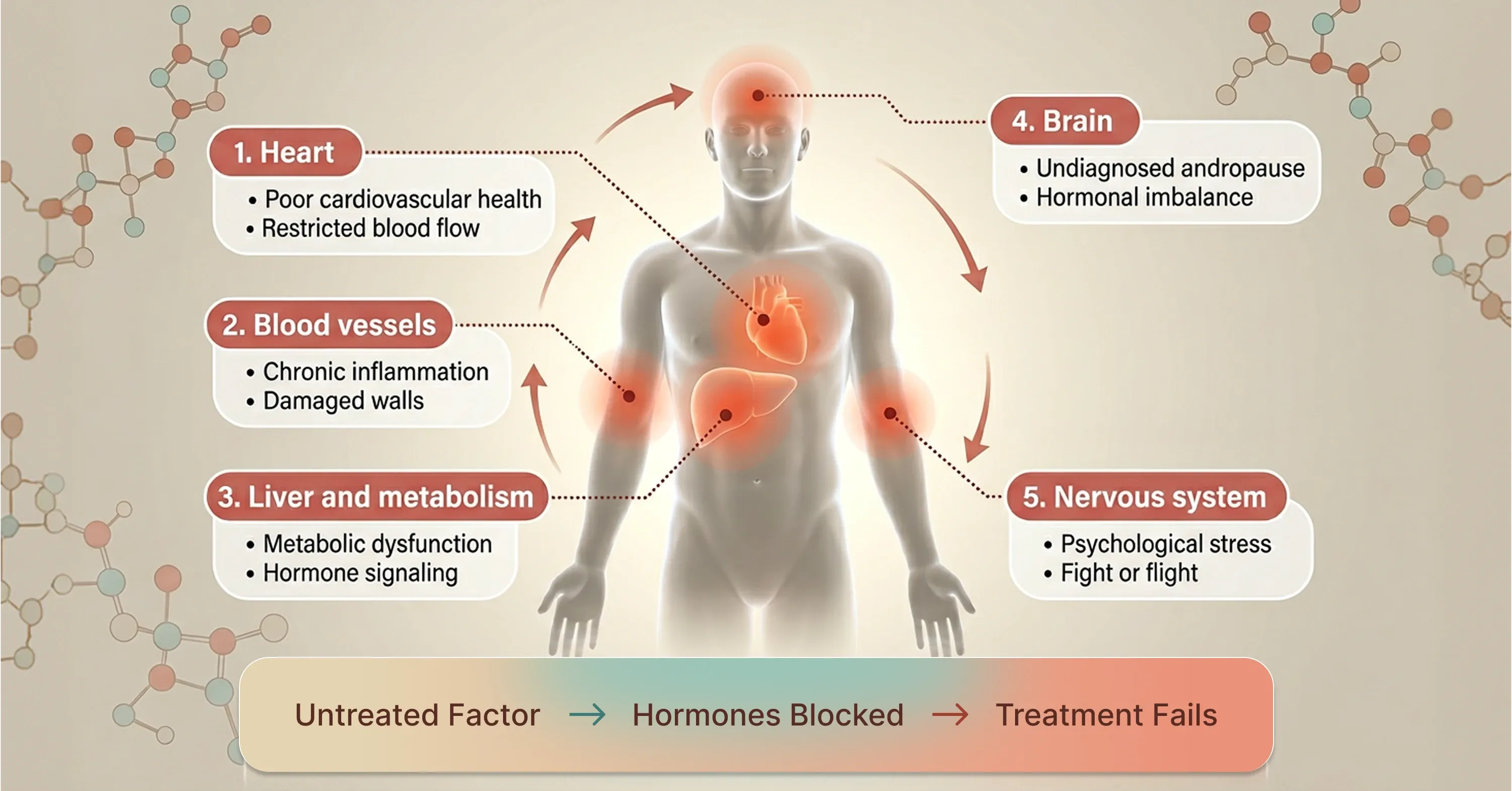
Medical diagram showing how hormonal imbalance affects the heart, blood vessels, liver metabolism, brain, and nervous system

To understand why treatments fail, doctors must examine how the body processes hormones and evaluate overall systemic health rather than isolated symptoms. When these underlying issues go untreated, standard medications eventually stop working because hormones cannot effectively reach their target tissues. Patients need a treatment approach that addresses foundational health before introducing exogenous hormones.

Conventional therapies typically overlook several crucial factors:

  • Poor cardiovascular health that restricts blood flow

  • Chronic inflammation that damages blood vessels

  • Metabolic dysfunction that disrupts hormone signaling

  • Undiagnosed andropause symptoms that require thorough care

  • Psychological stress that overrides physical arousal

When doctors ignore these systemic issues, standard medications eventually stop working. If doctors prescribe testosterone and do not repair the damaged vascular system first, patients miss out on lasting improvements because the hormones cannot reach their intended cellular destinations. These patients need a different approach that addresses their foundational health before adding exogenous hormones.

Treatment Sequence Before Hormone Therapy for Erectile Dysfunction Support

Functional medicine practitioners address this foundational health and approach sexual health with a specific order of operations. These practitioners repair the foundational body systems before they introduce hormone therapy for erectile dysfunction support. This sequencing method prevents treatment failures and builds a strong biological foundation. If a patient receives testosterone while his body suffers from severe inflammation, the therapy fails to work optimally. The inflamed tissues reject the hormonal signals and prevent cellular absorption.

Restoring Foundational Health Before Hormone Treatment

Doctors need conviction when they design these sequential treatment plans. They must first identify and fix gastrointestinal problems, metabolic imbalances, and chronic stress. This systematic repair process clears the pathways for hormones to travel and attach to the correct cellular receptors. When the vascular system operates efficiently, the body can actually use the new hormones.

When doctors skip these foundational steps, patients experience endless dosage adjustments and frustration. Medical professionals who establish proper cellular health first ensure that subsequent therapies succeed. A healthy metabolic environment helps the endocrine system accept and process external hormones naturally. Patients who follow this proper sequence experience long-term recovery instead of temporary symptom relief. This methodical preparation creates the exact conditions necessary for lasting sexual vitality.

Ready to transform your health?

Book your health assessment with TNT Wellness personalized nutrition, functional medicine, and science-driven care to address the root causes of your symptoms.

Book Your Assessment →

Gut Health Repair to Reduce Inflammation

This methodical preparation begins in the digestive tract because the gastrointestinal microbiome plays a major role in regulating systemic inflammation. When harmful bacteria outnumber beneficial bacteria in the digestive tract, the body enters a state of chronic immune response. This gut imbalance damages the delicate inner lining of blood vessels throughout the body. These damaged blood vessels restrict blood flow and directly cause erectile dysfunction.

Patients must regain control over their digestive health to heal their vascular system. A recent medical study demonstrates that dysbiosis causes systemic inflammation and hormonal imbalances that collectively impair sexual performance. A healed gut lining stops the leakage of toxins into the bloodstream. This reduction in inflammation helps the endothelial cells produce nitric oxide naturally. Adequate nitric oxide production relaxes the blood vessels and restores proper sexual function.

Blood Sugar Optimization to Support Metabolism

Even with adequate nitric oxide production, insulin resistance creates a major barrier to successful hormonal treatments. When the body struggles to process glucose, high blood sugar levels damage the nerves and arteries responsible for arousal. This metabolic dysfunction disrupts the entire endocrine network and restricts normal blood flow. Doctors must focus on stabilizing blood sugar levels as a primary solution before prescribing testosterone.

Research confirms the strong link between metabolic health and sexual performance. A clinical study found that patients who experience sexual performance issues have an elevated insulin resistance index compared to healthy individuals. Men can improve their insulin sensitivity by following proper dietary guidelines and engaging in regular exercise. Lower blood sugar reduces arterial stiffness and helps hormones circulate freely.

Solutions for Stress-Induced Sexual Dysfunction

Even when hormones circulate freely, chronic stress constantly floods the body with cortisol and disrupts the entire endocrine network. High cortisol levels signal the brain to shut down non-essential functions, such as reproduction. When the nervous system remains stuck in a sympathetic "fight or flight" state, the physical mechanisms required for arousal fail to activate. This stress response directly contributes to psychological and physical sexual dysfunction.

Daily stress management restores parasympathetic dominance and helps the body relax. Clinical observations show that a high cortisol awakening response correlates with perceived stress in patients facing sexual health challenges. Patients feel empowered when they learn how to regulate their nervous system. Lower cortisol levels naturally encourage the brain to resume normal testosterone production and facilitate healthy sexual responses.

Integrated Endocrine System Framework

This normal testosterone production relies on the fact that the human body operates as a complex network of interacting hormones rather than a collection of isolated chemicals. Doctors must evaluate the entire endocrine system to find a lasting solution for sexual health challenges. Thyroid hormones, cortisol, prolactin, and estrogen all work together to dictate physical arousal and energy levels. Physicians who only check total testosterone miss the broader picture of how these hormones influence each other.

A thorough hormonal assessment provides better diagnostic insights than a simple testosterone check. For example, high prolactin levels can suppress testosterone production and eliminate sexual desire. Similarly, poor thyroid function slows down metabolism and reduces the energy required for intimacy. Men also need to monitor their Sex Hormone-Binding Globulin (SHBG) levels. High SHBG binds to testosterone and prevents the body from using it effectively.

Ready to transform your health?

Book your health assessment with TNT Wellness personalized nutrition, functional medicine, and science-driven care to address the root causes of your symptoms.

Book Your Assessment →

Hormone Balance and Ratios Influence Sexual Health

The balance between different hormones matters just as much as the individual hormone levels. Medical evidence indicates that an elevated estradiol-to-testosterone ratio acts as an independent risk factor for organic erectile dysfunction in young men with normal testosterone levels. Doctors use this ratio to identify underlying estrogen dominance that ruins sexual vitality. Medical professionals who evaluate the complete endocrine framework bring certainty to the diagnostic process. This detailed approach ensures that hormone therapy for erectile dysfunction support addresses the specific imbalances that cause the problem.

Total Testosterone Measurements

Medical professionals must address these specific imbalances, and they need clarity when they evaluate testosterone levels because total testosterone measurements rarely tell the whole story. Total testosterone represents the entire amount of the hormone that circulates in the bloodstream. However, the body cannot use most of this hormone. The liver produces the Sex Hormone-Binding Globulin (SHBG) protein. This protein attaches to testosterone and transports it through the body. Once SHBG binds to testosterone, the hormone becomes inactive and unavailable for cellular use.

Only free testosterone remains available to support physical arousal. Medical studies demonstrate that men with high SHBG and low free testosterone face a 4.61-fold increased risk for sexual dysfunction. If doctors only check total testosterone, they miss the underlying chemical imbalances that block sexual function.

Estradiol Balance and Hormone Interaction

Doctors evaluate the estradiol-to-testosterone ratio to understand how hormones interact within the body. High estrogen levels often neutralize the benefits of healthy testosterone production. Men naturally convert some testosterone into estrogen, but metabolic dysfunction accelerates this conversion process. Patients who notice signs they need hormone replacement require comprehensive testing that measures free testosterone, SHBG, and estradiol. These specific markers provide an accurate picture of hormonal health and guide the selection of more advanced treatment methods.

Advanced Regenerative Treatment Options

This accurate picture of hormonal health guides doctors when they implement advanced regenerative treatments to restore tissue health after they repair the foundational body systems. These advanced protocols work best when the patient addresses metabolic health first. The body needs a healthy environment to heal itself. Personalized bioidentical hormone delivery methods and regenerative technologies create powerful synergistic effects. Clinical research shows that impaired nitric oxide bioavailability acts as the major pathogenic mechanism that causes organic sexual dysfunction across cardiovascular and metabolic diseases. Doctors combine several modern therapies to increase nitric oxide production and rebuild damaged blood vessels.

Common regenerative treatments used in these protocols include:

  1. Bioidentical hormone pellets provide a steady release of testosterone that mimics the body's natural endocrine rhythms.

  2. Acoustic shockwave therapy stimulates the growth of new blood vessels in the affected tissue.

  3. Platelet-rich plasma injections deliver concentrated healing factors to repair damaged cellular structures.

These regenerative protocols give patients strong control over their physical recovery. When patients combine these vascular repairs with customized hormone therapy for erectile dysfunction support, they experience significant benefits. The repaired blood vessels efficiently transport the new hormones to the proper cellular receptors. This dual approach ensures that the physical mechanisms of arousal function correctly. This comprehensive treatment strategy establishes the groundwork for a lasting recovery plan.

Sustainable Actionlan

This lasting recovery plan requires a cohesive strategy that integrates daily lifestyle habits with targeted medical interventions to maintain long-term sexual vitality. Patients maintain their nutritional routines and stress management practices even after they start to feel better. For example, a 45-year-old executive struggled with severe performance issues. He initially adopted a systems-based approach to heal his gut lining and stabilize his blood sugar. After he completed these foundational repairs, his doctor prescribed customized hormone therapy for erectile dysfunction support.

The executive also committed to a daily walking routine and a strict sleep schedule. This comprehensive approach yielded strong results. A large clinical trial from the Cleveland Clinic demonstrates the power of this methodology. The researchers found that 31% of patients improved their physical health scores by a clinically meaningful margin within six months.

Long-Term Commitment to Metabolic Health

Men either resolve their underlying metabolic issues, or they accept a lifetime of diminishing returns from standard medications. Patients who follow this path regain control over their biological health. They do not mask their symptoms with temporary pills. Instead, they implement a permanent solution that supports their entire endocrine system. Continuous lifestyle modifications ensure that the body processes exogenous hormones efficiently year after year. This sustained effort protects the vascular network and preserves healthy sexual function as men age.

Conclusion

This preserved sexual function demonstrates why a reliable systemic approach works better than endless adjustments to individual hormone levels. Medical professionals treat the underlying conditions to create the necessary environment for long-term health and sustainable results. Medical researchers will continue to develop sophisticated methods that analyze the complex interactions between gut health, metabolic pathways, and the endocrine system.

These advancements will give patients greater control over their sexual vitality. A functional medicine consultation helps diagnose these underlying conditions. A personalized plan that integrates targeted treatments with precise bioidentical hormone replacement protocols ensures that hormone therapy for erectile dysfunction support delivers the most reliable path forward.

Ready to transform your health?

Book your health assessment with TNT Wellness personalized nutrition, functional medicine, and science-driven care to address the root causes of your symptoms.

Book Your Assessment →

You'll typically notice changes within three to six months after you start your recovery plan. Your body needs this time to heal damaged blood vessels and restore normal digestion. This timeline depends on your commitment to dietary changes and stress management routines.

You should consult a functional medicine practitioner who assesses your baseline health. TNT Wellness offers detailed lab testing and personalized care plans that target gut discomfort and hormone imbalances. These professionals combine advanced diagnostics with targeted nutrition to rebuild your biological health.

Many insurance plans cover the initial blood panels and medical consultations that diagnose your condition. However, you'll need to pay out of pocket for regenerative treatments and customized hormone therapy for erectile dysfunction support. You should contact your insurance provider to verify your coverage details.

You'll want to eat fermented foods like kimchi and sauerkraut to introduce helpful bacteria into your gut. You also need to consume leafy greens and berries because they provide antioxidants that protect your blood vessels. These foods naturally improve your immune response.

Your brain produces most of its daily testosterone during the rapid eye movement phase of sleep. If you don't sleep at least seven hours, you disrupt this natural production cycle. A consistent sleep schedule helps your nervous system relax and supports your recovery.

Schedule a Meeting

Book a time that works best for you

You Might Also Like

Discover more insights and articles

Minimalist skincare and cosmetic products arranged on a bright modern countertop with soft natural sunlight and indoor plants

Boosting Mood, Energy, and Libido for Women Over 40

In this article, we explain the underlying hormonal mechanisms of midlife transitions and show how targeted lifestyle strategies restore vitality. We also explore functional testing, metabolic nutrition, and circadian-aligned exercise.

A female doctor in a bright, modern office uses a tablet to review patient information, focused on her task in a professional setting.

Digestive Health Assessment: Symptoms, History, Tests, and Next Steps

This article explains how a structured review of your symptoms and history turns vague gut complaints into decisions you can act on. It covers what a practitioner asks about and which warning signs need medical attention first, so you can walk into an appointment with the information that actually changes the outcome.

A female nutritionist in a bright, minimalist office discusses treatment plans with a patient, using a tablet displaying healthcare data.

Functional Medicine Consultation: How to Prepare and What Happens Next

This article covers what to bring to a first functional medicine consultation and what actually happens during and after the visit. It also explains why testing sometimes comes later than people expect, and what a realistic plan looks like when you walk out.

A woman doctor consults with a patient, shown from behind, in a warm, upscale medical office with natural lighting and soft colors.

How to Choose a Gut Health Specialist for Persistent Digestive Symptoms

This article explains how to pick the right provider when bloating or unpredictable bowel habits have stopped being occasional. It walks through the warning signs that need medical attention now and what each type of provider is actually trained to do.