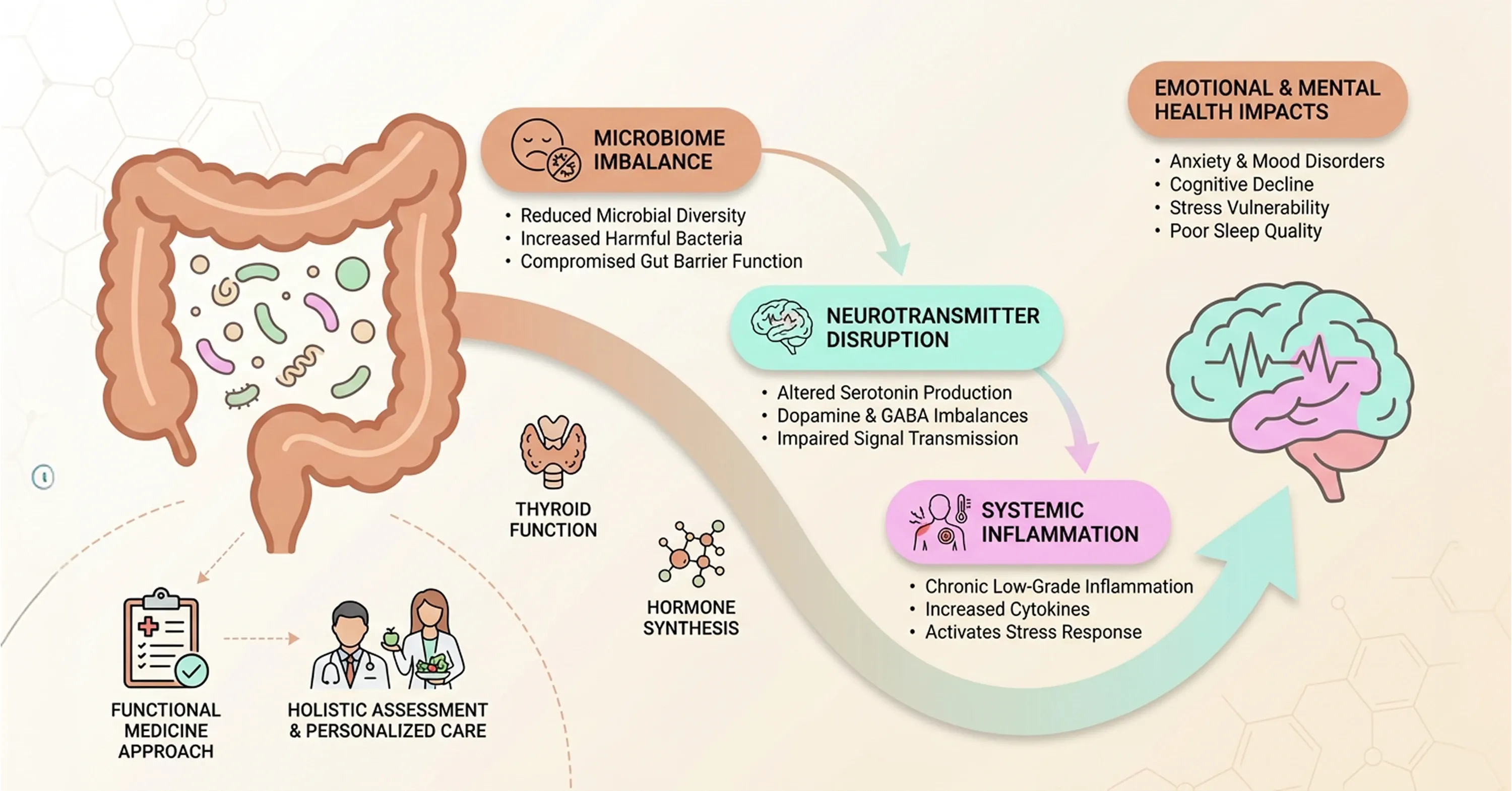
Functional Tests Versus Conventional Labs
Doctors must order tests to identify these chemical signals, but standard bloodwork often misses subclinical endocrine dysfunction that drives persistent mood disorders. Conventional doctors rely on limited reference ranges that do not flag minor abnormalities. Basic blood tests fail to show how hormones interact with each other throughout the day. This narrow scope leaves patients without answers when their hormone levels fall within standard bounds but remain suboptimal for mental health.
How Advanced Hormone Testing Reveals the Root Cause
Advanced biomarker tests provide a clearer diagnostic picture. Functional practitioners order detailed panels because functional medicine evaluates thyroid and sex hormone levels through advanced methods. This thorough approach reveals subtle imbalances that standard panels overlook. If a patient lacks the right balance of cortisol and Dehydroepiandrosterone, the adrenal system falters and triggers constant worry. Practitioners measure these specific biomarkers accurately to help patients regain control over their health. Doctors can prescribe hormone therapy for anxiety and depression support once they see the complete endocrine profile.
They might also recommend adrenal support supplements to help the body process stress efficiently. Endocrine system repair requires precise measurements. Detailed tests give patients confidence because they finally identify the physiological root causes of emotional distress. Because hormone balance for better wellness requires accurate data, patients need to understand treatment timelines after these tests.
Expectations for Hormone Therapy
Patients follow these treatment timelines and achieve emotional stability gradually when they begin bioidentical hormone interventions. The endocrine system needs time to adjust to new hormonal inputs. During the first few weeks of treatment, patient emotions often fluctuate temporarily as their brain chemistry adapts to increased hormone levels. Hormone therapy for mood swings requires patience, but the long-term results demonstrate its effectiveness. Clinical studies show that combined estrogen-progesterone therapy provided 96.05% treatment effectiveness versus 86.84% placebo for menopausal mood symptoms. This success rate shows that treatment of physiological root causes works better than symptom suppression.
A Realistic Timeline for Emotional Recovery Through Hormone Therapy
For example, a patient named Sarah struggled with severe panic attacks and morning fatigue. Her functional medicine doctor discovered low progesterone and high cortisol levels, and he prescribed hormone therapy for anxiety and depression support. Sarah did not feel better immediately. She noticed minor mood shifts during her second week of treatment. However, her morning fatigue vanished by week four, and her panic attacks stopped by week eight. Sarah regained her mental strength after her body adapted to the treatment protocol.
Patients find success when they follow their prescribed timelines and communicate with their doctors about any adjustment symptoms. Medical professionals track these changes carefully because doctors should monitor hormonal health changes throughout the entire healing process. Holistic strategies that combine lifestyle changes with hormone replacement ensure that patients build sustainable mental stability over time.
Holistic Systems-Based Approach
These holistic strategies combine bioidentical hormones with lifestyle interventions to build long-term emotional wellbeing. Hormone replacement acts as a foundational step, but the body needs proper nutrients to manufacture and use these chemical messengers. Functional medicine addresses depression through nutrition, lifestyle interventions, supplement protocols, and behavioral therapies. This systems-based approach ensures that every physiological network supports brain health. Medical nutrition therapy provides the building blocks for neurotransmitter synthesis. If a patient lacks essential micronutrients like vitamin B12, magnesium, and zinc, their nervous system will struggle to maintain emotional balance even with optimal hormone levels.
Patients must replenish these nutrients for neurological repair because chronic stress depletes essential vitamins rapidly. Doctors often recommend adrenal support supplements alongside hormone therapy for anxiety and depression support to repair the stress response system.
Daily Functional Medicine Habits That Support Hormonal Recovery
Patients expand their healing capability when they implement targeted habits alongside their medication.
Functional medicine protocols require individuals to complete specific daily actions to support endocrine function:
-
Protein-rich meals stabilize blood sugar and prevent cortisol spikes.
-
Targeted micronutrients help the body convert thyroid hormones.
-
Consistent sleep schedules help the body produce morning cortisol regularly.
-
Stress-reduction practices calm the nervous system.
This thorough framework teaches patients how to sustain their recovery. Practitioners show individuals how to manage hormone imbalance effectively through these focused lifestyle modifications. These healthy habits create the physical resilience needed to prevent future depressive episodes.
Conclusion
Patients build physical resilience through these healthy habits, and they achieve lasting emotional balance when they move beyond generic psychiatric approaches. Doctors uncover and treat the underlying hormonal deficits that drive these persistent symptoms. Standard medications often mask the physiological root causes, but functional medicine provides a clearer path forward.
Patients stop guessing about their health when they combine precise hormone replacement with targeted gut and adrenal protocols. Hormone therapy for anxiety and depression support addresses the specific imbalances that disrupt brain chemistry. Individuals reclaim their long-term mental wellbeing when they identify their exact deficiencies. Scheduling a consultation with a functional medicine practitioner serves as the best next step to evaluate endocrine health.