TNT Wellness

Understanding Hormone Replacement Therapy: Benefits and Uses

Content authorBy Dr. Vanessa Lara PhDPublished onReading time8 min read
Doctor consulting with a senior patient about digestive health, showing medical analytics on a tablet in a modern clinic office

The conversation around hormone therapy has changed. With updated safety data and a deeper understanding of how gut health and inflammation influence hormones, we can finally move beyond outdated narratives.

Overview

This article explores how modern, evidence-based hormone therapy can safely restore vitality; especially when integrated into a functional medicine framework. You’ll learn why gut health and inflammation directly influence hormonal balance, how advanced testing eliminates guesswork, and why timing and personalization matter. Rather than masking symptoms, a root-cause approach prepares the body to receive hormone therapy effectively, transforming it from a temporary fix into a long-term strategy for resilience, clarity, and cardiovascular protection.

A New Era in Hormone Therapy

Patients often feel exhausted and mentally foggy even when their doctors say that standard lab results look normal. For years, fear surrounded hormone replacement therapy, leaving millions without relief. However, the medical consensus has shifted. With the FDA removing black box warnings in 2025, patients and providers can now make decisions based on updated safety data rather than outdated assumptions.

Hormone therapy can be highly effective, especially when delivered through a personalized program like bioidentical hormone therapy, which uses hormones structurally identical to those produced by the body. When carefully prescribed and monitored, this approach restores balance while aligning with the body’s physiology.

Safety of Hormone Replacement Therapy

Recent shifts in medical consensus regarding hormonal health support this functional approach and bring new clarity to treatment options. Fear dominated the conversation around hormone replacement therapy for decades, but the FDA officially ended this era on November 10, 2025. Commissioner Marty Makary noted that medical dogma rooted in risk distortion denied tens of millions of women benefits that could have improved their quality of life.

The removal of the "black box" warning allows patients and providers to make decisions based on current safety data regarding lab based hormone therapy rather than outdated fears. This change marks a turning point in how hormone therapy is understood and applied in modern medicine.

Recognizing the Real Symptoms of Hormonal Imbalance

This shift validates patients who feel dismissed by the standard medical system. While the cultural narrative often reduces menopause to hot flashes, the reality looks quite different. A study published in Menopause found that 95% of women who report perimenopause experienced physical and mental exhaustion, yet only 71% of the population recognizes these signs as hormonal. Patients frequently experience "invisible" symptoms that disrupt daily life long before a hot flash ever occurs.

Physicians often ignore common perimenopause symptoms such as:

  • Persistent fatigue and physical exhaustion

  • Brain fog and difficulty concentrating

  • Sleep disturbances or insomnia

  • Mood swings and irritability

  • Unexplained weight gain

Recognition of these symptoms as valid hormonal signals allows patients to explore bioidentical hormone therapy as a solution and refuse exhaustion as a new normal.

Ready to transform your health?

Book your health assessment with TNT Wellness personalized nutrition, functional medicine, and science-driven care to address the root causes of your symptoms.

Book Your Assessment →

Foundation of Hormonal Health

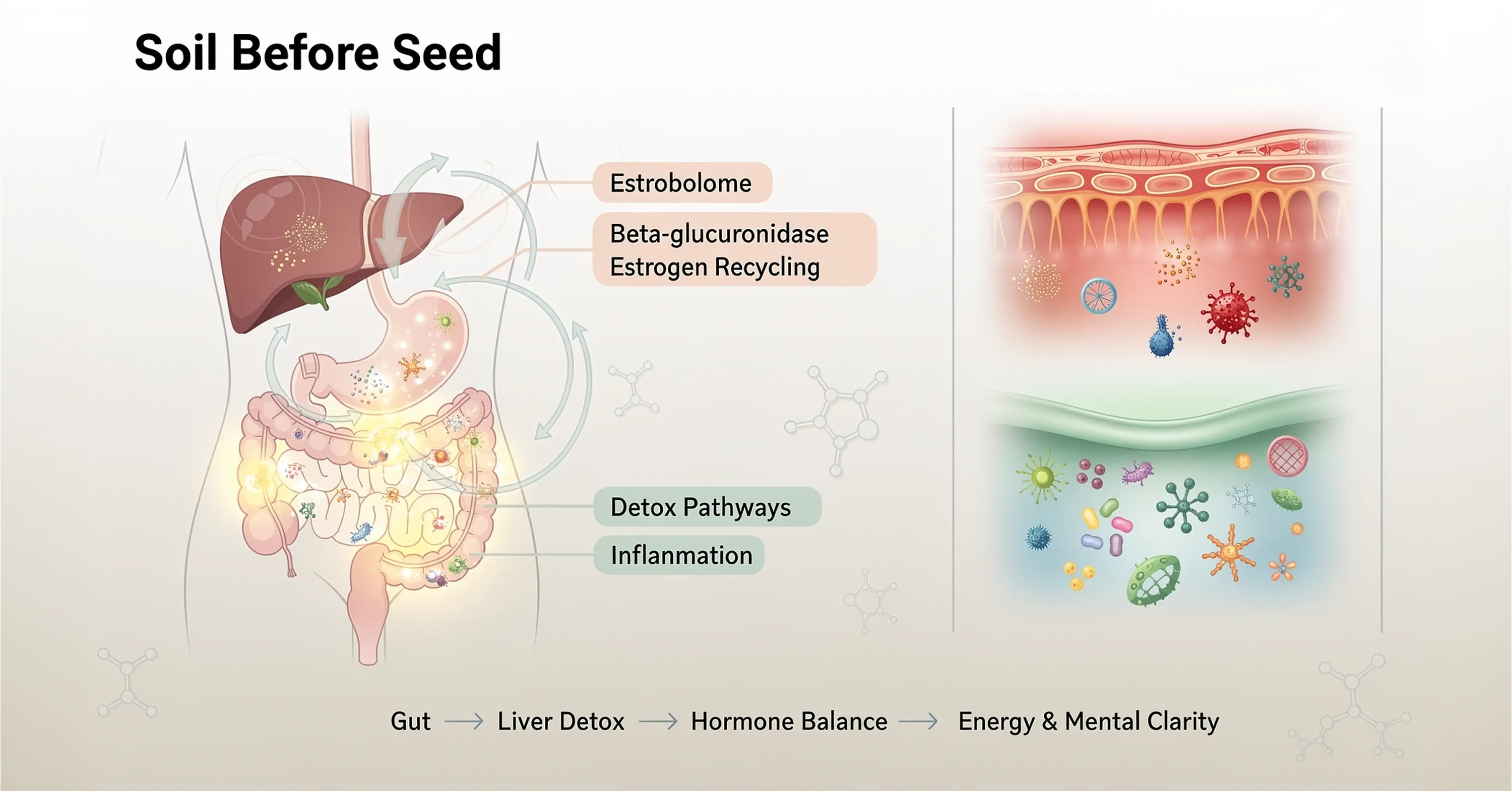
Infographic showing gut and liver detox pathways, estrobolome activity, estrogen recycling, and inflammation impact on hormone balance and energy levels

Patients who refuse exhaustion as a new normal soon discover that hormone replacement therapy acts as a seed that requires healthy soil. A functional medicine approach views the body as an interconnected system where gut health controls how well hormones function. If the digestive system suffers from inflammation or imbalance, added hormones often fail to resolve symptoms and can sometimes make them worse.

The "Soil Before Seed" philosophy prioritizes repair of the gut health foundation before the introduction of high-dose prescriptions. When the terrain is prepared properly, hormone therapy becomes far more effective.

The Estrobolome: How the Gut Regulates Estrogen

The gut microbiome plays a mechanical role in hormone processing through a collection of bacteria called the estrobolome. These bacteria produce an enzyme called beta-glucuronidase. Research indicates that this enzyme determines if the body reactivates estrogen for circulation or eliminates it through waste.

When the gut works correctly, it regulates estrogen levels naturally. However, if the gut microbiome lacks diversity, the body cannot process these hormones efficiently. Gut microbial research confirms that beta-glucuronidase activity directly impacts circulating estrogen levels. Without attention to this digestive mechanism, even the highest quality hormone treatments may remain ineffective.

Bioidentical Hormone Therapy and Gut Health

This digestive mechanism relies on the estrobolome, which functions as a control center for estrogen levels within the body. Specific bacteria in the gut ecosystem change the beta-glucuronidase enzyme, which acts like a gatekeeper. When this enzyme level is optimal, the body recycles the right amount of estrogen and excretes the rest. However, common disruptors can break this delicate process.

Antibiotics, for example, can severely damage this bacterial network. Expert commentary suggests that antibiotic use disrupts gut microbial diversity and reduces the bacteria that metabolize estrogen. This disruption often leads to an excess of circulating estrogen that contributes to dominance symptoms, or it causes a deficiency where the body excretes hormones too quickly. Effective bioidentical hormone therapy requires protection of these bacterial populations to ensure the body uses the prescribed hormones.

Inflammation Before Prescription

While bacterial populations require protection, systemic inflammation also prevents the body from safely accepting hormone therapy. If the body remains in a state of chronic defense due to gut permeability or toxins, cell receptors may become resistant to hormonal signals. This scenario explains why some patients feel worse or see no improvement after they start lab based hormone therapy. The cells simply cannot hear the message the hormones send.

Inflammation reduction stands as a necessary requirement for successful treatment. A functional approach repairs the gut lining and supports the liver's detoxification pathways first. This preparation clears the "static" from the system. Once the inflammatory fire stops, the body can receive and use hormone therapy effectively for the restoration of energy and mental clarity.

Ready to transform your health?

Book your health assessment with TNT Wellness personalized nutrition, functional medicine, and science-driven care to address the root causes of your symptoms.

Book Your Assessment →

Eliminate Guesswork, Start Tests

Precise answers help achieve this restoration, yet doctors often end standard medical appointments by declaring that blood work appears normal, even though the patient feels exhausted. This disconnect occurs because standard serum testing measures hormones that float in the bloodstream at a single moment in time.

Naturopathic analysis suggests that serum testing often uses wide reference ranges that fail to recognize imbalances associated with hormonal transitions. These tests often rely on broad reference ranges that may fail to recognize subtle imbalances associated with hormonal transitions. As a result, patients are left without clarity, and symptoms persist despite “normal” lab results. Measuring quantity alone does not explain how the body is actually using hormones.

Advanced Functional Testing: A Deeper Look at Hormones

Effective hormone replacement therapy relies on understanding how the body uses hormones, not just the quantity it possesses. Lab based hormone therapy differs from standard care in this regard. Advanced options like the Dried Urine Test for Comprehensive Hormones (DUTCH) offer deeper understanding. Unlike a simple blood draw, the DUTCH test reveals complete hormone metabolite profiles that show exactly how the body breaks down estrogen and cortisol.

Functional lab testing provides specific data points that guide treatment:

  • Metabolite tracking: This method identifies how the liver processes hormones through Phase I and Phase II detoxification pathways.

  • Cortisol patterns: These patterns map adrenal health over a 24-hour period rather than a single morning spike.

  • Methylation status: This status confirms if the body can safely neutralize estrogen metabolites to reduce cancer risks.

Comprehensive hormone testing transforms therapy from educated guesswork into precise, targeted treatment. Rather than relying solely on standard blood panels, advanced testing evaluates how your body produces, metabolizes, and eliminates hormones, providing a clear roadmap for care. Through personalized hormone testing and optimization, clinicians can design a strategy that restores balance safely, effectively, and in alignment with your unique physiology.

Personalized Path Forward

These advanced metrics provide a detailed roadmap, but insight alone does not restore vitality without a strategic plan. The TNT Wellness approach moves beyond the limitations of a brief office visit to develop a comprehensive, individualized path forward. Every protocol begins with a thorough intake and lifestyle assessment, ensuring the foundation is addressed before any prescription is written.

Bioidentical hormone therapy works most effectively when the body is ready to receive it. Once practitioners manage inflammation and improve gut health, they can introduce lab based hormone therapy protocols tailored to specific metabolic needs. This careful timing ensures that the treatment supports long-term health rather than just masks symptoms.

Intervention timing matters. FDA-supported evidence indicates that patients who start hormone replacement therapy within ten years of menopause onset see a 50% cardiovascular risk reduction and a 35% reduction in Alzheimer's disease risk. These statistics highlight the necessity of a personalized, functional approach. This approach changes hormone therapy from a simple symptom patch into a protective measure for future health.

Conclusion

In summary, restoring energy levels requires more than a quick prescription because the entire body needs a thorough look. Patients do not have to suffer through symptoms or guess at solutions. A focus on root causes like gut health and detoxification pathways allows people to safely maximize the benefits of hormone replacement therapy. A personalized plan based on data offers the clearest path to restored vitality. Schedule a consultation with TNT Wellness to begin the investigation.

Ready to transform your health?

Book your health assessment with TNT Wellness personalized nutrition, functional medicine, and science-driven care to address the root causes of your symptoms.

Book Your Assessment →

The FDA removed black box warnings in November 2025 because scientific reviews validated the treatment's safety. This decision allows patients to use hormone replacement therapy without fear of outdated risks that previously denied women benefits.

You likely experience hormonal imbalances if you suffer from persistent fatigue, brain fog, sleep disturbances, or unexplained weight gain. Doctors often dismiss these signs, but they serve as valid signals that your body needs support to function correctly.

Your gut microbiome controls how well your body processes and recirculates hormones like estrogen through specific enzymes. If your digestive system suffers from inflammation or lacks bacterial diversity, you may not receive the full benefits of your treatment.

Standard blood tests often fail because they only measure hormones floating in your bloodstream at a single moment. Functional tests like the DUTCH test offer a complete picture by mapping hormone metabolites and daily cortisol patterns over time.

TNT Wellness creates a thorough plan for vitality that moves beyond the typical fifteen-minute doctor visit. The providers assess your lifestyle, gut health, and specific metabolic needs before writing any prescriptions to ensure your long-term health success.

Schedule a Meeting

Book a time that works best for you

You Might Also Like

Discover more insights and articles

Minimalist skincare and cosmetic products arranged on a bright modern countertop with soft natural sunlight and indoor plants

Boosting Mood, Energy, and Libido for Women Over 40

In this article, we explain the underlying hormonal mechanisms of midlife transitions and show how targeted lifestyle strategies restore vitality. We also explore functional testing, metabolic nutrition, and circadian-aligned exercise.

A female doctor in a bright, modern office uses a tablet to review patient information, focused on her task in a professional setting.

Digestive Health Assessment: Symptoms, History, Tests, and Next Steps

This article explains how a structured review of your symptoms and history turns vague gut complaints into decisions you can act on. It covers what a practitioner asks about and which warning signs need medical attention first, so you can walk into an appointment with the information that actually changes the outcome.

A female nutritionist in a bright, minimalist office discusses treatment plans with a patient, using a tablet displaying healthcare data.

Functional Medicine Consultation: How to Prepare and What Happens Next

This article covers what to bring to a first functional medicine consultation and what actually happens during and after the visit. It also explains why testing sometimes comes later than people expect, and what a realistic plan looks like when you walk out.

A woman doctor consults with a patient, shown from behind, in a warm, upscale medical office with natural lighting and soft colors.

How to Choose a Gut Health Specialist for Persistent Digestive Symptoms

This article explains how to pick the right provider when bloating or unpredictable bowel habits have stopped being occasional. It walks through the warning signs that need medical attention now and what each type of provider is actually trained to do.