TNT Wellness

Holistic Approach to Health and Wellness

Content authorBy Paige Schreiber, FNPPublished onReading time10 min read
smiling woman in a cozy café setting having a friendly conversation with another person

In this article, we explore how addressing root causes restores daily energy and mental clarity, and shifts the focus from avoiding disease to achieving immediate and lasting vitality. We explain the biological mechanisms behind chronic exhaustion and provide practical steps for long-term health improvements.

Introduction

Patients experience frustration when conventional doctors review bloodwork and declare that everything looks normal. Even with typical lab results, these patients still endure real and disruptive physical exhaustion. 40% of primary care visits involve medically unexplained symptoms, and doctors find a biological cause in only a quarter of those cases. This diagnostic gap leaves patients without answers or effective treatments. They receive only temporary relief when doctors manage isolated symptoms.

A holistic approach to health and wellness investigates deeper physiological layers to restore vitality. This approach evaluates cellular energy deficits, endocrine disruptions, and digestive dysfunctions. Practitioners use this method to identify the underlying metabolic dysfunctions that conventional tests often miss because they examine the interaction of all body systems rather than their separate parts. This biological understanding shifts the strategy from simply avoiding disease to building strong and lasting energy.

Normal Labs Leave Many Exhausted

While the holistic approach builds lasting energy, conventional medicine evaluates health by looking for the mere absence of disease. Doctors run standard blood panels and tell patients that their results look fine. However, these basic tests fail to detect deeper physiological dysfunctions. Standard blood testing reveals a specific illness in only 8% of patients who complain about unexplained fatigue. Many laboratory tests fail to identify the exact cause of chronic exhaustion.

True vitality requires a different perspective because feeling well means more than lacking a medical diagnosis. Practitioners adopt a holistic approach to health and wellness and look beyond standard markers. They investigate cellular energy deficits, hormone imbalances, and gut dysbiosis. Sarah works as a forty-year-old teacher, and she exemplifies this situation. She struggled to stay awake during afternoon classes even though she had normal lab results. Her doctor assured her she was healthy, but Sarah lacked the energy to manage her daily tasks.

She eventually consulted a functional practitioner who evaluated her hidden metabolic imbalances and uncovered a severe energy deficit. Doctors miss these critical physiological gaps when they rely only on conventional tests. The discovery of these root causes shifts the medical focus from disease avoidance to physiological restoration. Medical professionals resolve underlying metabolic issues to restore daily energy and mental clarity.

Chronic Stress Depletes Cellular Energy

Chronic stress acts as one of these underlying metabolic issues, and it drains cellular energy and disrupts the nervous system. The human stress response evolved to help people survive immediate physical threats. Modern life triggers this response constantly, and this prevents the body from regulating itself properly. Elevated stress hormones directly impair how cells generate energy. Cortisol functions as the stress hormone, and it regulates mitochondrial energy capacity in the brain. The brain's mitochondria produce less energy when cortisol levels remain high for extended periods. This energy deficit causes persistent fatigue and poor concentration.

Why Chronic Stress Weakens the Immune System and Drains Energy

Chronic stress also damages immune resilience. Chronic fatigue syndrome leaves immune cells starved of energy, and this limits their defensive abilities. A dysregulated nervous system drives widespread inflammation throughout the body. Inflammation forces the immune system to consume massive amounts of energy and leaves little fuel for daily activities. David works as a fifty-year-old executive, and he experienced this exact cycle. Years of high-pressure work triggered chronic inflammation that drained his stamina. He applied principles of precision health & wellness to calm his internal stress response. Decreased cortisol levels naturally resolve inflammation and restore cellular energy production.

A balanced nervous system requires practitioners to address several physiological conditions:

  • Stable blood sugar levels throughout the day

  • Adequate sleep cycles that allow cellular repair

  • Proper nutrient absorption in the digestive tract

  • Balanced hormone production in the adrenal glands

When practitioners support these core systems together, they help reduce inflammation, restore immune resilience, and improve long-term energy levels.

Ready to transform your health?

Book your health assessment with TNT Wellness personalized nutrition, functional medicine, and science-driven care to address the root causes of your symptoms.

Book Your Assessment →

Hidden Drivers of Daytime Fatigue and Brain Fog

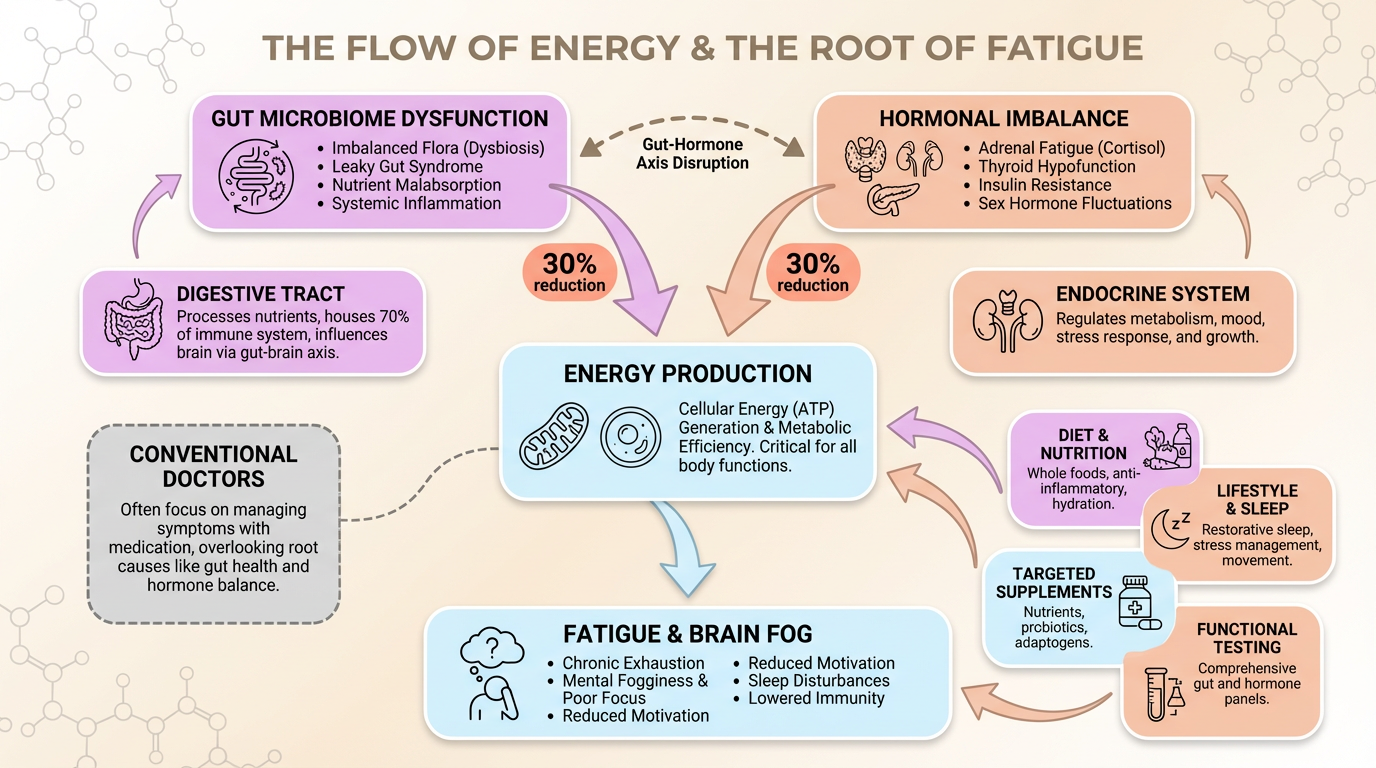
A flat, symmetrical medical infographic illustrating energy production, gut microbiome dysfunction, and hormonal imbalance with soft colors.

Nervous system dysregulation plays a major role, but gut microbiome dysfunction and hidden hormonal imbalances act as the primary drivers of daytime fatigue and cognitive brain fog. These two biological systems dictate daily energy levels. The digestive tract breaks down food and creates the raw materials that cells need to function. The endocrine system produces hormones that instruct those cells on how to use the materials. The entire body struggles to produce enough energy when either system fails.

Conventional doctors rarely test for these specific dysfunctions during routine checkups. A root-cause evaluation uncovers the biological reasons behind unexplained symptoms. An evaluation of the gut and hormones helps practitioners map out a holistic approach wellness plan. This type of plan targets the exact mechanisms that control metabolism. A detailed physiological assessment measures bacterial diversity and hormone levels to identify exact deficiencies. Precision health & wellness interventions then restore these systems. Intestinal repair allows the body to absorb nutrients efficiently. Hormone restoration ensures that cells receive the correct signals to produce energy.

Gut Microbiome Dysfunction and ATP Production

While hormones signal cells to produce energy, gut bacteria directly control how cells produce Adenosine Triphosphate. This molecule serves as the primary energy currency for every cell in the body. The resulting dysbiosis causes widespread metabolic problems when harmful bacteria overtake beneficial bacteria in the digestive tract. Specific bacterial metabolites disrupt mitochondrial respiration across multiple biological pathways.

These toxic metabolites cross the intestinal lining and enter the bloodstream. They travel to cells and stop the mitochondria from producing energy. This biological interference causes severe daytime fatigue. Intestinal balance restoration reverses this process and revives metabolic function. Medical protocols eliminate harmful bacteria and repair the intestinal lining to restore energy levels. A healthy microbiome produces beneficial short-chain fatty acids that support mitochondrial function. Cells naturally resume optimal energy production after these protocols eliminate the bacterial interference.

Holistic Approach Wellness for Hormone Balance

Just as a healthy microbiome supports energy levels, hormones act as essential messengers that regulate mitochondrial function and energy production. The endocrine system controls the body's metabolic rate and energy distribution. Hidden hormonal imbalances prevent cells from producing enough energy to sustain physical and mental activity. Estrogen controls energy production, and postmenopausal women experience a 30% reduction in metabolic efficiency when their hormone levels decline.

This sharp drop in energy production causes the cognitive brain fog that many women experience during menopause. Thyroid hormones also play a critical role in cellular energy metabolism. The entire metabolism slows down significantly when thyroid function declines. The identification and resolution of these hormonal imbalances clears brain fog and restores physical stamina. An optimized endocrine system allows cells to function properly. Practitioners use a comprehensive strategy to test hormone levels accurately. A holistic approach wellness program includes targeted interventions that support hormone production naturally.

Ready to transform your health?

Book your health assessment with TNT Wellness personalized nutrition, functional medicine, and science-driven care to address the root causes of your symptoms.

Book Your Assessment →

Functional Diagnostics for Metabolic Dysfunctions

Practitioners need accurate diagnostics to guide these targeted interventions, but standard blood tests often fail to identify the specific physiological gaps that cause chronic exhaustion. Because conventional medicine primarily screens for existing diseases, doctors miss the early stages of metabolic decline that drain daily energy. A holistic approach to health and wellness relies on targeted diagnostics to uncover these hidden metabolic dysfunctions. Practitioners use thorough functional testing to measure cellular energy production, hormone balance, and gut microbiome diversity. This specific data allows them to map out exact biological deficiencies. When patients understand exactly why they feel tired, they feel confident about their recovery path. They finally know what their bodies need to heal.

Precision health & wellness replaces generalized symptom-masking with real biological correction. Practitioners develop customized protocols based on individual test results instead of prescribing universal treatments. If a patient lacks specific digestive enzymes, the treatment directly addresses that exact deficiency. Patients either guess which supplements might work, or they use hard data to implement targeted lifestyle changes. Dr. Andrea Gartenbach works as a longevity medicine specialist, and she notes that precision medicine reduces hospital stays by 37% and improves healthy life expectancy by 8.3 years. Resolving these specific imbalances builds a resilient foundation for long-term health. However, patients must also learn how to balance their desire for data with their mental well-being to avoid overwhelming their nervous systems.

Measurement Fatigue from Wearable Devices

This desire for data often pushes people to constantly track their personal health metrics, and this tracking often hinders their healing process. Even though wearable technology remains a top fitness trend for 2026, clients struggle to interpret metrics meaningfully, and this confusion leads to overwhelm. The benefits of monitoring heart rates rarely outweigh the psychological costs of obsessing over minor fluctuations. A 2025 National Institutes of Health (NIH) study found that continuous metrics and alerts without clinical oversight cause anxiety and false alarms.

This constant stream of data generates measurement fatigue. Individuals wake up and check their sleep scores before they even assess how their bodies feel. When a device reports a poor recovery score, the nervous system reacts with stress, and this directly depletes cellular energy. If a person worries about a low heart rate variability, their brain releases cortisol to handle that perceived threat. This cortisol spike disrupts the exact hormone balance they want to fix. Many smartwatch users develop unhealthy fixations on their daily statistics, and they forget that human biology naturally fluctuates. Patients benefit more when they focus on optimizing foundational health before symptoms start instead of analyzing digital charts. Stepping away from excessive data tracking helps individuals feel empowered to trust their physical sensations again. A strong mind-body connection provides much better feedback than a smartwatch algorithm.

Timelines for Daily Energy Recovery

When patients finally trust this mind-body connection, they must understand that chronic exhaustion requires patience to heal because cellular repair happens gradually over several months. When patients adopt a holistic approach to health and wellness, they often expect immediate results. But biological systems need time to rebuild their energy capacity after years of chronic stress and poor nutrient absorption. The body must generate new mitochondria and balance endocrine glands before a person feels energetic again.

A typical timeline for restoring vitality follows a specific chronological sequence:

  1. Improved sleep quality and stabilized daytime mood emerge within the first four weeks.

  2. Enhanced mental clarity and reduced brain fog occur between weeks five and eight.

  3. Physical stamina persists throughout the afternoon by the third month of treatment.

  4. Consistent cellular energy and hormone balance stabilize after six months of dedicated lifestyle changes.

These milestones help patients stay determined during the early stages of recovery. Evidence shows that patients engaged in personalized preventive care are 60% more likely to stay on track with their long-term health plans. This adherence produces significant clinical outcomes. According to a Journal of the American Medical Association (JAMA) study, patients who incorporate lifestyle modifications reduce dependence by nearly 75%. A structured holistic approach wellness plan treats the underlying metabolic dysfunctions systematically rather than rushing the healing process. People feel capable of managing their lives again when their bodies reliably generate energy every single day.

Conclusion

To summarize, patients achieve this reliable daily energy and long-term relief when they identify the specific biological drivers of exhaustion rather than rely on quick fixes. These patients often receive treatments for isolated symptoms from conventional medicine, but they need to resolve underlying metabolic imbalances to achieve true vitality. A holistic approach to health and wellness helps patients find these hidden physiological gaps and receive targeted interventions. Patients experience a permanent return of daily energy when practitioners evaluate bodily functions and create personalized strategies. Booking an initial consultation helps patients step away from symptom-masking treatments and restore both mental clarity and physical stamina.

Ready to transform your health?

Book your health assessment with TNT Wellness personalized nutrition, functional medicine, and science-driven care to address the root causes of your symptoms.

Book Your Assessment →

Many insurance providers cover functional assessments and personalized treatments for chronic fatigue. TNT Wellness accepts insurance for its evidence-based care and custom nutrition plans. You'll need to contact your insurance provider to verify your specific coverage details before you schedule an appointment.

You should gather your past medical records and list your current medications before your visit. A holistic approach to health and wellness requires practitioners to understand your complete medical background. This information helps your doctor identify patterns and select the right diagnostic tests for your situation.

Certain foods cause systemic inflammation that drains your cellular energy. You might have hidden food sensitivities even if you don't eat processed meals. You can eliminate common triggers like dairy to determine which ingredients disrupt your digestion and cause daytime fatigue.

Bioidentical hormones share the chemical structure of the hormones your body produces. Your cells process them easily because they don't see them as foreign substances. Synthetic options feature altered structures that cause side effects and disrupt your normal endocrine function.

Genetic testing reveals how your body processes nutrients and clears environmental toxins. Your doctor uses these genetic insights to map your metabolic pathways. They can't guess your nutritional needs, so professionals use this information to prescribe vitamins that match your genetic profile.

Schedule a Meeting

Book a time that works best for you

You Might Also Like

Discover more insights and articles

Minimalist skincare and cosmetic products arranged on a bright modern countertop with soft natural sunlight and indoor plants

Boosting Mood, Energy, and Libido for Women Over 40

In this article, we explain the underlying hormonal mechanisms of midlife transitions and show how targeted lifestyle strategies restore vitality. We also explore functional testing, metabolic nutrition, and circadian-aligned exercise.

A female doctor in a bright, modern office uses a tablet to review patient information, focused on her task in a professional setting.

Digestive Health Assessment: Symptoms, History, Tests, and Next Steps

This article explains how a structured review of your symptoms and history turns vague gut complaints into decisions you can act on. It covers what a practitioner asks about and which warning signs need medical attention first, so you can walk into an appointment with the information that actually changes the outcome.

A female nutritionist in a bright, minimalist office discusses treatment plans with a patient, using a tablet displaying healthcare data.

Functional Medicine Consultation: How to Prepare and What Happens Next

This article covers what to bring to a first functional medicine consultation and what actually happens during and after the visit. It also explains why testing sometimes comes later than people expect, and what a realistic plan looks like when you walk out.

A woman doctor consults with a patient, shown from behind, in a warm, upscale medical office with natural lighting and soft colors.

How to Choose a Gut Health Specialist for Persistent Digestive Symptoms

This article explains how to pick the right provider when bloating or unpredictable bowel habits have stopped being occasional. It walks through the warning signs that need medical attention now and what each type of provider is actually trained to do.