Why pelvic floor training belongs in every plan
Kegels target the bulbocavernosus and ischiocavernosus muscles, which wrap the base of the penis and trap blood during erection. When these muscles are weak, venous leak makes rigidity hard to maintain.
A randomized controlled trial by Grace Dorey and colleagues at the Somerset Nuffield Hospital, published in the British Journal of General Practice in 2004, found that men performing pelvic floor exercises with manometric biofeedback for three months saw a 6.74-point gain on the International Index of Erectile Function. By six months, 40% of participants had regained normal erectile function and another 34.5% showed measurable improvement.
A practical protocol is 30 to 40 contractions per day, split into sets, with each squeeze held for three to five seconds. Results appear within four to six weeks. Pelvic floor training costs nothing and rivals first-line drug therapy in mild to moderate cases, which is why it belongs in every plan.
How do stress and mental health affect erections?
The nervous system has a veto. An erection requires the parasympathetic branch to take over, and chronic stress keeps the sympathetic branch dominant. With cortisol elevated and testosterone suppressed, arousal signaling is blunted before it ever reaches the penile arteries.
A 2018 meta-analysis in The Journal of Sexual Medicine by Liu and colleagues pooled data from 49 studies and found that men with depression had a 39% higher risk of erectile dysfunction, and men with anxiety disorders showed similar elevated risk. The relationship is bidirectional, which means each problem worsens the other.
This is where breathwork and cognitive behavioral therapy earn their place, with mindfulness practices serving the same nervous-system goal. Slow diaphragmatic breathing activates the vagus nerve and shifts the nervous system out of fight-or-flight. Performance anxiety in particular responds well to short-course therapy because it interrupts the feedback loop where one bad experience becomes the cause of the next.
Which supplements have credible evidence?
A handful of supplements have real data behind them. The strongest evidence sits with nitric oxide precursors and an antioxidant from pine bark, with a traditional adaptogen also in the credible group.
The shortlist worth discussing with a clinician:
-
L-citrulline, which raises plasma L-arginine more effectively than oral L-arginine itself and improved erection hardness in a 2011 trial in Urology by Cormio and colleagues
-
Pycnogenol combined with L-arginine, which a 2023 meta-analysis of three trials with 184 patients found significantly improved IIEF erectile-domain scores in men with mild-to-moderate ED
-
Korean red ginseng, which a systematic review by Jang and colleagues in the British Journal of Clinical Pharmacology reported as superior to placebo across six randomized trials with 349 men
-
Zinc and vitamin D, but only when blood work confirms a deficiency
Supplements work best as targeted corrections. Pick them based on lab findings and clinical context, and run them past a provider who can check for interactions with blood pressure or anticoagulant medications.
When should functional lab testing come in?
The right time to test is when generic lifestyle changes haven't produced results after eight to twelve weeks, or when symptoms are severe enough that you want answers now rather than later. Comprehensive testing finds the specific reason a man's body isn't responding.
Functional medicine clinicians look beyond the basic metabolic panel that most primary care visits include. The American Urological Association's 2018 guideline on erectile dysfunction recommends measuring morning total testosterone in men with ED and considering additional endocrine workup based on symptoms and findings, while acknowledging that vascular and metabolic comorbidities frequently coexist.
The practical implication is that a one-time testosterone draw is rarely enough to explain a complex case. Comprehensive panels reveal the interactions between hormones, blood sugar, micronutrients, and inflammation that explain why a fit, well-fed man is still struggling.
Which labs reveal root causes?
A functional baseline workup for sexual performance covers four domains: hormones, metabolic health, micronutrients, and inflammation.
The panels worth running:
-
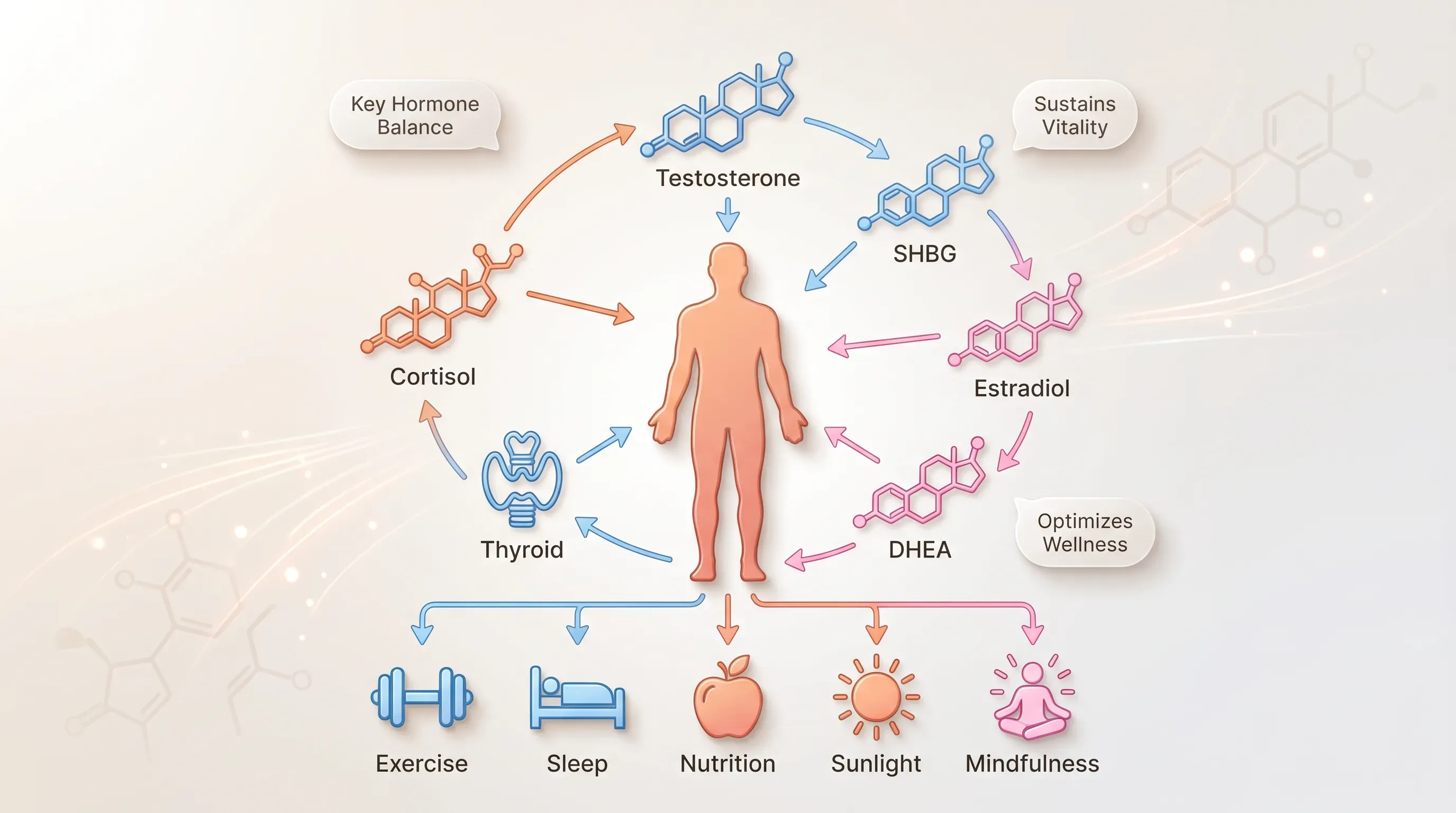
Hormones: total and free testosterone, estradiol, SHBG, DHEA-S, prolactin, LH, FSH, TSH, free T3, free T4
-
Metabolic: fasting insulin, fasting glucose, HbA1c, full lipid panel, ApoB
-
Micronutrient: vitamin D, B12, folate, zinc, magnesium (RBC), ferritin
-
Inflammation and stress: hs-CRP, four-point salivary cortisol
A 2023 review in Translational Andrology and Urology emphasized that men with ED should be screened for diabetes and dyslipidemia, with hypogonadism evaluated at the same time, because the conditions cluster and treating one without the others produces incomplete results. Pulling all four domains in a single draw lets a clinician see the interactions rather than chase one number at a time.
How do results turn into a personalized plan?
Lab data becomes a plan when a clinician matches each finding to a specific intervention. Decisions change outcomes.
A typical pattern looks like this. Low vitamin D and zinc get corrected with dosed supplementation and a recheck at 90 days. Elevated fasting insulin with normal glucose triggers a carbohydrate-restricted plan and a strength-training prescription. High estradiol relative to testosterone in an overweight man becomes a fat-loss target because aromatase activity drops with visceral fat. Low free testosterone with high SHBG points toward different treatment than low total testosterone with normal SHBG.
The Endocrine Society's hypogonadism guideline is explicit that treatment must be tied to confirmed biochemical findings and symptom patterns rather than a single isolated number. The same logic applies to nutrition, supplementation, and exercise prescriptions. A plan built from data outperforms a plan built from generic advice every time.
Build your personalized plan with TNT Wellness
If you've worked through the basics and want a plan built on your actual labs, TNT Wellness is set up for that conversation. The team combines registered dietitians and functional medicine providers in Charlotte, NC, with virtual visits available across most states, so location is not a barrier.
Services include comprehensive hormone, metabolic, micronutrient, and gut testing, customized nutrition plans, 1:1 coaching, and bioidentical hormone therapy when the lab data and clinical picture call for it. The model is built for men who want a root-cause path rather than a prescription pad.
To get started, book an initial consultation through the TNT Wellness website. You'll decide which panels make sense for your goals, then leave with a clear plan for the next 90 days. That's the practical step between knowing what helps and actually changing how your body performs.