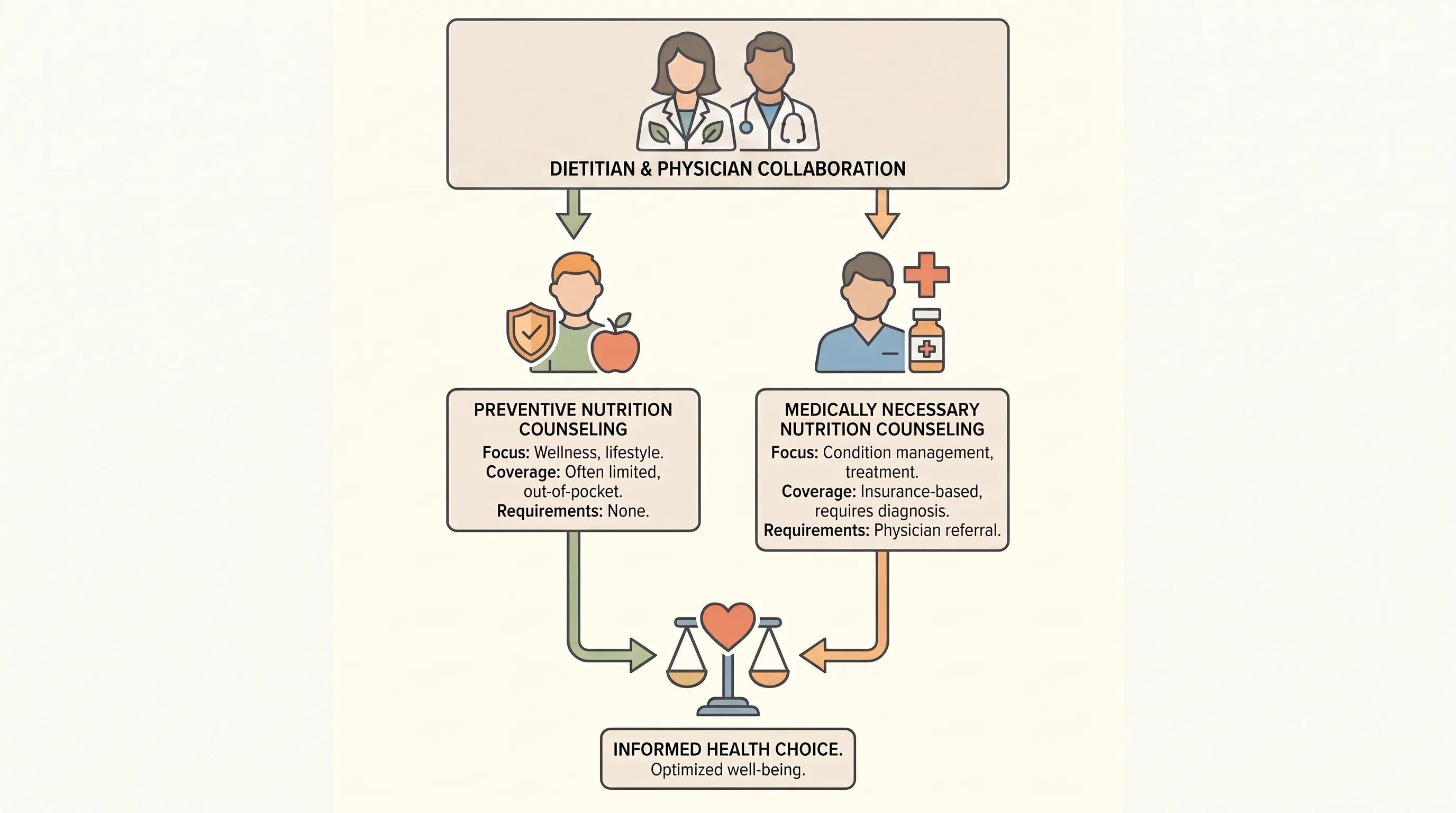
Dietitian insurance benefits
Credentials come first. Horizon NJ Health, for example, denies MNT codes outright when they're billed by a provider other than a registered dietitian, nutrition professional, or facility. A coach or an uncredentialed nutritionist can't bill your plan at all, which means you pay the full fee yourself.
Network status is the second gate, and it's narrower than most people assume. The Department of Health and Human Services states that preventive services are free only when delivered by a provider in your plan's network, and your plan may charge you a fee for going outside it. Clinics also participate selectively. TNT Wellness, to use a concrete example, is in-network with Blue Cross Blue Shield of North Carolina. It is not with Blue Value or Blue Home plans.
Then come the paperwork rules. Referrals and prior authorization are separate requirements, and missing either one gets the claim kicked back. Across HealthCare.gov plans in 2024, KFF found that 9% of in-network denials came down to a lack of prior authorization or referral, with another 16% for excluded services.
That last figure deserves attention. A clinic can be fully in-network with your insurer and still be delivering a service your particular plan excludes. Aetna's weight reduction policy says so plainly: many of its benefit descriptions specifically exclude services related to treatment of obesity or diet and weight control, and claims under those plans get denied on that exclusion alone. Network participation and dietitian insurance benefits are two different questions.
Limits and patient costs
Visit caps vary widely between products sold by the same company. Aetna's preventive benefit allows 10 healthy-diet counseling sessions per 12-month period, with 26 sessions available for obesity or overweight plus a cardiovascular comorbidity, while a Cigna plan caps medical nutrition therapy at 3 visits per calendar year and leaves preventive counseling codes uncapped. Ask for the number, then ask whether it resets on January 1 or on your plan's anniversary date.
Cost sharing is where estimates get real. KFF's 2025 employer survey put the average single-coverage deductible at $1,886, and 34% of covered workers sit in plans with a deductible of $2,000 or more. If your visit codes as medical before you meet that deductible, you pay the contracted rate in full.
One caution that no clinic can wave away. Blue Cross and Blue Shield of Illinois states in its own provider guidance that verification of eligibility or benefit information is not a guarantee of payment, because benefits get determined when the claim arrives and a quote is a dated snapshot. It's still worth getting, since it's the difference between an informed guess and no information at all on does insurance cover nutrition counseling.
Compare payment options
Three routes get you into the chair, and each trades certainty for cost differently.
In-network benefits give you the lowest ceiling on price when the claim goes through cleanly. The clinic bills and you pay whatever cost sharing applies. The contracted rate caps the total. The risk sits on the back end, in a denial you learn about weeks later.
Out-of-network reimbursement puts you in the middle of the transaction. You pay up front and receive a superbill listing dates of service with the CPT and diagnosis codes so you can file it yourself. Amy Plano, a dietitian who has billed insurance since 2007 and now coaches other dietitians on reimbursement, is blunt about the odds: patients "will ONLY receive money from the insurance company if they have out-of-network MNT benefits on their policy," so there's no guarantee when you issue a superbill that the patient ever sees that money. Out-of-network denial rates ran 37% on HealthCare.gov plans, well above the in-network figure.