TNT Wellness

Losing Stubborn Belly Fat and Boosting Metabolism After 40

Content authorBy Dr. Vanessa Lara PhDPublished onReading time11 min read
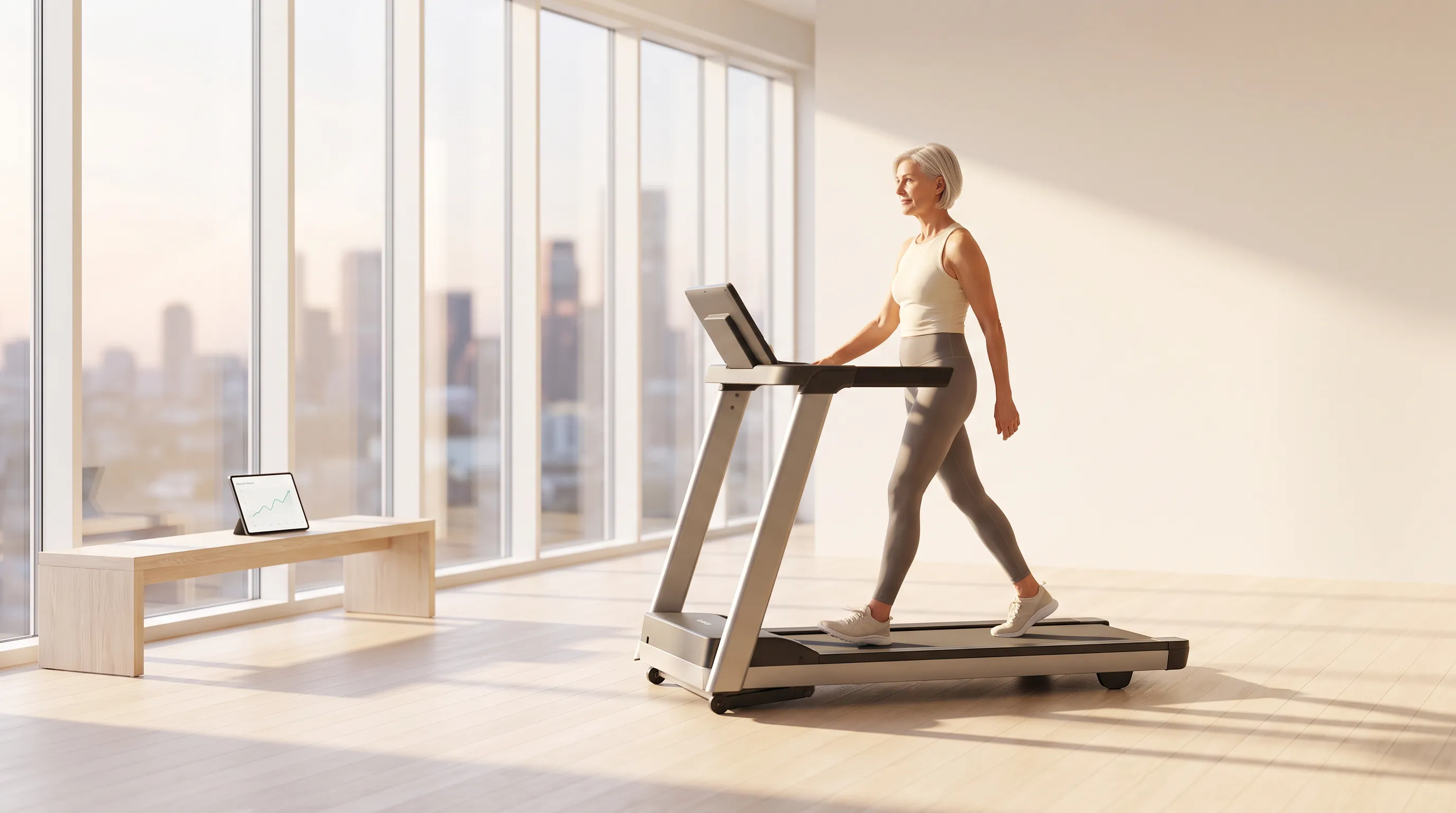
A fit, older woman walks on a treadmill in a spacious gym with floor-to-ceiling windows and a warm, neutral color palette.

Belly fat after 40 responds to overall fat loss. Lean mass declines, and perimenopausal estrogen shifts push fat storage toward the midsection. The combination that works is a moderate calorie deficit with enough protein and resistance training twice weekly, with lab testing when progress stalls despite real effort.

Why does belly fat increase after 40?

Belly fat increases after 40 because several changes stack at once, and each one nudges the same direction. Lean mass falls, and the hormonal environment of perimenopause starts redirecting fat storage toward the abdomen instead of the hips and thighs. Insulin sensitivity declines alongside all of it.

The pace of that redistribution is faster than most people expect. During the menopause transition, visceral fat rises by roughly 6.24% per year while gynoid fat in the hip and thigh region rises by only 2.03%, according to a 2025 review in Clinical and Experimental Obstetrics & Gynecology.

That gap explains something the scale can't. Your total weight can barely move while your waistband tightens, because fat is relocating. Which means a plan judged only by pounds lost will look like a failure even when it's working, and a plan judged by nothing at all will miss a real change in cardiometabolic risk.

Muscle loss lowers daily energy needs

Losing muscle lowers how much energy you burn at rest and how much glucose your body can clear after meals. Skeletal muscle is the largest site of insulin-stimulated glucose disposal, so less of it means more circulating glucose and a smaller buffer for the carbohydrates you eat.

Resistance training with adequate protein pushes back on both problems at once. A 2022 systematic review in the Journal of Cachexia, Sarcopenia and Muscle found that protein intakes of 1.6 g/kg/day or higher combined with resistance exercise produced measurable gains in lean body mass.

The practical read: if you're eating less without lifting anything heavy, a meaningful share of what you lose comes out of muscle, which lowers your energy needs further and makes the next plateau arrive sooner. That's the loop worth breaking early.

Hormones can shift fat distribution

Falling estrogen changes where fat gets stored. Premenopausal women store proportionally more fat subcutaneously in the hips and thighs. As estradiol declines, that preference weakens and abdominal depots take a larger share.

The magnitude is documented. Across menopausal transition studies summarized in a 2022 review in the Journal of Women's Health, visceral fat climbs from roughly 5%-8% of total body fat before menopause to 15%-20% after.

Two things follow from this that get confused constantly. First, hormonal change alters distribution, so a waist that grows while your weight holds steady isn't a measurement error. Second, hormone therapy is prescribed for menopausal symptoms and specific clinical indications, not as a fat-loss intervention, and treating it as one sets up disappointment. The behaviors that shift body composition still do the actual work.

Sleep and stress affect appetite

Short sleep raises how much you eat, and the effect size is large enough to erase a careful deficit. Researchers at King's College London pooled controlled trials and found that sleep-restricted adults consumed 385 extra calories per day compared with normal sleep, with no compensating rise in energy expenditure.

Chronic stress works through slower channels. It shortens sleep and reduces the appetite for training. A plateau reflects the behavioral fallout of poor recovery.

Worth noticing: 385 calories is roughly the size of the deficit most people are trying to hold. So a stretch of bad sleep can cancel your progress outright while you're still doing everything else right.

Ready to transform your health?

Book your health assessment with TNT Wellness personalized nutrition, functional medicine, and science-driven care to address the root causes of your symptoms.

Book Your Assessment →

You cannot target belly fat alone

Crunches build abdominal muscle and do nothing to the fat sitting on top of it. Fat is mobilized systemically through the bloodstream, so reducing waist size requires losing fat overall while holding onto lean tissue.

The evidence here is settled. A 2011 randomized trial published in the Journal of Strength and Conditioning Research had 24 adults perform seven abdominal exercises five days a week for six weeks and found no reduction in abdominal fat or waist circumference, though abdominal endurance improved. A later meta-analysis of 37 comparisons reached the same conclusion.

So the time you spend on core work is worth something, just not what the fitness industry sold you. Core strength supports posture and heavier lifting, and heavier lifting is what preserves the muscle that keeps your energy needs from sliding. The abdominal work is a support act for the thing that actually moves your waistline.

Nutrition should create a sustainable deficit

Fat loss still requires eating less energy than you use, and after 40 the deficit has to be one you can hold for months. Severe restriction backfires through several channels at once. Training quality drops, and more of the weight you lose comes from muscle.

There's a threshold worth knowing. A meta-regression discussed by Biolayne's research team found that larger deficits drive greater fat-free mass losses, and gaining or holding lean tissue requires avoiding deficits greater than 500 kcal/day.

Pair that with the earlier point about muscle and daily energy needs and the logic closes. An aggressive deficit costs you the tissue that determines how much you can eat later. A moderate one takes longer on paper but leaves you with a body that burns more and a plan you haven't quit by week five. Slower here is faster.

Protein helps preserve lean mass

Spreading protein across your meals protects lean mass better than loading it all at dinner. Muscle protein synthesis responds to the protein in each meal, so three or four servings of 25 to 35 grams gives you more stimulus than one large evening portion.

Randomized work supports the higher end during dieting. Trained men in a hypocaloric study consuming 2.3 g/kg/day of protein lost 0.3 kg of lean mass compared with 1.6 kg in the group eating 1.0 g/kg/day, with fat loss identical between them.

Your own target depends on body size and training volume. Someone lifting twice a week in a modest deficit needs less than a competitive athlete cutting hard. But the direction is the same, and most women arriving at 40 with a stalled waistline are eating well below what the evidence supports.

Fiber-rich foods improve fullness

Fiber makes a deficit easier to hold because it slows gastric emptying and blunts the glucose response to a meal. Vegetables and legumes carry volume and water alongside the fiber, so you finish a meal fuller on fewer calories.

The single-target version of this works remarkably well. Yunsheng Ma, a physician and professor at UMass Chan Medical School, ran a 240-person randomized trial in which one group received a single instruction, eat 30 grams of fiber daily. They lost 4.6 pounds at 12 months, close to the 5.9 pounds achieved by the group following the full 13-component American Heart Association diet.

What that trial demonstrates is adherence. One instruction beat thirteen instructions by almost the same margin, which is the argument for building your eating pattern around a couple of targets you'll actually hit.

Liquid calories deserve attention

Drinks slide past your satiety signals, which is why they undo a deficit so efficiently. Alcohol, sweetened beverages, and large flavored coffees deliver energy without triggering the fullness response that solid food does, so nothing downstream compensates.

The population numbers make the size of it clear. CDC analysis of NHANES 2007-2010 data found that women aged 40 to 59 consume roughly 60 calories per day from alcoholic beverages on average, and among people who drink on a given day, alcohol supplies about 16% of total intake.

An average hides the pattern that matters. Nobody drinks 60 calories a day evenly. That figure comes from a few hundred calories concentrated on weekend evenings, which is exactly when a large coffee and a couple of glasses of wine can neutralize five weekdays of careful eating. Auditing two days a week fixes more than overhauling seven.

Ready to transform your health?

Book your health assessment with TNT Wellness personalized nutrition, functional medicine, and science-driven care to address the root causes of your symptoms.

Book Your Assessment →

Strength training protects your metabolism

Progressive resistance training at least twice a week is the most reliable lever you have on body composition after 40. Progressive means the load or reps go up over time. Aerobic exercise adds cardiovascular benefit and energy expenditure, and simply moving more across the day handles a surprising share of the total.

Most people aren't doing it. National Health Interview Survey data analyzed by the CDC found that only 24.2% of US adults met both the aerobic and muscle-strengthening components of the 2018 Physical Activity Guidelines in 2020, with women trailing men in every age bracket.

Skip the "metabolism boost" framing. Adding a few pounds of muscle raises resting energy expenditure by a modest amount, nowhere near what supplement marketing implies. The value is defensive and it compounds. You're preventing the slow erosion of lean tissue described earlier, which keeps your maintenance calories high enough that a moderate deficit stays livable years from now.

Recovery makes the plan sustainable

Recovery is what lets the deficit and the training coexist instead of competing. Consistent sleep restores appetite regulation, and rest days let the training you did actually produce adaptation. Sleep extension works in the other direction too. Esra Tasali, director of the Sleep Research Center at the University of Chicago, ran a randomized trial in which overweight adults who extended their sleep by 1.2 hours per night reduced intake by 270 kcal per day with no dietary instruction at all. Read that against the sleep restriction figure from earlier and the range becomes obvious. The gap between poorly slept and well slept is worth several hundred calories a day in either direction, without a single change to your food rules.

Which means the highest-yield item on your list some weeks is an earlier bedtime, and the small routine that makes it happen:

  • A fixed wake time seven days a week

  • Caffeine cut off eight hours before you plan to sleep

How should progress be measured?

Track waist circumference and weight trends over weeks. Daily weight swings of two to four pounds come from sodium and glycogen, none of which is fat.

Waist measurement carries clinical meaning that weight alone doesn't. The National Heart, Lung, and Blood Institute identifies a waist circumference above 35 inches (88 cm) in women as a marker of increased risk for type 2 diabetes, hypertension, and cardiovascular disease, and notes it flags risk even in people at a normal weight.

Given that visceral fat rises faster than total fat during the transition, waist is the measure that registers what your plan is doing. Useful things to log:

  1. Waist at the navel, same time of day, once weekly

  2. Load and reps on two or three main lifts

  3. Weekly average body weight instead of single readings

Progress in strength while the scale holds still is body recomposition, which is a win the number can't show you.

When should lab testing be considered?

Lab testing earns its place when symptoms, medical history, medications, or a genuinely poor response to a well-executed plan point toward something specific. Thyroid dysfunction and insulin resistance are the usual candidates. Testing everyone by default produces incidental findings and expense without changing the plan.

Thyroid is the clearest example of why history matters. NHANES III data reported by Hollowell and colleagues found subclinical hypothyroidism in 4.3% of the US population using a TSH threshold above 4.5 mIU/L, with prevalence roughly double in women and climbing with age.

So the base rate is low enough that a test alone rarely explains a stall, and high enough in women over 40 that dismissing fatigue, cold intolerance, and a stubborn waist without checking is a mistake. The trigger for testing is the pattern. Six months of consistent training and a moderate deficit with nothing to show is a legitimate reason to look deeper.

Build your personalized plan with TNT Wellness

If you've held a moderate deficit and lifted twice a week for months without your waist moving, the next step is an assessment that looks at what a general plan can't see. TNT Wellness has worked in functional health and nutrition for over 30 years, with licensed nutritionists and physicians who build individualized plans.

The practice provides medical nutrition therapy, an evidence-based process delivered by credentialed nutrition professionals that begins with a full nutrition assessment. Functional testing covers hormone panels, micronutrients, organic acids, and nutrigenomics, and results feed directly into the plan instead of sitting in a report you never use.

Care runs through one-on-one coaching, with virtual and in-person visits available across the Charlotte region. Book a call to review your history, your current plan, and whether testing would change anything about your next six months.

Ready to transform your health?

Book your health assessment with TNT Wellness personalized nutrition, functional medicine, and science-driven care to address the root causes of your symptoms.

Book Your Assessment →

Yes. Carbohydrates don't prevent fat loss when your overall intake supports a moderate calorie deficit. Choose fiber-rich carbohydrate sources such as beans, fruit, and whole grains, then pair meals with protein. Restrictive rules are unnecessary if they make your eating pattern harder to sustain.

Aim for at least 150 minutes of moderate aerobic activity each week, alongside strength training on two days. Brisk walking counts. Add activity gradually if your current routine is limited, because a schedule you repeat consistently supports energy use without interfering with recovery from lifting.

See a clinician first if you have chest pain, uncontrolled blood pressure, severe joint pain, or a condition that limits exercise. Otherwise, most adults can begin with basic resistance exercises and manageable loads. A qualified trainer can help you learn form and progress safely.

Corticosteroids, insulin, sulfonylureas, certain antipsychotics, and valproate can contribute to weight gain or increase appetite. Don't stop or change a prescribed medicine on your own. Ask the clinician who prescribes it whether an alternative, dose change, or monitoring plan is appropriate.

First, review four weeks of average weight, waist measurements, portions, and drinks before changing your plan. If those records show no change despite consistent adherence, make one small adjustment, such as reducing intake by 100 to 200 calories daily or adding regular walking, then reassess.

Schedule a Meeting

Book a time that works best for you

You Might Also Like

Discover more insights and articles

Minimalist skincare and cosmetic products arranged on a bright modern countertop with soft natural sunlight and indoor plants

Boosting Mood, Energy, and Libido for Women Over 40

In this article, we explain the underlying hormonal mechanisms of midlife transitions and show how targeted lifestyle strategies restore vitality. We also explore functional testing, metabolic nutrition, and circadian-aligned exercise.

A female doctor in a bright, modern office uses a tablet to review patient information, focused on her task in a professional setting.

Digestive Health Assessment: Symptoms, History, Tests, and Next Steps

This article explains how a structured review of your symptoms and history turns vague gut complaints into decisions you can act on. It covers what a practitioner asks about and which warning signs need medical attention first, so you can walk into an appointment with the information that actually changes the outcome.

A female nutritionist in a bright, minimalist office discusses treatment plans with a patient, using a tablet displaying healthcare data.

Functional Medicine Consultation: How to Prepare and What Happens Next

This article covers what to bring to a first functional medicine consultation and what actually happens during and after the visit. It also explains why testing sometimes comes later than people expect, and what a realistic plan looks like when you walk out.

A woman doctor consults with a patient, shown from behind, in a warm, upscale medical office with natural lighting and soft colors.

How to Choose a Gut Health Specialist for Persistent Digestive Symptoms

This article explains how to pick the right provider when bloating or unpredictable bowel habits have stopped being occasional. It walks through the warning signs that need medical attention now and what each type of provider is actually trained to do.