TNT Wellness

Advanced Gut Health Testing: Comprehensive Insights

Content authorBy Dr. Vanessa Lara PhDPublished onReading time10 min read
Healthcare professional using mobile app to review digital health diagnostics and medical data in a clinical setting

In this article, we examine how systemic diagnostic tools identify the underlying origins of chronic metabolic and mood imbalances. We discuss the biological connections between the microbiome and hormones, and we explain how targeted testing provides a clear roadmap to recovery.

Introduction

Many people deal with chronic fatigue, mood swings, and digestive distress, but they rarely get clear answers from conventional blood work. Standard tests often show normal results despite persistent, debilitating symptoms, and this frustrates patients. Advanced gut health testing maps the invisible connections between the gastrointestinal tract, hormones, and metabolism. Doctors use these data-driven diagnostics to look beyond superficial symptoms and analyze the complex biological networks that govern human health.

Functional medicine lab testing helps these doctors detect subtle imbalances that conventional diagnostics miss. Practitioners catch these issues because they compare patient results against optimal ranges versus population averages. These professionals use thorough panels to evaluate systemic function rather than just organ-specific disease. This targeted approach identifies the exact microbial populations and hormone metabolites that drive metabolic resistance and inflammation. Patients acquire exact data about their biochemical state when they pair thorough stool analysis with hormone testing. This exact data replaces endless supplement trials with specific interventions that address the biological root cause of systemic distress.

Skepticism Around Basic Versus Advanced Gut Health Testing

While advanced diagnostics provide this exact data, basic commercial gut tests often function as marketing gimmicks rather than medical diagnostics. These standard kits lack the clinical depth that doctors need to identify the underlying causes of chronic illness, and they often give patients generic yogurt recommendations. Medical professionals rely on clinical diagnostics to analyze the gastrointestinal tract thoroughly.

Doctors use validated testing methods like quantitative Polymerase Chain Reaction (PCR) stool analysis instead of basic culture methods. Advanced gut health testing replaces diagnostic estimations with precise DNA measurement. The GI-MAP diagnostic tool uses quantitative PCR technology to detect precise DNA targets for specific organisms.

Why Comprehensive Microbial Testing Provides More Accurate Answers

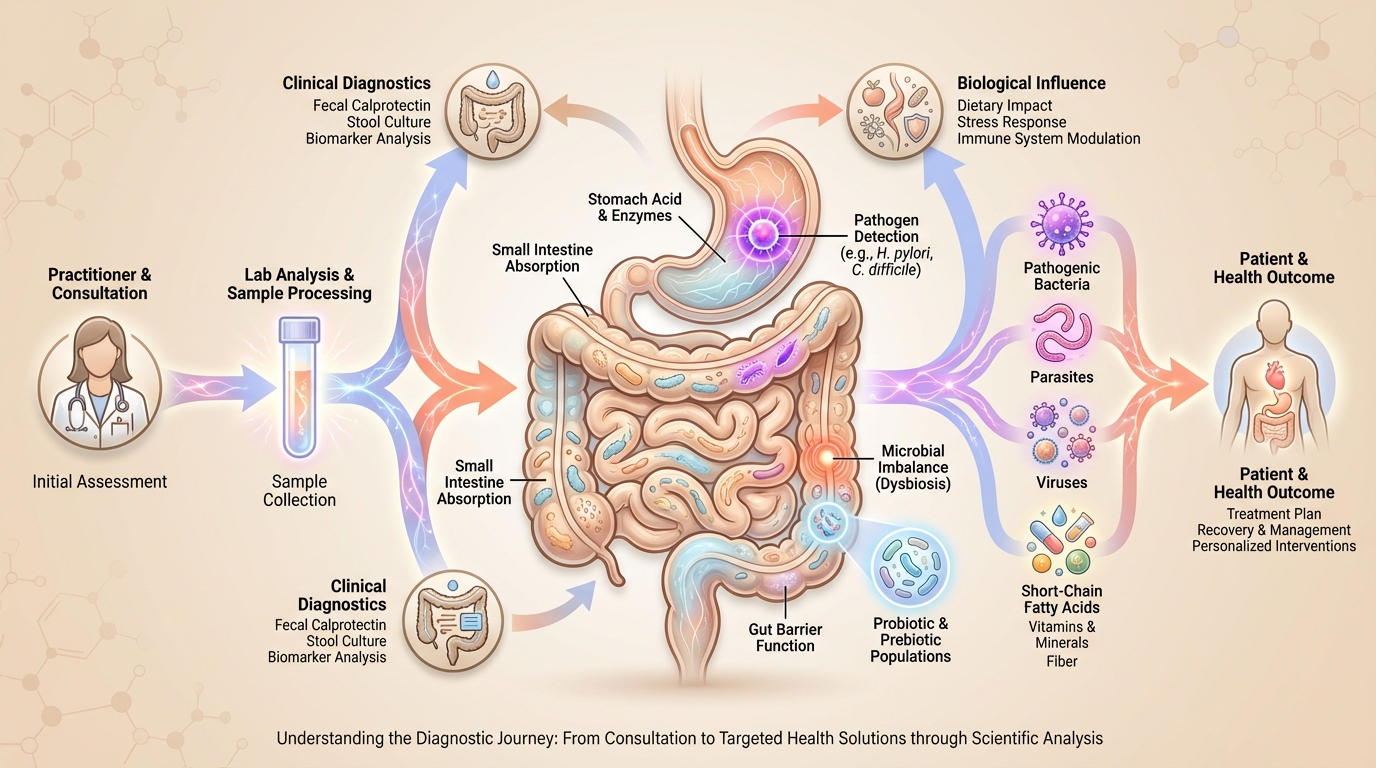
A scientific illustration depicting the diagnostic journey from practitioner to patient, featuring a digestive tract schematic with microbial annotations.

Advanced laboratory testing gives practitioners a detailed view of the microorganisms living inside the digestive tract. Rather than relying on generalized symptoms, this methodology identifies the exact pathogens and imbalances that contribute to inflammation, poor digestion, and nutrient deficiencies.

This methodology identifies the following microbial populations:

  • Parasitic infections that disrupt mucosal barriers

  • Bacterial pathogens that drive systemic inflammation

  • Helicobacter pylori strains that cause ulcers

  • Fungal overgrowths that affect nutrient absorption

This technology separates clinical diagnostics from consumer novelties. These clinical diagnostics prepare patients to understand how these microbial populations influence broader biological systems.

Biological Gut-Hormone-Metabolism Axis

Functional medicine research examines these broader biological systems and connects intestinal bacteria directly to systemic wellness and hormonal regulation. The gastrointestinal tract operates as an active endocrine organ rather than a passive digestive tube. Medical science shows a factual biological link between the microbiome, systemic inflammation, and metabolic function. When harmful bacteria outnumber beneficial strains, this dysbiosis triggers an immune response that affects distant organs. This complex interplay alters how the body processes and eliminates hormones. Medical professionals recommend stool analysis to help patients visualize these microbial imbalances.

For instance, specific bacteria produce beta-glucuronidase. When the activity of this enzyme increases, the body reabsorbs estrogen instead of excreting it. Researchers report that dysbiosis increases estrogen reabsorption through enterohepatic circulation, and this frequently causes estrogen dominance. Because the gut controls hormone clearance, isolated hormone treatments often fail. A reliable diagnostic approach requires doctors to evaluate both systems simultaneously. This bacterial influence reveals how the microbiome manages estrogen levels through a specialized network.

Ready to transform your health?

Book your health assessment with TNT Wellness personalized nutrition, functional medicine, and science-driven care to address the root causes of your symptoms.

Book Your Assessment →

How Gut Health Testing Illuminates Estrobolome

The estrobolome serves as this specialized network and consists of specific bacterial populations that control estrogen recirculation in the body. These microbes regulate beta-glucuronidase, and this enzyme metabolizes estrogens. A healthy estrobolome maintains hormonal equilibrium and ensures that excess estrogen exits the body through elimination. However, bacterial imbalances disrupt this clearance mechanism.

Clinical studies show that gut dysbiosis alters beta-glucuronidase activity, and this decreases circulating estrogen levels in women. Patients experience clear symptoms of estrogen deficiency or dominance when the microbiome shifts. Clinical diagnostics identify these microbial populations through detailed stool analysis. This data helps doctors correct the underlying clearance issue. Just as the microbiome dictates hormone metabolism, these same bacterial networks also control systemic metabolic health.

Microbiome's Impact on Systemic Metabolism

When these bacterial networks fail to support systemic metabolic health, harmful microbes in the gastrointestinal tract directly drive metabolic dysfunction and insulin resistance. The intestinal lining acts as a strict barrier that keeps toxins from entering the bloodstream. When pathogenic bacteria damage this lining, toxins leak into circulation and cause endotoxemia. This constant toxic burden forces the immune system into a state of chronic inflammation.

Medical literature shows that dysbiosis promotes intestinal permeability and inflammation, and this cascade contributes to insulin resistance development. Cells stop their response to insulin, and patients struggle with unexplained weight gain. Because metabolism starts in the microbiome, doctors must evaluate the exact state of intestinal permeability to resolve metabolic resistance. This inflammatory sequence damages metabolic function and simultaneously depletes cellular energy reserves.

Root Causes of Chronic Fatigue

Because this depletion of cellular energy reserves causes extreme exhaustion, doctors evaluate specific dysbiosis markers to identify the origins of chronic fatigue and brain fog. Energy production relies heavily on the nutrients that intestinal bacteria synthesize and absorb. When the microbiome falters, the body loses essential B vitamins and short-chain fatty acids that cellular energy requires. The systemic inflammation drains the remaining energy reserves and clouds cognitive function.

Modern gut health testing links this microbial data directly to systemic energy deficits. Scientists successfully identified most ME/CFS patients when they assessed their dysbiosis and inflammatory markers alone. Clinicians use these diagnostics to pinpoint which missing microbes or inflammatory triggers drain patient vitality. Doctors close the diagnostic gap that leaves many patients without answers when they integrate these microbial insights with hormonal data.

Integrated Analytics Close Diagnostic Gap

To integrate these microbial insights with hormonal data, clinicians pair stool analysis with thorough hormone metabolite testing and capture the complete biological picture. Isolated diagnostics fail to uncover root causes because human biology operates as an interconnected web. A standard blood test might show low cortisol, but it misses the gut inflammation that causes adrenal depletion. Advanced gut health testing reveals the microbial environment, while metabolite panels show how the body processes hormones.

For example, the DUTCH test analyzes dried urine samples to provide peer-reviewed validation as a reliable alternative to blood testing. Clinicians use these urine metabolites to map daily cortisol patterns and hormone clearance pathways. This combination gives practitioners definite parameters for treatment. If a patient shows estrogen dominance on a hormone panel, the stool analysis confirms whether beta-glucuronidase activity drives the problem. Patients avoid multiple supplement trials when doctors base their protocols on combined diagnostic data. This dual-testing approach changes patient care from symptom management to biological repair.

Ready to transform your health?

Book your health assessment with TNT Wellness personalized nutrition, functional medicine, and science-driven care to address the root causes of your symptoms.

Book Your Assessment →

Data Translation Into Actionable Health Frameworks

This biological repair requires integrated diagnostics, and these combined tests provide a clear financial advantage for patients because they stop wasting money on ineffective supplement trials. Initial functional lab fees might seem high, but these combined tests create a strong dataset that reveals the exact source of illness. This dataset saves patients thousands of dollars that they previously spent on ineffective treatments over several years.

Medical research confirms that combined biomarker panels improve diagnostic accuracy over single biomarker analysis. Practitioners evaluate both gastrointestinal health and hormone metabolites to avoid guessing the problem.

How Practitioners Combine Gut and Hormone Data to Create Personalized Treatment Plans

Effective treatment plans require practitioners to understand how digestive health and hormone function influence one another. By comparing gut testing results with hormone markers, they can identify the biological patterns that sustain chronic symptoms and create targeted interventions that address both systems simultaneously.

They use gut health testing data alongside hormonal metrics to build actionable frameworks through four specific steps:

  1. Practitioners assess the top gut imbalances that GI-MAP tests reveal to target specific microbial overgrowths.

  2. Doctors correlate gastrointestinal inflammation markers with adrenal fatigue patterns.

  3. Clinicians design precise nutritional protocols that eliminate pathogenic bacteria.

  4. Specialists administer specific lifestyle adjustments that support proper hormone clearance pathways.

This methodical strategy replaces medical guesswork with personalized interventions that directly target the biological root of chronic illness.

Real-World Clinical Case Studies With Outcomes

Clinical case studies demonstrate how these personalized interventions succeed when isolated medical treatments fail to resolve complex symptoms. For example, a patient struggles with prediabetes and weight resistance despite strict dietary changes. Standard blood panels only track glucose, but advanced gut health testing reveals the microbial environment that drives the insulin resistance. Clinical researchers found that dysbiosis associates with elevated inflammatory markers and reduced microbial diversity in prediabetic patients more than in healthy individuals. Without this data, doctors cannot treat the intestinal permeability that fuels the metabolic dysfunction.

Similar patterns emerge when doctors evaluate reproductive health. When patients struggle to conceive, practitioners analyze both the estrobolome and hormone clearance pathways to gather concrete data. This dual analysis frequently reveals how intestinal pathogens trigger systemic inflammation that disrupts ovulation. Once doctors identify these exact mechanisms, they apply targeted protocols that show how functional medicine improves fertility challenges. Routine gut health testing supplies the definitive evidence that doctors need to connect microbial dysbiosis with reproductive and metabolic disorders. These data-driven interventions then repair the intestinal damage and restore physiological balance.

Right Time For Systemic Evaluation

Doctors conduct thorough systemic evaluations to restore this physiological balance when standard medical interventions fail to resolve persistent chronic symptoms. Doctors often prescribe medications to suppress individual symptoms, but this isolated approach ignores the interconnected biological networks that drive the illness. If a patient takes daily antacids for reflux and sleep aids for insomnia, these separate treatments just mask a deeper dysfunction. A functional medicine approach identifies root causes through thorough testing of multiple body systems simultaneously and avoids isolated test results.

Advanced gut health testing provides conclusive data about intestinal pathogens that disrupt downstream metabolic processes. Patients pursue this diagnostic path when they experience chronic fatigue, unexplainable weight fluctuations, or severe mood imbalances that standard blood tests cannot explain. Without valid metrics from combined stool and hormone panels, doctors only guess at the underlying pathology. They might prescribe synthetic hormones for a deficiency and miss the parasitic infection that actually causes the imbalance. These systemic evaluations allow practitioners to abandon superficial symptom management and repair the biological foundations of health.

Conclusion

Advanced gut health testing repairs the biological foundations of health and provides a clear path to recovery. This objective testing removes the guesswork from the healing process when hormonal and metabolic issues feel overwhelming. The test results allow individuals to use targeted lifestyle, sleep, and nutritional interventions that restore overall health. Future technology will likely make these integrated tests the standard of medical care. Patients schedule consultations with certified functional medicine practitioners to evaluate individual metabolic needs because early testing allows early correction. These consultations ensure patients receive specific treatments that match their unique health data.

Ready to transform your health?

Book your health assessment with TNT Wellness personalized nutrition, functional medicine, and science-driven care to address the root causes of your symptoms.

Book Your Assessment →

You must stop taking probiotics and antibiotics at least two weeks before you collect your sample. This step ensures your advanced gut health testing evaluates your normal microbial populations. You shouldn't alter your diet because the lab needs to see your typical daily digestion.

You'll receive your diagnostic results two to three weeks after the laboratory gets your kit. Medical technicians need this time to extract the DNA and measure the bacterial strains. Your provider will schedule an appointment to explain the findings after the lab finishes the report.

Cruciferous vegetables like broccoli and cabbage feed the microbes that form your estrobolome. These fibrous foods provide the nutrients that your beneficial bacteria use to manage estrogen clearance. You'll also support these microbial populations and maintain proper hormone balance when you eat flaxseeds and garlic.

Many insurance plans pay for functional lab work if your policy includes these medical benefits. TNT Wellness accepts insurance to help patients afford these diagnostic assessments. You shouldn't assume your policy covers all fees, so contact your provider to verify your limits before you order tests.

Pediatricians frequently use non-invasive stool analysis to evaluate children who experience chronic stomach pain or irregular bowel movements. Parents collect the sample at home so the child doesn't experience anxiety. Doctors then use this microbial data to create gentle nutritional protocols rather than prescribe medications.

Schedule a Meeting

Book a time that works best for you

You Might Also Like

Discover more insights and articles

Minimalist skincare and cosmetic products arranged on a bright modern countertop with soft natural sunlight and indoor plants

Boosting Mood, Energy, and Libido for Women Over 40

In this article, we explain the underlying hormonal mechanisms of midlife transitions and show how targeted lifestyle strategies restore vitality. We also explore functional testing, metabolic nutrition, and circadian-aligned exercise.

A female doctor in a bright, modern office uses a tablet to review patient information, focused on her task in a professional setting.

Digestive Health Assessment: Symptoms, History, Tests, and Next Steps

This article explains how a structured review of your symptoms and history turns vague gut complaints into decisions you can act on. It covers what a practitioner asks about and which warning signs need medical attention first, so you can walk into an appointment with the information that actually changes the outcome.

A female nutritionist in a bright, minimalist office discusses treatment plans with a patient, using a tablet displaying healthcare data.

Functional Medicine Consultation: How to Prepare and What Happens Next

This article covers what to bring to a first functional medicine consultation and what actually happens during and after the visit. It also explains why testing sometimes comes later than people expect, and what a realistic plan looks like when you walk out.

A woman doctor consults with a patient, shown from behind, in a warm, upscale medical office with natural lighting and soft colors.

How to Choose a Gut Health Specialist for Persistent Digestive Symptoms

This article explains how to pick the right provider when bloating or unpredictable bowel habits have stopped being occasional. It walks through the warning signs that need medical attention now and what each type of provider is actually trained to do.